Representative George Albert Castor
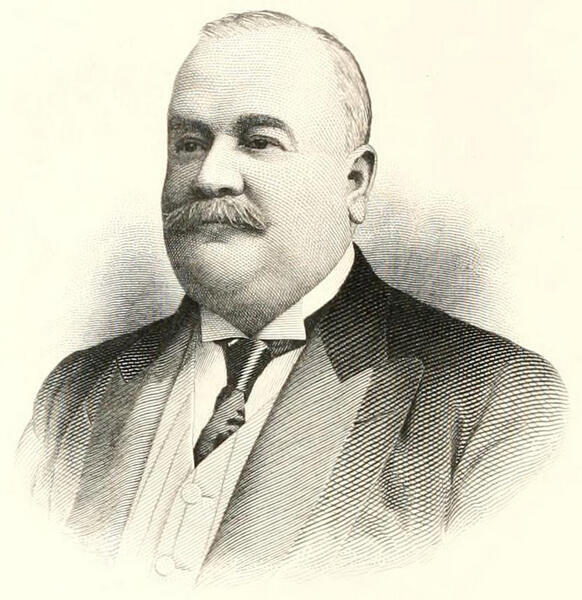
Here you will find contact information for Representative George Albert Castor, including email address, phone number, and mailing address.
| Name | George Albert Castor |
| Position | Representative |
| State | Pennsylvania |
| District | 3 |
| Party | Republican |
| Status | Former Representative |
| Term Start | November 9, 1903 |
| Term End | March 3, 1907 |
| Terms Served | 2 |
| Born | August 6, 1855 |
| Gender | Male |
| Bioguide ID | C000244 |
About Representative George Albert Castor
George Albert Castor (August 6, 1855 – February 19, 1906) was a Republican member of the United States House of Representatives from Pennsylvania in the early twentieth century. He was born in the Holmesburg section of the city of Philadelphia, Pennsylvania, then a semi-rural community in the northeastern part of the city. Little is recorded about his immediate family background, but his early years in Holmesburg placed him in proximity to Philadelphia’s expanding commercial life, which would shape his later business and political career.
As a young man, Castor entered a cloth house, gaining practical experience in the textile and clothing trade. He subsequently became a merchant tailor and built a substantial business, establishing large tailoring establishments in New York City, Boston, and Philadelphia. His success in commerce was such that he retired from active business pursuits in 1875, while still a young man. Despite having already achieved financial independence, he pursued higher education and graduated from Yale University in 1876, an uncommon trajectory that combined early commercial success with formal academic training at one of the nation’s leading universities.
In his personal life, Castor married Elizabeth Paul Pitcairn (1852–1900) in 1876, the same year he completed his studies at Yale. The couple had three children: Norman Castor (1876–1964), who became a diplomat and lawyer; William Castor (1878–1938), who rose to become president of American Coffee, at the time the largest coffee trading firm in North America; and George Castor II (1887–1979), who pursued a career as a lawyer. Through his son William, Castor’s family remained prominent in business and public service for multiple generations. William’s son, William Stanley Castor (1901–1971), succeeded his father as president of American Coffee, continuing the family’s leadership in the coffee trade. Another of William’s sons, Paul Martin Castor (1914–1969), served as chief of staff to U.S. Senators Robert A. Taft, Strom Thurmond, and Hiram Bingham III, and later ran as a Republican candidate for the U.S. House of Representatives from California’s 52nd congressional district, though he died before the election took place. Through this line, George Albert Castor is the great-grandfather of Pennsylvania Attorney General Bruce Castor and U.S. Representative Kathy Castor, extending his family’s public influence well into the twenty-first century.
Castor’s wealth and social position were reflected in his residence in Holmesburg. He built an eighteen-bedroom mansion known as “Stoneyhurst” on Solly Avenue, overlooking Pennypack Creek. The estate became a local landmark in northeastern Philadelphia. In the decades after his death, the property passed out of the family; by 1931 it had been acquired by the Missionary Servants of the Most Blessed Trinity, a Roman Catholic women’s congregation, which established its motherhouse on the site. As of 2018, the grounds of Stoneyhurst continued to be occupied by this religious community, preserving a connection between the historic estate and institutional life in the area.
Parallel to his business and family activities, Castor developed a sustained involvement in Republican politics in Philadelphia. He served as a member of the Republican city committee for fifteen years, participating in the organizational and electoral work of the party during a period when Republican dominance in Pennsylvania was pronounced. In 1892 he sought higher office as a candidate for the Republican nomination for Congressman at Large from Pennsylvania. Although he was unsuccessful in securing the nomination, this effort marked his emergence as a figure of statewide political ambition and laid the groundwork for his later congressional service.
Castor entered the United States House of Representatives in the 58th Congress. He was elected as a Republican to fill the vacancy caused by the death of Representative Henry Burk and took his seat on February 16, 1904, representing a Philadelphia-area district. He was subsequently reelected to the 59th Congress, reflecting the confidence of his constituents and party in his service. His tenure in Congress coincided with the administration of President Theodore Roosevelt and a period of significant national attention to industrial regulation, urban growth, and political reform, although detailed records of his specific committee assignments and legislative initiatives are limited in surviving summaries. Nonetheless, his service placed him among the Pennsylvania Republican delegation at a time when the state wielded considerable influence in national affairs.
George Albert Castor’s congressional career was cut short by his death in office. He served continuously from February 16, 1904, until his death in Philadelphia on February 19, 1906. His passing placed him among the members of the United States Congress who died in office in the first half of the twentieth century. Following his death, memorial addresses were delivered in the House of Representatives, later published in 1907 under the title “George A. Castor, late a representative from Pennsylvania,” reflecting the customary congressional tribute to deceased members. His life bridged commerce, local party organization, and national legislative service, and his legacy extended through a family that remained active in American business, law, and politics for generations after his death.