Representative George Washington Cate
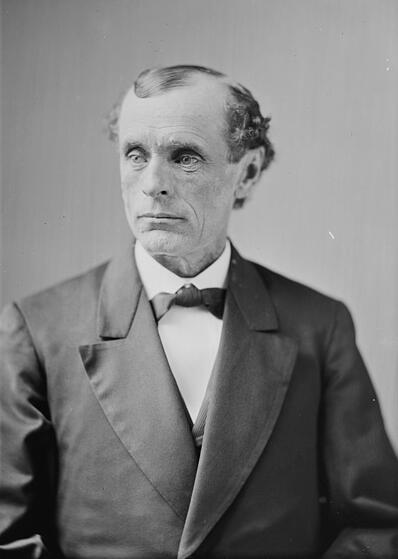
Here you will find contact information for Representative George Washington Cate, including email address, phone number, and mailing address.
| Name | George Washington Cate |
| Position | Representative |
| State | Wisconsin |
| District | 8 |
| Party | Democratic |
| Status | Former Representative |
| Term Start | December 6, 1875 |
| Term End | March 3, 1877 |
| Terms Served | 1 |
| Born | September 17, 1825 |
| Gender | Male |
| Bioguide ID | C000248 |
About Representative George Washington Cate
George Washington Cate (September 17, 1825 – March 7, 1905) was an American lawyer, jurist, and Democratic politician who served as a member of the United States House of Representatives for Wisconsin’s 8th congressional district in the Forty-fourth Congress from 1875 to 1877. Over the course of a long public career, he also served two terms in the Wisconsin State Assembly and spent 21 years as a Wisconsin circuit court judge, becoming a prominent figure in the legal and political life of the state during the latter half of the nineteenth century.
Cate was born on September 17, 1825, in Montpelier, Vermont. He was raised in New England and received his early education in the common schools of the region. Demonstrating an early interest in the law, he pursued legal studies as a young man, reading law in the traditional manner of the period rather than attending a formal law school. After completing his legal training, he was admitted to the bar and began the practice of law, initially in the East before deciding to move westward as new states and territories opened opportunities for professional and political advancement.
In the mid-nineteenth century, Cate relocated to Wisconsin, which had been admitted to the Union in 1848 and was rapidly developing. He settled in the central part of the state, where he established a law practice and quickly became involved in local affairs. His legal abilities and growing reputation led to his election to the Wisconsin State Assembly, where he served two terms. In the Assembly, he participated in shaping state legislation during a period of expansion and institutional development, contributing to the framework of Wisconsin’s laws and governance.
Cate’s legislative service at the state level was followed by a distinguished judicial career. He was elected as a Wisconsin circuit court judge, a position of considerable responsibility in the state’s judicial system. He served on the circuit court for 21 years, presiding over a wide range of civil and criminal matters. In this role, he helped interpret and apply Wisconsin law during a time of significant economic growth, social change, and post–Civil War adjustment, earning respect for his judgment and integrity on the bench.
Building on his experience in state government and the judiciary, Cate entered national politics as a member of the Democratic Party. He was elected to the United States House of Representatives as the Representative from Wisconsin’s 8th congressional district in the Forty-fourth Congress, serving one term from March 4, 1875, to March 3, 1877. His service in Congress occurred during a significant period in American history, as the nation grappled with the closing years of Reconstruction, debates over federal authority, economic policy following the Panic of 1873, and questions of civil rights and regional reconciliation. As a member of the House of Representatives, Cate participated in the legislative process, represented the interests of his Wisconsin constituents, and contributed to the deliberations of the national legislature.
After completing his single term in Congress, Cate returned to Wisconsin and resumed his legal and judicial work, continuing to be identified primarily with his long service on the circuit court and his role in the state’s legal community. He remained a respected figure in public life, known for his dedication to the law, his steady participation in the democratic process, and his decades of service at both the state and federal levels.
George Washington Cate died on March 7, 1905. By the time of his death, he had spent much of his life in public service—as a legislator, judge, and member of Congress—leaving a record of sustained involvement in the civic and political development of Wisconsin and contributing to the broader history of American governance in the nineteenth century.