Senator George Earle Chamberlain
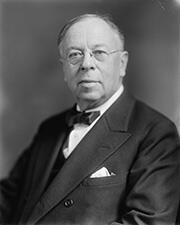
Here you will find contact information for Senator George Earle Chamberlain, including email address, phone number, and mailing address.
| Name | George Earle Chamberlain |
| Position | Senator |
| State | Oregon |
| Party | Democratic |
| Status | Former Representative |
| Term Start | March 15, 1909 |
| Term End | March 3, 1921 |
| Terms Served | 2 |
| Born | January 1, 1854 |
| Gender | Male |
| Bioguide ID | C000277 |
About Senator George Earle Chamberlain
George Earle Chamberlain Sr. (January 1, 1854 – July 9, 1928) was an American attorney, politician, and public official in Oregon who served as a United States Senator from Oregon from 1909 to 1921. A member of the Democratic Party, he was the first attorney general of Oregon, the state’s 11th governor, and later a two-term U.S. Senator in Washington, D.C., where he contributed to the legislative process during a significant period in American history.
Chamberlain was born in Natchez, Mississippi, on January 1, 1854. His family were early immigrants to North America from England and helped to pioneer in Massachusetts before members of the family moved south. His father, Dr. Charles Thomson Chamberlain, was born in Delaware, attended medical school in Philadelphia, and in 1837 settled in Natchez, where he quickly built a large and prosperous medical practice. This success enabled him to maintain his Maryland-born wife, Pamelia H. Archer, and their family in comfort. Pamelia Archer came from a prominent political lineage: she was the granddaughter of Maryland Congressman John Archer, the daughter of Maryland Congressman Stevenson Archer Sr., and the sister of Maryland Congressman Stevenson Archer Jr. George Earle Chamberlain was the couple’s third child, raised in an environment that combined professional accomplishment with a strong tradition of public service.
Chamberlain attended public schools in Natchez and completed his secondary education in 1870 at the age of sixteen. After graduation he worked for two years as a clerk in a general merchandise store, gaining early experience in business and administration. In 1872 he enrolled at Washington and Lee University in Lexington, Virginia, where he pursued a rigorous course of study and became a member of the Phi Kappa Psi fraternity. He graduated in July 1876 with both a Bachelor of Arts and a Bachelor of Law degree. Following his graduation, he briefly returned to Natchez but found professional prospects in the post–Civil War South limited. Seeking better opportunities, he decided to move west and arrived in Oregon on December 6, 1876.
Upon his arrival in Oregon, Chamberlain first took a modest position as a country schoolteacher in Linn County, a brief and poorly paid appointment that nevertheless introduced him to the communities of the Willamette Valley. In late 1877 he was appointed deputy clerk of Linn County, a post he held until the summer of 1879. During this period he studied law and passed the Oregon state bar, enabling him to begin the practice of law. In 1878 he also served in the Linn County Rifles, a volunteer militia unit formed to participate in the Bannock War against belligerents from the Bannock, Shoshone, and Paiute peoples. In 1879 he married Sallie Newman Welch; the couple had seven children and remained married until her death on May 26, 1925. A committed Democrat in a predominantly Republican state, Chamberlain entered electoral politics in November 1880, winning election to a two-year term in the Oregon House of Representatives.
Chamberlain’s legal and political career advanced steadily in the 1880s and early 1890s. In 1884 he was named district attorney for Oregon’s Third Judicial District, a role in which his effectiveness attracted the attention of Democratic Governor Sylvester Pennoyer. When the Oregon Legislature created the office of attorney general in 1891, Pennoyer appointed Chamberlain in May of that year as the first person to hold the position. Chamberlain then stood for election in the fall and won, despite being the nominee of the minority party in the state. He served as Oregon’s attorney general until January 1895, following the expiration of his term. For the next 58 years he would remain the only Democrat to have held that office, until Robert Y. Thornton was elected in 1952. After leaving the attorney generalship, Chamberlain entered the banking business in Albany, Oregon, working with the First National Bank and later the Linn County National Bank, before returning to public legal work.
By 1900 Chamberlain had moved to Portland, the state’s largest city, and sought the office of district attorney for Multnomah County. He won the election by more than 1,000 votes, an impressive margin in a county with a Republican majority of about 4,000 votes, and this victory further elevated his statewide profile. In 1902 the Democratic Party of Oregon nominated him for governor by acclamation at its convention. In the general election he was elected governor of Oregon by the narrow margin of 256 votes, even as Republicans carried the state by roughly 15,000 votes in the concurrent congressional elections. Chamberlain’s success in a Republican-leaning state underscored his personal popularity and political skill. He was reelected governor in 1906 but resigned during his second term after winning election to the United States Senate.
In 1908 Chamberlain was elected as a Democrat to the U.S. Senate from Oregon, and he took his seat on March 4, 1909. He was reelected in 1914 and served two full terms, from March 4, 1909, to March 3, 1921, representing Oregon during a transformative era that included the Progressive Era and World War I. A member of the Democratic Party, Chamberlain participated actively in the legislative process and represented the interests of his constituents in a period of rapid national change. In the Senate he held several important committee assignments. He served as chairman of the Committee on Geological Survey during the Sixty-second Congress and was a member of the Committee on Public Lands in the Sixty-third Congress. Most notably, he served on the Committee on Military Affairs during the Sixty-third through Sixty-fifth Congresses, where he played a central role in debates over national defense and wartime mobilization, and later on the Committee on Expenditures in the War Department in the Sixty-sixth Congress. His name is associated with the Chamberlain Military Preparedness Bill of 1918, reflecting his advocacy for strengthening the nation’s military readiness during World War I. He was an unsuccessful candidate for reelection in 1920, bringing his Senate service to a close on March 3, 1921.
After leaving the Senate, Chamberlain remained active in national public affairs. He was appointed a member of the United States Shipping Board, serving from 1921 to 1923, a period in which the board oversaw issues related to the American merchant marine and postwar shipping policy. Following this service, he engaged in the practice of law in Washington, D.C., drawing on his long experience in state and federal government. In his later years he also maintained connections to Oregon and to various civic and fraternal organizations that had long claimed his allegiance.
Chamberlain’s personal life in his final years included a second marriage. After the death of his first wife, Sallie Newman Welch, in 1925, he married his longtime personal secretary, Carolyn B. Shelton, on July 12, 1926, in Norfolk, Virginia. He died in Norfolk on July 9, 1928. His remains were interred in Arlington National Cemetery, reflecting his national stature and his association with military and public service. Throughout his life he was active in a wide range of fraternal and civic organizations. He was a member of the Independent Order of Odd Fellows and the Knights of Pythias, and he was a 32nd degree Mason in Portland. He also belonged to the Commercial Club of Portland, the Multnomah Athletic Club, and the Oregon Historical Society, and he was a life member of the Benevolent and Protective Order of Elks.