Representative George Washington Cook
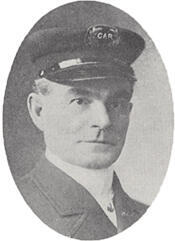
Here you will find contact information for Representative George Washington Cook, including email address, phone number, and mailing address.
| Name | George Washington Cook |
| Position | Representative |
| State | Colorado |
| District | -1 |
| Party | Republican |
| Status | Former Representative |
| Term Start | December 2, 1907 |
| Term End | March 3, 1909 |
| Terms Served | 1 |
| Born | November 10, 1851 |
| Gender | Male |
| Bioguide ID | C000717 |
About Representative George Washington Cook
George Washington Cook (November 10, 1851 – December 18, 1916) was a Republican U.S. Representative from Colorado who served one term in the United States House of Representatives from 1907 to 1909. He was born in Bedford, Lawrence County, Indiana, to Samuel Cook and Agnes (Dodson) Cook. He came from a family with a strong military tradition: his great-grandfather, also named George W. Cook, served in the American Revolutionary War from North Carolina, and his maternal grandfather was a major in the War of 1812. During the Civil War, his father served as a lieutenant in the 13th Indiana Cavalry Regiment and died of disease or from war-related wounds, and his only brother, a bugler in the same regiment, died at age fifteen.
At the age of eleven, Cook ran away from home to enlist in the Union Army during the Civil War. He first enlisted in the 15th Indiana Infantry Regiment and served as a drummer boy for several regiments in the Army of the Cumberland. He was later transferred to the 155th Indiana Infantry Regiment, where he became chief regimental clerk at the age of fourteen, reputedly the youngest chief regimental clerk in the Union Army. He served with General William Tecumseh Sherman on the March to the Sea and remained in service until the end of the war. After the close of the conflict, he returned to Indiana, completed his public school education, attended Bedford Academy, and then pursued higher education at Indiana University.
Following his education, Cook embarked on a varied career in railroads and mining that would eventually lead him west. By 1872 he was employed by a railroad in Chicago, and by 1880 he had entered the service of the Louisville, New Albany and Chicago Railway. In 1880 he moved to Leadville, Colorado, where he became division superintendent of the Denver & Rio Grande Railroad. In that capacity he gained local prominence for his actions during severe winter conditions in the Colorado mountains. He suspended railroad service and organized a rescue party that saved approximately one hundred miners trapped in the Homestake mine by a snowslide near Leadville. In another harsh winter, when the people of Leadville began to face starvation, he hired about one thousand miners to clear snow from the railroad tracks so that food shipments could reach the town.
Cook’s growing stature in Leadville led to public office. He was elected mayor of Leadville and served from 1885 to 1887. In 1888 he moved to Denver, Colorado, where he became general sales agent for the Colorado Fuel and Iron Company. He also became active in veterans’ affairs through the Grand Army of the Republic (GAR), the principal Union veterans’ organization. He served as department commander of the GAR for Colorado and Wyoming in 1891 and 1892, and later, in 1905 and 1906, he was senior vice commander in chief of the national organization. He organized and commanded the Cook Drum Corps of Denver, reflecting both his Civil War experience as a drummer boy and his continuing engagement with veterans’ ceremonial activities. In 1893 he became an independent mining operator, further consolidating his ties to Colorado’s mining economy.
Cook entered national politics as a member of the Republican Party. He was elected as a Republican to the 60th Congress and served as a U.S. Representative from Colorado from March 4, 1907, to March 3, 1909. His single term in the House of Representatives took place during a significant period in American history, amid the Progressive Era and the administration of President Theodore Roosevelt. As a member of the House, Cook participated in the legislative process, represented the interests of his Colorado constituents, and contributed to national debates of the time. He did not seek renomination in 1908 and thus concluded his congressional service after one term.
After leaving Congress, Cook returned to Colorado and resumed his mining operations. He continued to reside in Denver during the later part of his life. Around 1914 his mental health began to decline, and he was admitted to the state asylum in Pueblo, Colorado. He remained there until his death on December 18, 1916. He was interred in Fairmount Cemetery in Denver, a resting place for many of the state’s prominent figures.
In his personal life, Cook married Nina Florence, the daughter of John Boyle, a Canadian merchant. The couple had one son, George Washington Cook Jr., who pursued a military career and served as a first lieutenant in the 43rd Infantry. Cook’s life encompassed early and distinguished service in the Civil War, a prominent role in Colorado’s railroad and mining industries, leadership in veterans’ organizations, municipal service as mayor of Leadville, and national office as a U.S. Representative from Colorado.