Representative George Washington Covington
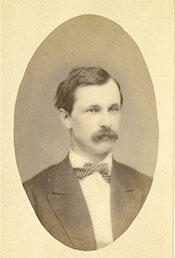
Here you will find contact information for Representative George Washington Covington, including email address, phone number, and mailing address.
| Name | George Washington Covington |
| Position | Representative |
| State | Maryland |
| District | 1 |
| Party | Democratic |
| Status | Former Representative |
| Term Start | December 5, 1881 |
| Term End | March 3, 1885 |
| Terms Served | 2 |
| Born | September 12, 1838 |
| Gender | Male |
| Bioguide ID | C000815 |
About Representative George Washington Covington
George Washington Covington (September 12, 1838 – April 6, 1911) was an American lawyer and Democratic politician who represented Maryland’s 1st congressional district in the United States House of Representatives from 1881 to 1885. Over the course of two terms in Congress, he contributed to the legislative process during a significant period in American history, participating in the democratic governance of the post–Civil War and early Gilded Age era.
Covington was born on September 12, 1838, in Berlin, Worcester County, Maryland. He attended the common schools of the area as a youth, reflecting the typical educational path of many mid-19th-century Marylanders. Seeking more advanced instruction, he enrolled at Buckingham Academy, a well-regarded local institution that prepared students for professional and collegiate study. He later pursued legal education at Harvard Law School, where he received formal training in the law before returning to his native state.
In 1861, Covington was admitted to the bar and commenced the practice of law in Berlin and Snow Hill, Maryland, both in Worcester County. Establishing himself as a country lawyer, he built a professional reputation in the region during the tumultuous years of the Civil War and Reconstruction. His legal practice placed him in close contact with the social and economic issues facing the Eastern Shore, and it provided the foundation for his subsequent involvement in state and national politics.
Covington’s first major public role came in 1867, when he served as a member of the Maryland state constitutional convention. That convention, convened in the aftermath of the Civil War, was charged with framing a new constitution for the state, and his participation signaled his emergence as a figure of influence within the Democratic Party on the Eastern Shore. By the time of the 1880 census, he was residing in Snow Hill with his wife, Sallie B., while continuing his legal practice and increasing his engagement in public affairs.
A Democrat, Covington was elected to the Forty-seventh and Forty-eighth Congresses as the Representative from Maryland’s 1st congressional district, serving from March 4, 1881, to March 3, 1885. His tenure in the House of Representatives coincided with a period of rapid industrialization, contested federal economic policy, and ongoing debates over civil service reform and the lingering issues of Reconstruction. During the Forty-eighth Congress, he held the important administrative post of chairman of the Committee on Accounts, which oversaw the financial and administrative operations of the House. In this capacity, he played a role in managing the internal affairs of the chamber while also representing the interests of his Eastern Shore constituents in national legislative matters.
Covington chose not to be a candidate for renomination in 1884 and thus concluded his congressional service at the end of his second term in March 1885. After leaving Congress, he returned to Snow Hill and resumed the practice of law, again taking up the life of a country lawyer on Maryland’s Eastern Shore. He remained identified with the Democratic Party and with the legal profession, continuing to be regarded as a prominent local figure even after his departure from national office.
George Washington Covington died in New York City on April 6, 1911. Following his death, his remains were returned to Maryland, and he was interred in All Hallows Cemetery in Snow Hill, Worcester County. His career distinguished him from another contemporary Marylander of the same name, George Washington Covington of Still Pond in Kent County, a wealthy merchant and druggist who was born in Middletown, Delaware, in 1834 and died in 1917. The better-known George Washington Covington of Berlin and Snow Hill secured his place in public life through his service in the Maryland constitutional convention of 1867 and his two terms in the United States Congress.