Senator George Mifflin Dallas
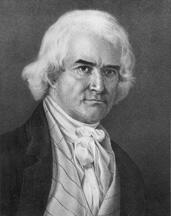
Here you will find contact information for Senator George Mifflin Dallas, including email address, phone number, and mailing address.
| Name | George Mifflin Dallas |
| Position | Senator |
| State | Pennsylvania |
| Party | Jackson |
| Status | Former Representative |
| Term Start | December 5, 1831 |
| Term End | March 3, 1833 |
| Terms Served | 1 |
| Born | July 10, 1792 |
| Gender | Male |
| Bioguide ID | D000011 |
About Senator George Mifflin Dallas
George Mifflin Dallas (July 10, 1792 – December 31, 1864) was an American politician, lawyer, and diplomat who served as the 11th vice president of the United States from 1845 to 1849. A prominent Pennsylvania Democrat and member of the Jacksonian, or “Jackson,” Party, he also served as a United States senator from Pennsylvania from 1831 to 1833, mayor of Philadelphia from 1828 to 1829, attorney general of Pennsylvania, and United States minister to both Russia and the United Kingdom. Over a long public career, he played important roles in domestic financial debates, territorial expansion, and U.S. foreign relations, and he is possibly the namesake of Dallas, Texas.
Dallas was born in Philadelphia, Pennsylvania, the son of Alexander J. Dallas, a leading lawyer who later served as U.S. secretary of the treasury under President James Madison, and Arabella Maria Smith Dallas. Raised in a politically engaged household, he received a classical education and read law in his father’s office. He was admitted to the bar in 1813. As a new graduate, he had little enthusiasm for routine legal practice and was eager to fight in the War of 1812, but he abandoned plans for military service at his father’s insistence. Instead, he entered public service when he accepted a position as private secretary to Albert Gallatin, then U.S. minister to Russia, accompanying him to St. Petersburg on a mission to secure Russian assistance in mediating peace between the United States and Great Britain. After about six months in Russia, Dallas was dispatched to London to assess prospects for a diplomatic resolution of the war. In August 1814 he returned to Washington, D.C., carrying a preliminary draft of British peace terms. President Madison appointed him remitter of the Treasury, a post made more notable by the fact that his father was then serving as secretary of the treasury. The position left him ample time to study politics, his principal interest, and he later became counsel to the Second Bank of the United States. The death of his father in 1817 ended his plan for a family law practice; that year he left the Bank and became deputy attorney general of Philadelphia, serving in that capacity until 1820.
In the turbulent political climate that followed the War of 1812, Dallas emerged as a leader in Pennsylvania’s Democratic politics. He headed the Philadelphia-based “Family Party” faction, which asserted the supremacy of the federal Constitution and favored an energetic national government, protective tariffs, a strong central banking system, and internal improvements to promote commerce. This put him at odds with the rival “Amalgamator” faction led by fellow Pennsylvanian James Buchanan, with whom he developed a long-standing political rivalry. Dallas’s prominence in Philadelphia politics led to his election as mayor of Philadelphia, serving from 1828 to 1829. He quickly grew bored with the largely administrative duties of the mayoralty and soon accepted appointment as United States attorney for the Eastern District of Pennsylvania in 1829, a position his father had held from 1801 to 1814. He continued as U.S. attorney until 1831, while consolidating his influence within the state Democratic organization.
Dallas entered national legislative service when the Pennsylvania legislature elected him to the United States Senate to fill the unexpired term of Senator Isaac D. Barnard, who had resigned. He served as a senator from Pennsylvania from December 13, 1831, to March 3, 1833, completing a single term in office. During his less than fifteen months in the Senate, he was chairman of the Committee on Naval Affairs and participated actively in the legislative process at a time of intense national debate over banking and federal power. A member of the Jackson Party, he supported the broader Jacksonian program but became embroiled in the controversy over the Second Bank of the United States. Combined with his wife’s reluctance to leave Philadelphia for extended periods, this conflict contributed to his decision not to seek re-election. After leaving the Senate, he resumed the practice of law and served as attorney general of Pennsylvania from 1833 to 1835, further strengthening his reputation as a capable lawyer and party leader.
Dallas’s national diplomatic career advanced under President Martin Van Buren, who appointed him Envoy Extraordinary and Minister Plenipotentiary to Russia in 1837. He served as U.S. minister to Russia from 1837 to 1839, managing relations with the Russian Empire during a period of relative calm in bilateral affairs. He was recalled at his own request in 1839 and was subsequently offered the post of U.S. attorney general, which he declined in favor of returning to private legal practice in Pennsylvania. In 1840 he was elected to membership in the American Philosophical Society, reflecting his standing in the intellectual and political life of Philadelphia. As the 1844 presidential election approached, Dallas supported former President Van Buren’s bid for another term and opposed the candidacy of his intrastate rival James Buchanan for the Democratic nomination.
At the 1844 Democratic National Convention, the party bypassed both Van Buren and Buchanan and nominated James K. Polk for president. To balance the ticket geographically and politically, the convention selected Dallas as the vice-presidential nominee. The Polk–Dallas ticket defeated the Whig ticket in the general election, and Dallas took office as vice president on March 4, 1845. As presiding officer of the Senate, he sought to use his position to advance two central objectives of the Polk administration: tariff reduction and territorial expansion. Traditionally aligned with Pennsylvania’s protectionist interests, Dallas nonetheless accepted the administration’s commitment to lower tariffs and came to view his tie-breaking vote in the Senate as analogous in importance to the president’s veto power. During his four-year term he later claimed to have cast thirty tie-breaking votes, though Senate records confirm nineteen. His most consequential vote came on July 28, 1846, when the Senate divided 27–27 on the Walker Tariff bill. After attempting to avoid being forced into a public stand, he cast the deciding vote in favor of the tariff reduction, reasoning that support for the measure was geographically broad and that the House of Representatives, closer to popular sentiment, had overwhelmingly approved it. He explained to Pennsylvanians that, as an officer elected by all twenty-eight states, he was bound to consider the interests of the entire Union rather than those of a single state. The decision earned him the respect of President Polk and many party leaders, but it effectively destroyed his political base in Pennsylvania and ended serious prospects for future elective office there.
Dallas was also a vigorous advocate of expansionist policies associated with “Manifest Destiny.” As vice president he supported the annexation of Texas and pressed for aggressive U.S. claims in the Oregon boundary dispute, at one point calling for the annexation of all of the Oregon Territory. During the Mexican–American War he went so far as to call for the annexation of all of Mexico, though he ultimately accepted compromises that brought only parts of Oregon and Mexico under U.S. control. He backed the administration’s choice of Robert J. Walker as secretary of the treasury, even as he failed to prevent Polk from appointing his rival Buchanan as secretary of state. Seeking to position himself for the 1848 presidential nomination, Dallas hoped that his loyalty to the administration and his record in the Senate would make him a leading contender once Polk, who had pledged to serve only one term, stepped aside. However, his tariff vote had alienated Pennsylvania’s industrial interests, and his advocacy of popular sovereignty on the question of slavery, combined with his aggressive expansionist stance, provoked opposition in other regions. These factors together crippled his national prospects, and he did not secure the nomination.
After leaving the vice presidency in 1849, Dallas returned to private life and the practice of law, remaining a respected elder statesman within the Democratic Party. In 1856, President Franklin Pierce appointed him minister to Great Britain, a post he held from February 4, 1856, until May 16, 1861, when he was relieved by Charles Francis Adams, appointed by President Abraham Lincoln. At the outset of his mission in London, Dallas was required to address sensitive issues involving Central America and the U.S. request that the British government recall its minister to Washington, Sir John Crampton. He handled these matters in a conciliatory but firm manner that preserved U.S. national dignity and led to amicable settlements. His tenure also intersected with the deepening sectional crisis in the United States. Following the Supreme Court’s Dred Scott decision in 1857, Dallas refused to issue a passport to abolitionist leader Frederick Douglass on the grounds that Douglass, as a Black man, was not a U.S. citizen—an incident Douglass later recalled in his autobiography as emblematic of the era’s racial injustices. At the close of his diplomatic service in 1861, Dallas retired permanently from public office, returning to Philadelphia and largely withdrawing from active political life, though he publicly condemned secession as the Civil War began.
In his later years, Dallas devoted himself to legal and literary pursuits and to family life, occasionally corresponding about public affairs but no longer seeking office. He remained a figure of historical interest for his role in major national controversies over banking, tariffs, and territorial expansion, as well as for his extensive diplomatic service. George Mifflin Dallas died in Philadelphia on December 31, 1864. His long career, encompassing service as senator, vice president, mayor, state and federal legal officer, and minister to two great European powers, left a complex legacy in both Pennsylvania and the nation.