Representative George Potter Darrow
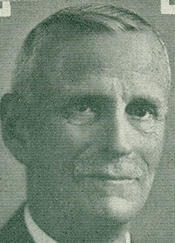
Here you will find contact information for Representative George Potter Darrow, including email address, phone number, and mailing address.
| Name | George Potter Darrow |
| Position | Representative |
| State | Pennsylvania |
| District | 7 |
| Party | Republican |
| Status | Former Representative |
| Term Start | December 6, 1915 |
| Term End | January 3, 1941 |
| Terms Served | 12 |
| Born | February 4, 1859 |
| Gender | Male |
| Bioguide ID | D000063 |
About Representative George Potter Darrow
George Potter Darrow (February 4, 1859 – June 7, 1943) was a Republican member of the U.S. House of Representatives from Pennsylvania who served twelve terms in Congress between 1915 and 1941. His long tenure in the House of Representatives spanned World War I, the Roaring Twenties, the Great Depression, and the early years of the New Deal, during which he participated in the legislative process and represented the interests of his Pennsylvania constituents as a member of the Republican Party.
Darrow was born in Waterford, New London County, Connecticut, on February 4, 1859. Details of his early family life are sparse in the historical record, but his subsequent educational and professional trajectory reflects the mobility and civic engagement characteristic of many late nineteenth-century professionals. He pursued higher education at Alfred University in Alfred, New York, an institution with strong liberal arts and civic traditions, and graduated in 1880. His education prepared him for a career in business and public service at a time when industrialization and urban growth were reshaping the economic and political landscape of the United States.
After completing his studies, Darrow embarked on a business career and, in 1888, moved to Philadelphia, Pennsylvania, which would remain his home for the rest of his life. In Philadelphia he engaged in several lines of private enterprise, including banking, the manufacture of paints, and the insurance business. These activities placed him within the city’s expanding commercial and industrial sectors and provided him with experience in finance and management that would later inform his public service. His involvement in these fields also connected him to the broader economic development of Philadelphia as it emerged as a major urban and industrial center in the late nineteenth and early twentieth centuries.
Darrow’s first significant roles in public life came through local educational and municipal service. From 1906 to 1909 he served as president of the Twenty-second Sectional School Board of Philadelphia, reflecting an early commitment to public education and local governance. He then advanced to city government as a member of the Philadelphia Common Council, serving from 1910 to 1915. In these positions he participated in the oversight of local services and infrastructure during a period when American cities were grappling with issues of urban growth, public health, and modernization of municipal administration.
Building on his local public service, Darrow was elected to the U.S. House of Representatives as a Republican in 1914, winning a seat in the Sixty-fourth Congress. He entered Congress on March 4, 1915, and served continuously until January 3, 1937. During these eleven consecutive terms, he took part in national legislative debates as the United States entered and fought in World War I, navigated the postwar adjustment of the 1920s, and confronted the onset of the Great Depression. As a Republican representative from Pennsylvania, he contributed to the legislative process in an era marked by shifting party fortunes, the rise of Progressive reforms, and the expansion of federal responsibilities in economic and social policy. He was an unsuccessful candidate for reelection in 1936, losing his bid to continue in the Seventy-fifth Congress as the New Deal coalition consolidated its strength.
Darrow returned to Congress two years later. He was elected again as a Republican to the Sixty-seventh Congress and, following changes in congressional term dates, served from January 3, 1939, to January 3, 1941. This final term placed him in the House during the pre–World War II period, when the United States was debating neutrality, preparedness, and aid to allies as global conflict intensified. After this additional service, he chose not to be a candidate for renomination in 1940, thereby concluding his long congressional career that had begun a quarter-century earlier.
In his later years, Darrow remained in Philadelphia, the city that had been the center of his business, civic, and political life since the late 1880s. He died there on June 7, 1943. George Potter Darrow was interred at Ivy Hill Cemetery in Philadelphia, Pennsylvania, closing a life that had encompassed significant phases of American political and economic transformation and more than two decades of service in the U.S. House of Representatives.