Representative George Gibbs Dibrell
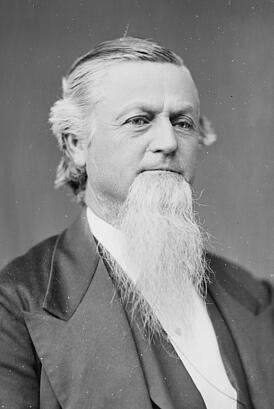
Here you will find contact information for Representative George Gibbs Dibrell, including email address, phone number, and mailing address.
| Name | George Gibbs Dibrell |
| Position | Representative |
| State | Tennessee |
| District | 3 |
| Party | Democratic |
| Status | Former Representative |
| Term Start | December 6, 1875 |
| Term End | March 3, 1885 |
| Terms Served | 5 |
| Born | April 12, 1822 |
| Gender | Male |
| Bioguide ID | D000301 |
About Representative George Gibbs Dibrell
George Gibbs Dibrell (April 12, 1822 – May 9, 1888) was an American lawyer, Confederate brigadier general, railroad executive, and a five-term member of the United States House of Representatives from Tennessee’s 3rd Congressional District. A member of the Democratic Party, he served in Congress from March 4, 1875, to March 3, 1885, and was a prominent figure in the political, economic, and military life of Tennessee in the mid-19th century.
Dibrell was born in Sparta, White County, Tennessee, on April 12, 1822. His family were descendants of Huguenot refugees who had fled France and settled in Virginia in 1700. His grandfather fought as a Patriot in the American Revolution and married into a branch of the Lee family of Virginia. His father, Anthony Dibrell, moved to White County in 1811 and became an influential public official, serving as circuit court clerk, a member of the Tennessee state legislature, a Whig candidate for Congress, and eventually State Treasurer of Tennessee. Growing up in a rural setting, George Dibrell worked on his father’s farm during the summers. At age fifteen he traveled alone with droves of livestock to Virginia and Mississippi, gaining early experience in commerce and overland trade. His formal education was limited to local schools during the winter months and one session at the University of Tennessee at Knoxville when he was about sixteen years old.
In 1842 Dibrell married Mary Elizabeth Leftwich, a fellow native of Sparta and the daughter of a Virginia merchant. She had received what was then termed a lady’s education at the Nashville Female Academy. That same year, both George and Mary joined the Southern Methodist Church, and they became active in the Methodist congregation in Sparta, where Mary taught Sunday school. The couple eventually had eight children, the first born later in 1842. Their family life in Sparta remained closely tied to the Methodist Church and to the agricultural and commercial development of White County.
Dibrell studied law and was admitted to the bar in 1843, establishing a legal practice while also engaging in agricultural and mercantile pursuits. He was elected clerk of the branch of the Bank of Tennessee at Sparta and served for many years as a justice of the peace and county clerk for White County. By 1850 he had accumulated an estate valued at about $500, and by 1860 his personal estate had grown to approximately $27,000, making him one of the five wealthiest landowners in the county. Census slave schedules reflect his participation in the slave-based economy of the antebellum South: in 1850 he owned four enslaved people, all listed as mulatto—a woman aged 45, a girl aged 12, and two boys aged four and two. By 1860 he owned sixteen enslaved people ranging in age from one to fifty. During this period, after leaving his position at the Bank of Tennessee, he was listed in the 1850 census as a merchant, reflecting his growing involvement in commerce as well as landholding.
As the secession crisis unfolded, Dibrell initially aligned with Unionist sentiment in Tennessee. In July 1861 he was elected as a Union delegate to the proposed Tennessee State Constitutional Convention, which was to consider the question of secession; the convention was ultimately voted down and never met. He was also elected to represent White County in the Tennessee state legislature in 1861, but he served only a few weeks before entering Confederate military service. In the summer of 1861 he left Sparta, leaving behind his wife and seven children, then ranging in age from sixteen years to one year, and traveled to Camp Zollicoffer near Livingston, Tennessee. On August 10, 1861, he enlisted in the 25th Tennessee Infantry, bringing with him two horses valued at $200 each, and was elected lieutenant colonel of the regiment.
Dibrell served in the Confederate States Army from 1861 to 1865. After several months of drilling, the 25th Tennessee Infantry marched under Brigadier General Felix Zollicoffer to Camp Beech Grove near Mill Springs, Kentucky, in anticipation of a Federal advance. Dibrell and his regiment took part in the Battle of Mill Springs (also known as the Battle of Fishing Creek or Logan’s Crossroads) on January 19, 1862, one of the earliest significant Union victories in the Western Theater. During the battle, Zollicoffer was killed, the Confederate left flank—where Dibrell’s regiment was positioned—was turned, and the Confederate forces retreated in disorder across the Cumberland River, abandoning artillery, wagons, horses, and supplies, with about 400 men killed, wounded, or captured. Dibrell later participated in the Confederate defense during the Siege of Corinth. In May 1862 the 25th Tennessee Infantry was reorganized at Corinth, and Dibrell was defeated in his bid to retain the lieutenant colonelcy. He was discharged from the regiment on May 10, 1862, with three months remaining on his enlistment.
Following his discharge, Dibrell traveled to Richmond, Virginia, where he obtained authorization to raise a new regiment for Confederate service. Returning to Sparta, he organized an independent cavalry force of partisan rangers that became the 8th Tennessee Cavalry (sometimes referred to as the 13th Tennessee Cavalry). The regiment was organized at Yankeetown, near Sparta, on September 4, 1862, with twelve companies totaling about 920 men, and Dibrell was elected its first colonel. His eldest son, Wayman Leftwich Dibrell, had already joined the unit as a second lieutenant on August 2, 1862, at the age of nineteen. As a cavalry commander, Dibrell served under Generals Nathan Bedford Forrest and Joseph Wheeler and took part in numerous engagements, including the defense of the strategically important saltworks at the Battle of Saltville in southwestern Virginia. In the closing months of the war he was promoted to brigadier general in early 1865 and given command of a division under Wheeler during the Carolinas Campaign, including the Battle of Bentonville in March 1865. As the Confederacy collapsed, Dibrell accompanied the flight of the Confederate government after the fall of Richmond in April 1865, helping to protect the Confederate national archives and escorting President Jefferson Davis from Greensboro, North Carolina, into Georgia. He was captured and paroled near Washington, Georgia, on May 9, 1865.
After returning to Sparta in mid-1865, Dibrell resumed civilian life and turned his energies toward rebuilding and modernizing the economy of White County. He reengaged in agriculture and business pursuits and became a leading advocate for railroad development to overcome the county’s geographic isolation. He worked to bring in branches of the McMinnville and Manchester Railroad, the Nashville and Chattanooga Railroad (later the Nashville, Chattanooga and St. Louis Railway), and the Southwestern Railroad Company, with the goal of connecting Sparta to regional markets. Plans to extend a branch from McMinnville to Sparta had existed as early as 1858 but were halted by the Civil War. Dibrell became a director of the Southwestern Railroad Company around 1866 and was elected its president in 1869. He held that office for fifteen years, until the company was acquired by the Nashville and Chattanooga Company and the railroad finally reached Sparta in 1884, providing a much-needed transportation link for the county’s agricultural and mineral products.
Dibrell also became a significant figure in Tennessee’s postwar politics and constitutional reform. In 1870 he served as a delegate to the Tennessee state constitutional convention that drafted the state’s new constitution following Reconstruction-era changes. That same year he was a delegate to the Methodist conference at Memphis, reflecting his continued involvement in the Southern Methodist Church. Elected as a Democrat to the Forty-fourth and the four succeeding Congresses, he represented Tennessee’s 3rd Congressional District in the United States House of Representatives from March 4, 1875, to March 3, 1885. During his five terms in office, he participated in the legislative process during a significant period in American history, representing the interests of his East and Middle Tennessee constituents in matters related to post-Reconstruction policy, internal improvements, and economic development. He did not seek renomination in 1884 and, upon leaving Congress, returned to his agricultural and business enterprises, including the development of coal resources in White County.
In addition to his railroad work, Dibrell was a principal organizer and landholder in the Bon Air Coal, Land, and Lumber Company, later known as the Bon Air Coal & Coke Company, centered on Bon Air Mountain near Sparta. Drawing on capital accumulated from his antebellum mercantile success, he had gradually acquired more than 15,000 acres of coal and timber land in White County, which formed the core of the company’s holdings when it was chartered in September 1882. He declined the presidency of the company, which went to former governor John C. Brown, president of the 1870 constitutional convention, and instead served as vice president. Under his leadership, Bon Air became one of the county’s leading industries and largest employers, and by 1900 the company’s landholdings had expanded to about 38,000 acres. Dibrell also remained active in Methodist affairs, serving as a delegate to the Methodist conference at Nashville in 1882.
George Gibbs Dibrell died at his home in Sparta on May 9, 1888, at the age of sixty-six, following an “aggravated inflammation of the kidneys,” a recurring ailment that had been worsened by a strenuous forty-mile horseback ride two weeks earlier. He was survived by his wife Mary and their eight children, as well as numerous grandchildren. His funeral was conducted by the same minister who had married the couple forty-six years earlier. A Nashville newspaper, the Daily American, in announcing his death, stated that he “has done more for White County than any man who ever lived here,” reflecting the high regard in which he was held locally. He was interred in the Old Sparta Cemetery, leaving a legacy as a soldier, legislator, and key architect of White County’s transportation and industrial development.