Representative George Washington Emery Dorsey
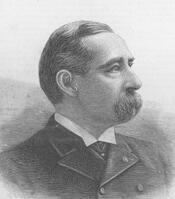
Here you will find contact information for Representative George Washington Emery Dorsey, including email address, phone number, and mailing address.
| Name | George Washington Emery Dorsey |
| Position | Representative |
| State | Nebraska |
| District | 3 |
| Party | Republican |
| Status | Former Representative |
| Term Start | December 7, 1885 |
| Term End | March 3, 1891 |
| Terms Served | 3 |
| Born | January 25, 1842 |
| Gender | Male |
| Bioguide ID | D000439 |
About Representative George Washington Emery Dorsey
George Washington Emery Dorsey (January 25, 1842 – June 12, 1911) was a Republican member of the United States House of Representatives from Nebraska who served three consecutive terms in Congress from 1885 to 1891. His congressional career unfolded during a significant period in American history, as the nation continued to adjust to the post–Civil War era and the rapid economic and political changes of the late nineteenth century. As a member of the House of Representatives, he participated in the legislative process and represented the interests of his Nebraska constituents, contributing to national debates on finance, agriculture, and development.
Dorsey was born in Loudoun County, Virginia, on January 25, 1842. In 1856 he moved with his parents to Preston County, Virginia, a region that would later become part of the new state of West Virginia during the Civil War. He attended private schools and pursued his early education at Oak Hill Academy, receiving the type of formal instruction that prepared many young men of his generation for professional and public life. His formative years in what became West Virginia exposed him to the sectional tensions that preceded the Civil War and helped shape his subsequent decision to support the Union cause.
With the outbreak of the American Civil War, Dorsey entered military service on the Union side. In August 1861 he recruited a volunteer company and entered the Union Army as a first lieutenant in the 6th Regiment, West Virginia Infantry. Over the course of the conflict he distinguished himself in service and was promoted to captain and then to major for meritorious conduct. He served in the Army of the Shenandoah and was mustered out with that command in August 1865, having spent virtually the entire duration of the war in uniform. His wartime experience, leadership responsibilities, and exposure to national issues during the conflict informed his later legal and political career.
Following the Civil War, Dorsey moved west, settling in Nebraska in 1866 at a time when the state was in the early stages of development and expansion. He studied law after his arrival and was admitted to the bar in 1869, commencing the practice of law in Nebraska. In addition to his legal work, he became active in business and civic affairs, engaging in banking and helping to shape the financial infrastructure of his adopted state. He served as vice president of the State Board of Agriculture, reflecting his involvement in and support for Nebraska’s agricultural interests, which were central to the state’s economy. His growing prominence in Republican politics led to his selection as chairman of the Republican State central committee, a position that placed him at the center of party organization and strategy in Nebraska.
Dorsey’s political activities culminated in his election to the United States House of Representatives as a Republican. He was elected to the Forty-ninth, Fiftieth, and Fifty-first Congresses and served from March 4, 1885, to March 3, 1891. During his three terms in office, he contributed to the legislative process at a time when issues such as monetary policy, banking regulation, western development, and agricultural concerns were prominent in national politics. In the Fifty-first Congress he served as chairman of the Committee on Banking and Currency, a key assignment that underscored his expertise and interest in financial matters and banking policy. As a member of the House, he participated in the democratic process and worked to represent the interests of his Nebraska constituents within the broader national framework.
Despite his influence and committee leadership, Dorsey’s congressional career came to an end when he was an unsuccessful candidate for reelection in 1890 to the Fifty-second Congress. After leaving Congress in March 1891, he turned his attention to private business pursuits in the rapidly developing American West. He engaged in mining enterprises in Nevada and Utah, reflecting both the economic opportunities of the region and his continued interest in investment and development beyond the Great Plains. These ventures marked a new phase in his professional life, as he shifted from public office to entrepreneurial activity in the mining sector.
George Washington Emery Dorsey died in Salt Lake City, Utah, on June 12, 1911. His remains were returned to Nebraska, where he was buried in the City Cemetery in Fremont, Nebraska, symbolizing his enduring connection to the state he had served in Congress and where he had built his legal and political career.