Representative George Washington Edmonds
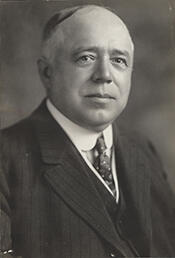
Here you will find contact information for Representative George Washington Edmonds, including email address, phone number, and mailing address.
| Name | George Washington Edmonds |
| Position | Representative |
| State | Pennsylvania |
| District | 4 |
| Party | Republican |
| Status | Former Representative |
| Term Start | April 7, 1913 |
| Term End | January 3, 1935 |
| Terms Served | 7 |
| Born | February 22, 1864 |
| Gender | Male |
| Bioguide ID | E000053 |
About Representative George Washington Edmonds
George Washington Edmonds (February 22, 1864 – September 28, 1939) was a Republican member of the U.S. House of Representatives from Pennsylvania who served as a Representative from Pennsylvania in the United States Congress from 1913 to 1935. He was born in Pottsville, Schuylkill County, Pennsylvania, and came of age during the post–Civil War industrial expansion that shaped much of the state’s economic and political life.
Edmonds pursued professional training in the sciences and graduated from the Philadelphia College of Pharmacy in 1887. Following his graduation, he practiced pharmacy for several years, establishing himself in a respected profession at a time when formal pharmaceutical education was becoming increasingly important. In addition to his work as a pharmacist, he became engaged in the coal business, an industry central to the economy of Pennsylvania and particularly significant in the Schuylkill County region from which he hailed.
His involvement in business and community affairs led Edmonds into local politics in Philadelphia. He served as a member of the common council of Philadelphia from 1896 to 1902, participating in municipal governance during a period of rapid urban growth and modernization. This experience in city government provided him with legislative and administrative background that would later inform his work at the national level.
Edmonds was elected to Congress as a Republican in 1912 and entered the U.S. House of Representatives at the start of the 63rd Congress in 1913. A member of the Republican Party, he contributed to the legislative process during seven terms in office, with his service in Congress occurring during a significant period in American history that encompassed World War I, the postwar era, and the early years of the Great Depression. During his tenure in the House of Representatives, he represented the interests of his Pennsylvania constituents and participated in the democratic process on a wide range of national issues. He served as chairman of the House Committee on Claims, a position that placed him in a key role in considering private claims against the federal government and related legislative matters.
In 1924 Edmonds was an unsuccessful candidate for renomination, bringing his initial consecutive period of congressional service to a close. After leaving Congress, he entered the wholesale coal and lumber business, drawing on his earlier experience in the coal trade and maintaining his ties to the commercial life of Philadelphia and the surrounding region. His post-congressional business activities reflected the continuing importance of coal and lumber to both local industry and national infrastructure in the 1920s.
Edmonds later returned to public service in a more specialized capacity. In September 1927 he was elected manager of the Port of Philadelphia Ocean Traffic Bureau, a position he held until 1933. In this role he was involved in promoting and managing ocean traffic through the port, an important commercial gateway for both domestic and international trade. His work there coincided with years of economic volatility, including the onset of the Great Depression, when efficient port operations and trade promotion were of particular concern to regional and national economic interests.
In 1932 Edmonds was again elected to Congress as a Republican and returned to the House of Representatives for one additional term, thereby extending his overall congressional career into 1935. This later service placed him in the midst of the early New Deal era, when Congress was considering major legislative responses to the economic crisis. After completing this final term, he resumed the wholesale coal business in Philadelphia, continuing his engagement in the private sector.
George Washington Edmonds died at Jefferson Hospital in Philadelphia on September 28, 1939. His career spanned professional pharmacy, local government, national legislative service, and commercial and port management, reflecting the intertwined economic and political developments of Pennsylvania and the United States in the late nineteenth and early twentieth centuries.