Senator George Gilman Fogg
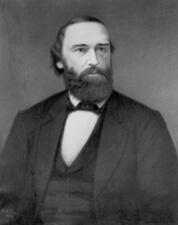
Here you will find contact information for Senator George Gilman Fogg, including email address, phone number, and mailing address.
| Name | George Gilman Fogg |
| Position | Senator |
| State | New Hampshire |
| Party | Republican |
| Status | Former Representative |
| Term Start | January 1, 1866 |
| Term End | March 3, 1867 |
| Terms Served | 1 |
| Born | May 26, 1813 |
| Gender | Male |
| Bioguide ID | F000234 |
About Senator George Gilman Fogg
George Gilman Fogg (May 26, 1813 – October 5, 1881) was an American politician, diplomat, lawyer, and newspaper editor who represented New Hampshire in the United States Senate during the Reconstruction era. A member of the Republican Party, he served in the Senate from 1865 to 1867, participating in the legislative process during a significant period in American history and representing the interests of his New Hampshire constituents. Over the course of his career, Fogg also held state office in New Hampshire, served as United States Ambassador to Switzerland, and was active in party leadership and higher education.
Fogg was born on May 26, 1813, in Meredith, New Hampshire, the son of David Fogg and Hannah Gilman Vickery. Raised in rural New Hampshire, he pursued classical studies in preparation for a professional career. He enrolled at Dartmouth College in Hanover, New Hampshire, and graduated in 1839, receiving the broad liberal education that was typical of the period and that would underpin his later work in law, politics, and journalism.
Following his graduation from Dartmouth, Fogg studied law in Meredith and continued his legal education at Harvard Law School. After completing his studies, he was admitted to the bar in 1842. He commenced the practice of law in Gilmanton Ironworks, New Hampshire, building a professional reputation that soon led him into public life. Seeking broader opportunities, he later moved to Concord, the state capital, where he combined legal work with increasing involvement in politics and public affairs.
Fogg’s formal political career began in the New Hampshire House of Representatives, where he served as a member in 1846. That same year he was appointed New Hampshire Secretary of State, a position he held from 1846 to 1847. Alongside his public service, he became deeply involved in journalism and publishing. From 1847 to 1861 he worked as a newspaper publisher, and from 1856 to 1860 he served as reporter of the New Hampshire Supreme Court, preparing and overseeing the publication of the court’s decisions. His political influence grew as the Republican Party emerged in the 1850s; by 1860 he was serving as secretary of the Republican National Executive Committee, placing him at the center of national party organization at the time of Abraham Lincoln’s election.
In recognition of his party service and political standing, President Abraham Lincoln appointed Fogg as Minister Resident (United States Ambassador) to Switzerland in 1861. He held this diplomatic post from 1861 to 1865, representing the United States in Bern throughout the Civil War. His tenure as ambassador coincided with a critical period in American foreign relations, during which the Union sought to maintain European neutrality and secure international respect for the federal government’s war aims. After returning from Switzerland in 1865, Fogg resumed his political activities in New Hampshire.
Fogg entered the United States Senate as a Republican when he was appointed to fill the vacancy caused by the resignation of Senator Daniel Clark. His service in the Senate is recorded as running from August 31, 1866, to March 3, 1867, encompassing one term in office during the early Reconstruction period. Within the broader context of his congressional service, he is also noted as having served as a Senator from New Hampshire from 1865 to 1867. During this time he contributed to the legislative process at a moment when Congress was grappling with the aftermath of the Civil War and the reintegration of the former Confederate states. He did not stand as a candidate for election to the Senate in 1866 and left the chamber at the expiration of his appointed term.
In his later years, Fogg remained active in public and intellectual life. He became editor of the Concord Daily Monitor, continuing his long association with journalism and shaping public opinion in New Hampshire through the press. He also maintained ties to higher education and served as a fellow of Bates College in Lewiston, Maine, from 1875 until his death in 1881, reflecting his ongoing interest in academic and civic advancement. George Gilman Fogg died in Concord, New Hampshire, on October 5, 1881, closing a career that had spanned state government, national politics, diplomacy, and the press.