Representative George Ford
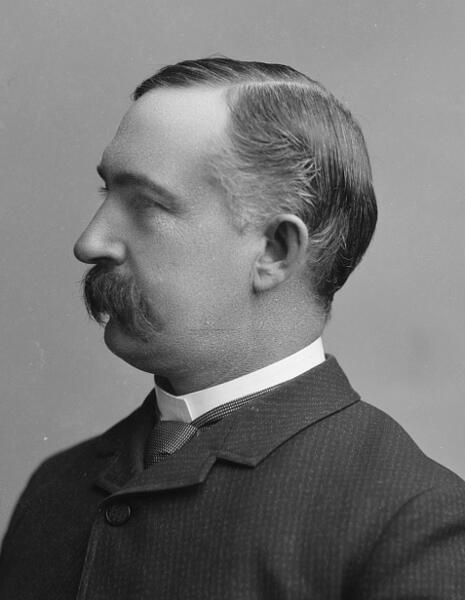
Here you will find contact information for Representative George Ford, including email address, phone number, and mailing address.
| Name | George Ford |
| Position | Representative |
| State | Indiana |
| District | 13 |
| Party | Democratic |
| Status | Former Representative |
| Term Start | December 7, 1885 |
| Term End | March 3, 1887 |
| Terms Served | 1 |
| Born | January 11, 1846 |
| Gender | Male |
| Bioguide ID | F000259 |
About Representative George Ford
George Ford, known formally as George Ford (American politician), was born on October 6, 1846, in South Bend, St. Joseph County, Indiana. He came of age in the decades following the early settlement and rapid development of northern Indiana, a period marked by the expansion of transportation networks and industry in the Midwest. His early life in South Bend, a growing commercial and manufacturing center, exposed him to the civic and legal issues that would later shape his professional and political career. Ford’s upbringing in Indiana rooted him firmly in the community he would eventually represent at both the local and national levels.
Ford received his early education in the public schools of South Bend, reflecting the expanding system of common schooling in the mid-nineteenth century United States. Demonstrating an aptitude for the law, he pursued legal studies after completing his preliminary education. He studied law in Indiana, was admitted to the bar, and commenced practice in South Bend. This legal training and early professional experience provided him with a detailed understanding of statutory and constitutional questions, as well as the practical concerns of citizens and businesses in his region.
Ford’s legal career in South Bend developed alongside his growing involvement in public affairs. As an attorney, he built a reputation that facilitated his entry into elective office and public service. Over time, he advanced to the judiciary, serving as a judge, a role in which he applied his legal expertise to the resolution of disputes and the interpretation of Indiana law. His work as both lawyer and judge placed him at the intersection of law, politics, and community life, and established him as a prominent Democratic figure in Indiana. This combination of legal and judicial experience formed the foundation for his subsequent national political career.
A member of the Democratic Party, George Ford was elected to the United States House of Representatives from Indiana and served a single term in the Forty-ninth Congress, from March 4, 1885, to March 3, 1887. His tenure in Congress occurred during a significant period in American history, as the nation grappled with the economic, social, and political consequences of rapid industrialization, post–Civil War reconstruction policies, and evolving debates over tariffs, currency, and federal regulation. As a Representative from Indiana, Ford participated in the legislative process, contributed to deliberations in the House of Representatives, and represented the interests of his constituents from South Bend and the surrounding region. During this term in office, he took part in the democratic process at the national level, aligning with Democratic positions of the era while addressing the concerns of a Midwestern industrial and agricultural constituency.
After completing his one term in Congress, Ford returned to Indiana and resumed his legal career. Drawing on his experience as a former Representative and judge, he continued to be engaged in the civic and professional life of South Bend. His post-congressional years reflected the common nineteenth-century pattern of citizen-legislators who alternated between public office and private professional practice, maintaining close ties to their home communities. Ford remained identified with the Democratic Party and with the legal profession, contributing his expertise to local and regional affairs.
George Ford lived out his later years in South Bend, the city that had shaped his early life and to which he repeatedly returned after periods of public service. He died there on August 30, 1917. His life spanned from the antebellum era through the Civil War, Reconstruction, and into the early twentieth century, and his career as an attorney, judge, and Democratic Representative from Indiana placed him among the public figures who helped guide their communities through a time of profound national transformation.