Representative George Edmund Foss
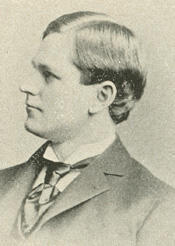
Here you will find contact information for Representative George Edmund Foss, including email address, phone number, and mailing address.
| Name | George Edmund Foss |
| Position | Representative |
| State | Illinois |
| District | 10 |
| Party | Republican |
| Status | Former Representative |
| Term Start | December 2, 1895 |
| Term End | March 3, 1919 |
| Terms Served | 11 |
| Born | July 2, 1863 |
| Gender | Male |
| Bioguide ID | F000295 |
About Representative George Edmund Foss
George Edmund Foss (July 2, 1863 – March 15, 1936) was a Republican member of the United States House of Representatives from Illinois who served eleven terms in Congress between 1895 and 1919. Over the course of his long legislative career, he played a prominent role in naval policy and represented the interests of his Illinois constituents during a period of significant economic, political, and military change in the United States. He was the brother of Eugene Noble Foss, who later served as Governor of Massachusetts.
Foss was born on July 2, 1863, in Berkshire, Vermont. He attended the common schools in his youth before pursuing higher education. Demonstrating early academic promise, he enrolled at Harvard University, from which he graduated in 1885. Seeking further professional and scholarly training, Foss moved to New York City, where he attended Columbia Law School and the School of Political Science at Columbia University, gaining exposure to both legal doctrine and contemporary political thought.
By the late 1880s, Foss had relocated to the Midwest to complete his legal education. In 1889 he graduated from Union College of Law in Chicago, Illinois. That same year he was admitted to the bar and commenced the practice of law in Chicago. His legal career in one of the nation’s fastest-growing cities provided him with practical experience and public visibility, laying the groundwork for his entry into electoral politics as a member of the Republican Party.
Foss was elected as a Republican to the Fifty-fourth Congress and eight succeeding Congresses, serving from March 4, 1895, to March 3, 1913. During these nine consecutive terms, he contributed to the legislative process at a time marked by industrial expansion, the Spanish-American War, and the emergence of the United States as a global power. As a member of the House of Representatives, he participated in debates and votes on issues affecting both his Illinois district and the nation at large, and he consistently represented the interests of his constituents within the broader framework of Republican policies of the era.
Within the House, Foss rose to a position of particular influence in military and naval affairs. He served as chairman of the Committee on Naval Affairs during the Fifty-sixth through the Sixty-first Congresses, a tenure that spanned from 1899 to 1911. In this capacity, he oversaw and helped shape legislation related to the development, expansion, and administration of the United States Navy at a time when naval power was central to American foreign policy and national defense. His prominence in this field was recognized locally on March 29, 1907, when residents in North Chicago, Illinois, incorporated the Foss Park District in his honor; the district’s largest park, Foss Park, also bears his name.
Foss’s continuous service in Congress was interrupted when he was an unsuccessful candidate for re-election in 1912. However, he soon returned to national office, winning election to the Sixty-fourth and Sixty-fifth Congresses and serving again from March 4, 1915, to March 3, 1919. This later period of his congressional service coincided with World War I, during which Congress addressed questions of mobilization, military funding, and postwar policy. After these additional terms, he chose not to be a candidate for renomination to the House in 1918 and instead sought higher office as a candidate for nomination to the United States Senate, a bid that was unsuccessful.
Following his departure from Congress, Foss resumed the practice of law in Chicago, returning to the profession with which he had begun his public career. He remained active in Republican politics and sought to reenter Congress, but he was an unsuccessful candidate for nomination in 1932 to the Seventy-third Congress. He continued to reside in Chicago until his death on March 15, 1936. George Edmund Foss was interred in Graceland Cemetery in Chicago, closing the life of a long-serving legislator whose congressional career spanned key decades in the transformation of the United States into a modern industrial and naval power.