Representative George W. Gekas
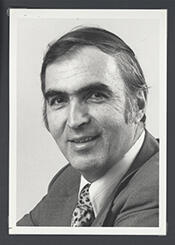
Here you will find contact information for Representative George W. Gekas, including email address, phone number, and mailing address.
| Name | George W. Gekas |
| Position | Representative |
| State | Pennsylvania |
| District | 17 |
| Party | Republican |
| Status | Former Representative |
| Term Start | January 3, 1983 |
| Term End | January 3, 2003 |
| Terms Served | 10 |
| Born | April 14, 1930 |
| Gender | Male |
| Bioguide ID | G000121 |
About Representative George W. Gekas
George William Gekas (April 14, 1930 – December 16, 2021) was an American politician and attorney from Pennsylvania who served as a Republican member of the U.S. House of Representatives for Pennsylvania’s 17th congressional district from 1983 to 2003. Over the course of 10 consecutive terms in Congress, he represented a Harrisburg-based district and participated actively in the legislative process during a significant period in late twentieth- and early twenty-first-century American history, contributing to national debates on crime, impeachment, and federal authority while representing the interests of his constituents.
Gekas was born in Harrisburg, Pennsylvania, the son of Mary (Touloumes) and William Gekas. He grew up in the state capital and graduated from William Penn High School in 1948. He then attended Dickinson College in Carlisle, Pennsylvania, where he received a Bachelor of Arts degree in 1952 and joined the Sigma Alpha Epsilon fraternity. After college, he served in the United States Army from 1953 to 1955, during the post–Korean War era. Following his military service, he pursued legal studies at the Dickinson School of Law, earning a Juris Doctor degree in 1958, and preparing for a career that would combine law and public service.
Following his admission to the bar, Gekas entered private legal practice, working for two years before moving into public service as a prosecutor. From 1960 to 1966, he served as assistant district attorney for Dauphin County, Pennsylvania, based in Harrisburg. In that role he gained experience in criminal law and local government, building a reputation that helped launch his political career. His work as a prosecutor provided him with a foundation in legal procedure and public policy that would inform his later legislative efforts at both the state and federal levels.
In 1966, Gekas was elected to the Pennsylvania House of Representatives from the 103rd district. He served in the state House until 1974, participating in state legislative affairs during a period marked nationally by the Vietnam War and the Watergate scandal. In the 1974 elections, amid the anti-Watergate Democratic landslide, he was defeated for reelection by Democrat Steven Reed, who would later become mayor of Harrisburg. After a brief hiatus from elected office, Gekas returned to the legislature as a member of the Pennsylvania State Senate, winning election in 1976 to represent the 15th district. He served in the State Senate from 1977 to 1982, further solidifying his credentials as a Republican lawmaker with experience in both chambers of the state legislature.
Gekas entered Congress following the reapportionment that followed the 1980 census, when Pennsylvania lost two congressional seats and the Republican-controlled legislature created a new Harrisburg-based district. He won election to this reconfigured 17th congressional district in 1982 and took office on January 3, 1983. His victory made him the second Greek-American elected to Congress from Pennsylvania, following Gus Yatron of the neighboring 6th district. A member of the Republican Party, Gekas was reelected nine more times, serving a total of 10 terms from 1983 to 2003. During his tenure in the House of Representatives, he participated in the democratic process on issues ranging from criminal justice to federal regulatory authority and immigration, and he held influential roles on committees dealing with the judiciary and government operations.
In Congress, Gekas developed a reputation as a conservative legislator with a particular interest in criminal law and constitutional issues. He was notably the only member of the House of Representatives to vote against the Gun-Free School Zones Act of 1990, reflecting his concerns about federal overreach into areas traditionally regulated by states. Gekas also played a prominent role in high-profile impeachment proceedings. He served as one of the House managers in the impeachment trial of federal judge Alcee Hastings and later as a House manager during the impeachment trial of President Bill Clinton in 1999, presenting the House’s case before the United States Senate. His service in Congress spanned the Reagan, George H. W. Bush, Clinton, and George W. Bush administrations, placing him at the center of major national debates over crime legislation, government reform, and executive accountability.
After the 2000 census, Pennsylvania again lost two congressional districts, prompting another round of redistricting that reshaped Gekas’s political landscape. The Reading-based 6th District, represented by five-term Democrat Tim Holden, was eliminated and divided among three other districts. The largest portion, including Holden’s home in St. Clair, was added to Gekas’s 17th District, while a small portion of the more heavily Republican 9th District was also shifted into the 17th. Although the district remained nominally favorable to Republicans, about 65 percent of its population was new to Holden. Nevertheless, Holden chose to run in the 17th District in 2002. In that election, Gekas was defeated by almost 6,000 votes, becoming the only Republican incumbent placed in a district with a Democratic incumbent to lose reelection in 2002. Around this time, the political news site PoliticsPA, in a feature assigning “yearbook superlatives” to Pennsylvania politicians, described him as “Missing in Action,” reflecting perceptions of his low public profile during the campaign.
Following his electoral defeat in 2002, Gekas left Congress on January 3, 2003, and returned to private life in Harrisburg. He established a law practice and remained active in the legal community, drawing on decades of experience in both state and federal government. He continued to reside in Harrisburg, maintaining ties to the region he had represented in various capacities for much of his adult life. George William Gekas died in Harrisburg on December 16, 2021, at the age of 91, closing a long career in public service that spanned local prosecution, the Pennsylvania General Assembly, and two decades in the United States House of Representatives.