Senator George Gray
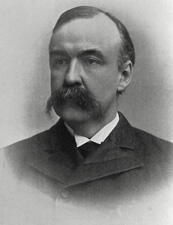
Here you will find contact information for Senator George Gray, including email address, phone number, and mailing address.
| Name | George Gray |
| Position | Senator |
| State | Delaware |
| Party | Democratic |
| Status | Former Representative |
| Term Start | December 7, 1885 |
| Term End | March 3, 1899 |
| Terms Served | 3 |
| Born | May 4, 1840 |
| Gender | Male |
| Bioguide ID | G000396 |
About Senator George Gray
George Gray, a prominent Delaware politician and member of the Democratic Party, was born on May 4, 1840, in New Castle, Delaware. He was the son of Andrew C. Gray, a well‑known Delaware lawyer and public figure, and Elizabeth Black Gray. Growing up in a family deeply engaged in the legal and civic life of the state, he was exposed early to public affairs and the workings of government. His formative years in New Castle, a historic community on the Delaware River, helped shape his interest in law, politics, and public service, interests that would later define his long career in state and national life.
Gray received his early education in Delaware and then attended Princeton University (then the College of New Jersey), from which he graduated in 1860. Following his graduation, he pursued legal studies, reading law under established practitioners in keeping with the professional norms of the era. He was admitted to the bar in 1863 and began practicing law in New Castle. His legal training and growing reputation as a careful and capable attorney laid the foundation for his later roles as a state official, United States senator, and federal judge.
Gray’s public career began at the state level. A committed Democrat, he became active in Delaware politics during the post–Civil War period, a time of significant political realignment and economic change. He served as Attorney General of Delaware from 1879 to 1885, a position in which he gained statewide recognition for his legal acumen and his even‑tempered approach to public questions. His work as attorney general, combined with his party loyalty and his standing in the legal community, positioned him as a leading Democratic figure in a small but politically important state.
In 1885, Gray was elected by the Delaware General Assembly to the United States Senate, succeeding Thomas F. Bayard, who had been appointed U.S. Secretary of State. Gray took his seat on March 18, 1885, beginning the first of three consecutive terms that would keep him in the Senate until March 3, 1899. As a senator from Delaware, he served during a significant period in American history marked by industrial expansion, labor unrest, tariff debates, and the nation’s emergence onto the world stage. Throughout his three terms in office, he contributed to the legislative process and participated actively in the democratic governance of the country, representing the interests of his Delaware constituents while engaging in the broader national issues before the Senate.
During his Senate career, Gray became particularly noted for his work on issues of foreign policy and arbitration. He served on the commission that negotiated peace following the Spanish–American War in 1898, helping to shape the Treaty of Paris that concluded the conflict and defined the terms of American control over former Spanish territories. His participation in this diplomatic effort reflected the respect he commanded among his colleagues and the executive branch for his judgment and moderation. Within the Senate, he was regarded as a thoughtful legislator, contributing to debates on economic policy, governance, and the evolving role of the United States in international affairs.
Gray’s service in Congress ended in 1899 when he was not returned for a fourth term, but his public career continued in another branch of the federal government. In 1899, President William McKinley appointed him as a judge of the United States Court of Appeals for the Third Circuit and of the United States Circuit Courts for the Third Circuit, a post he assumed on March 29, 1899. In this judicial capacity, which he held into the early twentieth century, Gray applied the same careful reasoning and sense of fairness that had characterized his legislative work. His decisions contributed to the development of federal jurisprudence at a time when the courts were increasingly called upon to address complex questions arising from industrialization, interstate commerce, and changing social conditions.
In his later years, Gray remained a respected figure in both Delaware and national legal circles. He continued to reside in Delaware while carrying out his judicial duties, maintaining his ties to the community that had first sent him to the Senate. Over the course of his long life, he witnessed and participated in the transformation of the United States from a largely agrarian republic into an industrial and emerging world power. George Gray died on August 7, 1925, in Wilmington, Delaware. He was interred in Immanuel Episcopal Church Cemetery in New Castle, the town of his birth, closing a life that had spanned from the antebellum era through World War I and leaving a legacy of service in both the legislative and judicial branches of the federal government.