Representative George Barnes Grigsby
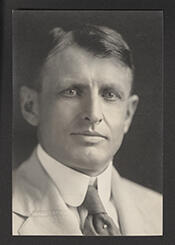
Here you will find contact information for Representative George Barnes Grigsby, including email address, phone number, and mailing address.
| Name | George Barnes Grigsby |
| Position | Representative |
| State | Alaska |
| District | At-Large |
| Party | Unknown |
| Status | Former Representative |
| Term Start | May 19, 1919 |
| Term End | March 3, 1921 |
| Terms Served | 1 |
| Born | December 2, 1874 |
| Gender | Male |
| Bioguide ID | G000474 |
About Representative George Barnes Grigsby
George Barnes Grigsby (December 2, 1874 – May 9, 1962) was a delegate to the United States House of Representatives from the Territory of Alaska, serving from 1919 to 1921. His service in Congress occurred during a significant period in American history, and as a member of the House of Representatives he participated in the democratic process and represented the interests of his Alaskan constituents. A member of the Democratic Party, he contributed to the legislative process during one term in office.
Grigsby was born on December 2, 1874, in Sioux Falls, Dakota Territory (now South Dakota), the son of Fannie (Kingsbury) Grigsby and Melvin Grigsby. His father was a prominent South Dakota political and military leader, and public service was a strong theme in the family. His brothers Sioux K. Grigsby and John T. Grigsby both later served as lieutenant governor of South Dakota, underscoring the family’s sustained involvement in state and territorial politics.
He attended public schools in South Dakota before pursuing higher education at the State University in Vermillion, South Dakota (now the University of South Dakota), and at Sioux Falls University. After his university studies, Grigsby read law and was admitted to the bar in 1896. He commenced the practice of law in Sioux Falls, South Dakota, establishing himself professionally while also beginning to participate in partisan politics. In 1896 he served as a delegate to the South Dakota state Democratic convention, marking his early formal engagement with the Democratic Party.
During the Spanish–American War, Grigsby served in the United States armed forces as a lieutenant in the Third Regiment, United States Volunteer Cavalry. Following his military service, he moved in 1902 to Nome, in the Territory of Alaska, where he continued his legal career and quickly became involved in public affairs. From 1902 to 1908 he served as an assistant United States attorney, and from 1908 to 1910 he was United States attorney for the district, roles that placed him at the center of federal legal administration in the territory. He subsequently served as city attorney of Nome in 1911 and was elected mayor of Nome in 1914. In 1915 he was a member of the board of commissioners for the promotion of uniform legislation, reflecting his growing influence in territorial legal and legislative matters. He was elected the first attorney general of the Territory of Alaska in 1916 and held that office until his resignation in 1919.
Grigsby entered national office when he presented his credentials as a Democratic Delegate-elect to the Sixty-sixth Congress to fill the vacancy caused by the death of Delegate Charles A. Sulzer. He took his seat on June 3, 1920, and served as Alaska’s nonvoting delegate in the United States House of Representatives until March 1, 1921. His tenure coincided with the post–World War I period, when issues of territorial development, resource management, and political status were of central concern to Alaska. His service ended when he was succeeded by James Wickersham, who had contested Sulzer’s original election and also contested Grigsby’s right to the seat. Over the course of his one term in office, Grigsby participated in the legislative process on behalf of the territory and its residents.
After leaving Congress, Grigsby remained active in Democratic Party affairs and territorial politics. He was a delegate to the Democratic National Convention in both 1920 and 1924, reflecting his continued prominence within the party. Professionally, he resumed the practice of law and worked in several Alaskan communities, including Ketchikan, Juneau, and Anchorage, contributing to the legal and civic life of the territory during a period of growth and change.
In his later years, Grigsby left Alaska and settled in California. He died on May 9, 1962, in Santa Rosa, California. In recognition of his military service and public career, he was interred in Golden Gate National Cemetery in San Bruno, California.