Representative George Paul Harrison
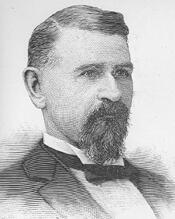
Here you will find contact information for Representative George Paul Harrison, including email address, phone number, and mailing address.
| Name | George Paul Harrison |
| Position | Representative |
| State | Alabama |
| District | 3 |
| Party | Democratic |
| Status | Former Representative |
| Term Start | August 7, 1893 |
| Term End | March 3, 1897 |
| Terms Served | 2 |
| Born | March 19, 1841 |
| Gender | Male |
| Bioguide ID | H000270 |
About Representative George Paul Harrison
George Paul Harrison Sr. (October 19, 1813 – May 14, 1888) was a Georgia planter, militia officer, state legislator, and Confederate military commander who later held a series of local judicial and administrative posts. He was also the father of George Paul Harrison Jr., who served as a colonel in the Confederate States Army, an Alabama State Senator, and a Democratic Representative from Alabama in the United States Congress from 1893 to 1897. Through his own public service and that of his son, Harrison Sr. was connected to both the political life of Georgia and the congressional representation of Alabama in the late nineteenth century.
Harrison was born on October 19, 1813, in Georgia, where he was raised in the plantation economy of the coastal region. He became a rice planter, a common and economically significant occupation in the lowcountry areas of Georgia and South Carolina, and established himself as a member of the local agricultural and political elite. His standing as a planter and community leader helped pave the way for his early involvement in state politics and the militia.
Before the outbreak of the American Civil War, Harrison served as a member of the Georgia House of Representatives, participating in the legislative affairs of the state during a period of mounting sectional tension. Concurrently, he pursued a military career in the state forces. From 1856 to 1861 he held the rank of brigadier general in the Georgia militia, commanding militia forces during the critical years immediately preceding secession. In this capacity he was responsible for organizing, training, and overseeing units that would later form part of Georgia’s contribution to the Confederate war effort.
With the secession of Georgia and the onset of the Civil War, Harrison’s military responsibilities expanded. He became commander of the 1st Brigade in the Georgia State Troops, a formation raised to defend the state and support Confederate operations. Later in the conflict, in 1864–1865, he served as a colonel in Georgia’s First Military District, a command that placed him in charge of local defense and military administration during the final, most desperate phase of the war. During the closing months of the conflict he was captured and held as a prisoner of war for several months, reflecting the collapse of Confederate military resistance and the personal consequences for many of its officers.
After the war, Harrison resumed public life during the tumultuous Reconstruction era. He returned to the Georgia House of Representatives as a state representative in 1865–1866, participating in the initial efforts to reestablish civil government under federal oversight. He also served as a delegate to the state constitutional convention, contributing to the framing of Georgia’s postwar constitutional order. These roles placed him at the center of debates over political reorganization, civil rights, and the reintegration of former Confederate states into the Union.
In addition to his legislative and convention service, Harrison held important local judicial and administrative offices in Savannah and Chatham County. He served as clerk of the city court of Savannah, Georgia, and later as clerk of the superior court of Chatham County, Georgia. These positions involved the management of court records, the administration of legal proceedings, and the maintenance of the judicial infrastructure in one of Georgia’s most important urban centers. His work in these roles extended his public service into the civilian legal sphere and reflected the continued trust placed in him by local authorities and citizens.
Harrison’s family continued his tradition of public and military service. His son, George Paul Harrison Jr., served as a colonel in the Confederate States Army, commanding a brigade late in the war, and later entered politics in Alabama. The younger Harrison became an Alabama State Senator and then a member of the United States House of Representatives, serving two terms as a Democratic Representative from Alabama from 1893 to 1897. In Congress, George Paul Harrison Jr. contributed to the legislative process and represented the interests of his constituents during a significant period in American history, linking the Harrison family’s Confederate-era military service to the postwar national political arena.
George Paul Harrison Sr. died on May 14, 1888. By the time of his death, he had witnessed the secession crisis, the Civil War, Reconstruction, and the political realignments that followed, and he had played a notable role in Georgia’s military and civic life. His legacy was carried forward both through his own record as a militia general, legislator, and court official, and through the subsequent congressional and state service of his son.