Representative George Sydney Hawkins
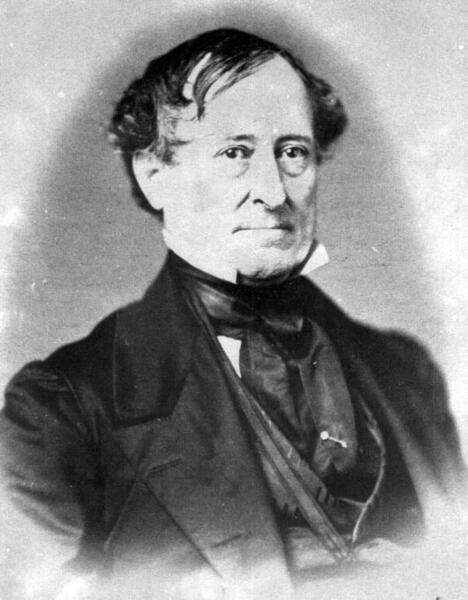
Here you will find contact information for Representative George Sydney Hawkins, including email address, phone number, and mailing address.
| Name | George Sydney Hawkins |
| Position | Representative |
| State | Florida |
| District | 1 |
| Party | Democratic |
| Status | Former Representative |
| Term Start | December 7, 1857 |
| Term End | March 3, 1861 |
| Terms Served | 2 |
| Gender | Male |
| Bioguide ID | H000369 |
About Representative George Sydney Hawkins
George Sydney Hawkins (1808 – March 15, 1878) was a nineteenth-century American lawyer, jurist, and Democratic politician who represented Florida in the United States House of Representatives. He was born in 1808 in Kingston, Ulster County, New York, where he attended the common schools before pursuing higher education. Hawkins enrolled at Columbia University in New York City and was graduated there, receiving the classical education typical of the period. After completing his studies, he read law, was admitted to the bar, and commenced legal practice, beginning a professional career that would soon take him to the developing frontier of the Florida Territory.
After his admission to the bar, Hawkins moved south and settled in Pensacola, Florida, then a key Gulf Coast port and administrative center of the territory. Immersing himself in both legal work and public affairs, he quickly became involved in the territorial militia and political life. In 1832, he married Jane Louisa Early, the adopted daughter of Eleazer Early and Jane Meriweather Paterson, linking him to a prominent Southern family. The marriage was short-lived, as his wife died two years later, around 1834. Professionally, Hawkins’s early Florida years were marked by his service as a captain in the Indian war of 1837, a reference to the Second Seminole War, in which territorial forces and federal troops sought to remove Seminole Indians from Florida.
Hawkins’s military and legal experience facilitated his entry into territorial governance. He became a member of the Legislative Council of the Territory of Florida, participating in the lawmaking process during the crucial years preceding statehood. In 1841 he was appointed district attorney, and in 1842 he was appointed United States district attorney for the Apalachicola district in Florida, reflecting growing federal responsibilities in the region’s expanding commercial centers. His judicial career advanced further when he was appointed an associate justice of the Florida Supreme Court, serving from 1846 to 1850, a period during which the young state’s legal framework and precedents were being established.
In January 1851, Hawkins was elected judge of the circuit court, continuing his role in shaping Florida’s judiciary at the trial level. Alongside his judicial service, he remained active in state politics. He served as a member of the Florida House of Representatives and later in the Florida State Senate, evidencing a broad base of support and influence in state government. At various times he also held federal administrative responsibilities, including service as collector of customs for the port of Apalachicola, an important position in overseeing trade and revenue in one of Florida’s principal Gulf ports.
Hawkins’s prominence in Florida law and politics led to his election to the United States Congress. A Democrat, he was elected to the Thirty-fifth and Thirty-sixth Congresses and served as a U.S. Representative from Florida from March 4, 1857, to January 21, 1861. His tenure in Congress coincided with the mounting sectional crisis over slavery and states’ rights. As Southern states began to secede following the election of Abraham Lincoln, Hawkins withdrew from Congress on January 21, 1861, in conjunction with Florida’s secession from the Union, aligning himself with his state’s decision to join the Confederacy.
During the Civil War, Hawkins continued his judicial career under the Confederate Government. From 1862 to 1865 he served as a judge of the district court under the Confederate authority, applying Confederate law in Florida during the conflict. After the collapse of the Confederacy and the end of the war, he returned to civilian life in a state undergoing Reconstruction. Although his earlier federal and Confederate roles placed him at the center of major national conflicts, he remained engaged in legal and governmental work in Florida in the postwar era.
In the final phase of his career, Hawkins was recognized for his legal expertise and long experience with Florida’s statutes. In 1877, the state legislature commissioned him to prepare a digest of the State laws of Florida, a significant undertaking intended to organize and clarify the body of Florida law for practitioners and officials. He continued this work until his death. George Sydney Hawkins died in Marianna, Florida, on March 15, 1878. He was interred in St. Luke’s Episcopal Cemetery, leaving a legacy as a key legal and political figure in Florida’s territorial, antebellum, Civil War, and early Reconstruction periods.