Representative George Cochrane Hazelton
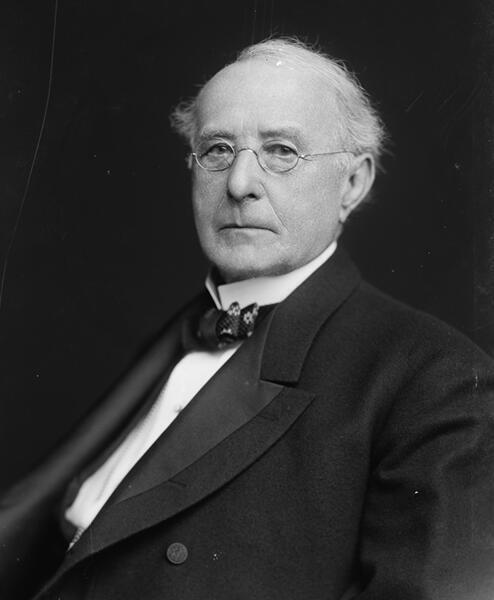
Here you will find contact information for Representative George Cochrane Hazelton, including email address, phone number, and mailing address.
| Name | George Cochrane Hazelton |
| Position | Representative |
| State | Wisconsin |
| District | 3 |
| Party | Republican |
| Status | Former Representative |
| Term Start | October 15, 1877 |
| Term End | March 3, 1883 |
| Terms Served | 3 |
| Born | January 3, 1832 |
| Gender | Male |
| Bioguide ID | H000418 |
About Representative George Cochrane Hazelton
George Cochrane Hazelton (January 3, 1832 – September 4, 1922) was an American attorney and Republican politician who represented Wisconsin in the United States House of Representatives for the Forty-fifth, Forty-sixth, and Forty-seventh Congresses, serving from 1877 to 1883. Over three consecutive terms, he contributed to the legislative process during a significant period in American history and later became the first appointed attorney general of the District of Columbia.
Hazelton was born in Chester, Rockingham County, New Hampshire, the son of William and Mercy Jane Hazelton. He attended local district schools in New Hampshire and pursued preparatory studies at Pinkerton Academy in New Hampshire and at Dummer Academy in Massachusetts. He then enrolled at Union College in Schenectady, New York, where he completed his collegiate education and graduated in 1858. After college, he studied law and was admitted to the bar at Malone, New York, commencing his legal career.
Following his admission to the bar, Hazelton moved west and settled in Boscobel, Wisconsin. Establishing himself as an attorney, he quickly entered public service. From 1864 to 1868, he served as prosecuting attorney of Grant County, Wisconsin, gaining experience in criminal law and local governance. His growing prominence in state affairs led to his election to the Wisconsin State Senate in 1867. He was reelected in 1869 and, during his tenure in the Senate, served as president pro tempore, reflecting the confidence his colleagues placed in his leadership and parliamentary abilities.
Hazelton’s state-level service provided the foundation for his subsequent national career. A member of the Republican Party, he was elected to the United States House of Representatives from Wisconsin’s 3rd congressional district and served in the Forty-fifth, Forty-sixth, and Forty-seventh Congresses, from March 4, 1877, to March 3, 1883. During these three terms, he participated actively in the legislative and democratic processes, representing the interests of his Wisconsin constituents at a time marked by the aftermath of the Civil War, Reconstruction, and the nation’s rapid industrial and demographic changes. He was an unsuccessful candidate for renomination in 1882, which brought his House service to a close at the end of the Forty-seventh Congress.
Hazelton’s congressional record reflected both the prevailing currents and the racial attitudes of his era. He was among a group of congressmen who advocated doctrines of racial superiority and spoke against the immigration of what he termed “unworthy” races. In debates over Chinese immigration, he argued that “if the segment of her population now upon the Pacific shores is the standard and measure of her home civilization, it is of the lowest order,” a statement that aligned him with restrictive and racially discriminatory immigration policies then gaining traction in national politics.
After leaving Congress, Hazelton settled in Washington, D.C., where he resumed the practice of law. During the administration of President Benjamin Harrison, he was appointed the first attorney general of the District of Columbia, a position that placed him at the center of the capital’s legal affairs and underscored his standing as an experienced lawyer and former legislator. In this capacity, he oversaw legal matters for the District, further extending his long career in public service.
Hazelton’s public life was intertwined with a family deeply involved in law and politics. His older brother, Gerry Whiting Hazelton, was also a member of Congress and a prominent lawyer in Wisconsin, reinforcing the family’s influence in the state’s political and legal circles. His nephew, Clark Betton Cochrane, served as a member of Congress from New York, extending the family’s congressional connections beyond Wisconsin. Hazelton married Ellen Van Antwerp, and the couple had two sons, George Cochrane Hazelton Jr. and John Hampden Hazelton.
In his later years, Hazelton returned to his native New Hampshire. He died in Chester, New Hampshire, on September 4, 1922, at the age of 90. He was interred at Vale Cemetery in Schenectady, New York, the city of his alma mater, Union College, thus closing a life that spanned from the antebellum period through World War I and that encompassed significant service at the county, state, and federal levels of American government.