Representative George Gilbert Hoskins
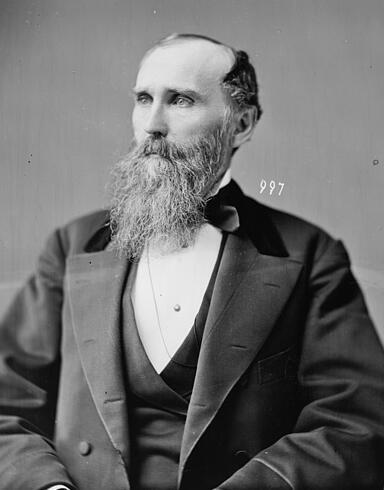
Here you will find contact information for Representative George Gilbert Hoskins, including email address, phone number, and mailing address.
| Name | George Gilbert Hoskins |
| Position | Representative |
| State | New York |
| District | 31 |
| Party | Republican |
| Status | Former Representative |
| Term Start | December 1, 1873 |
| Term End | March 3, 1877 |
| Terms Served | 2 |
| Born | December 24, 1824 |
| Gender | Male |
| Bioguide ID | H000801 |
About Representative George Gilbert Hoskins
George Gilbert Hoskins (December 24, 1824 – June 12, 1893) was an American politician who served as a United States Representative from New York from 1873 to 1877 and later as lieutenant governor of New York. A member of the Republican Party, he contributed to the legislative process during two terms in the House of Representatives and held several important state and local offices during a career that spanned the post–Civil War and Gilded Age eras.
Hoskins was born on December 24, 1824, in Bennington, Wyoming County, New York. He was raised in western New York at a time when the region was developing rapidly, both agriculturally and commercially. His early life in a rural community shaped his familiarity with local concerns and the needs of small towns and farming interests, which later informed his public service. He attended the common schools of the area, receiving a basic education typical of the period, and as a young man engaged in mercantile pursuits.
Before entering national office, Hoskins built a career in business and local government. He worked as a merchant and became active in civic affairs in Wyoming County, where he gained experience in public administration and finance. As the Republican Party emerged in the 1850s, Hoskins aligned himself with its principles, supporting the Union cause and the party’s economic policies. His growing prominence in local politics led to election to state-level office, where he began to develop a reputation as a capable administrator and reliable party man in New York’s increasingly complex political landscape.
Hoskins’s state service helped pave the way for his election to the United States House of Representatives. Running as a Republican, he was elected to represent New York in the Forty-third Congress and took his seat on March 4, 1873. He was subsequently reelected, serving through the Forty-fourth Congress until March 3, 1877. His service in Congress occurred during a significant period in American history, as the nation grappled with the final phases of Reconstruction, economic dislocation following the Panic of 1873, and debates over civil rights, federal authority, and industrial development. As a member of the House of Representatives, George Gilbert Hoskins participated in the democratic process and represented the interests of his constituents, contributing to the legislative work of the Republican majority and then the Democratic-controlled House that followed.
During his two terms in Congress, Hoskins took part in deliberations on issues central to New York and the broader nation, including questions of finance, infrastructure, and the regulation of commerce in an era of expanding railroads and industry. He supported the general Republican program of fostering economic growth and maintaining the integrity of the Union’s postwar settlement. While not among the most nationally prominent figures of his day, he was regarded as a steady and reliable representative who advanced the concerns of his district within the broader framework of party policy and national priorities.
After leaving Congress in 1877, Hoskins continued his political career in New York State. Drawing on his legislative experience and party connections, he remained active in Republican politics and was eventually elected lieutenant governor of New York. In that capacity, he served as the state’s second-highest executive officer, presiding over the State Senate and assisting in the administration of state government during a period marked by rapid urbanization, industrial expansion, and ongoing debates over political reform. His tenure as lieutenant governor further solidified his standing as a significant Republican leader in New York in the late nineteenth century.
In his later years, Hoskins remained a respected figure in state political circles, associated with the generation of Republican leaders who guided New York through the decades following the Civil War. He died on June 12, 1893, closing a public career that had extended from local business and county affairs to the halls of Congress and the executive offices of his state. His life reflected the trajectory of many nineteenth-century American politicians who rose from modest beginnings to positions of substantial responsibility in both state and national government.