Representative George Franklin Huff
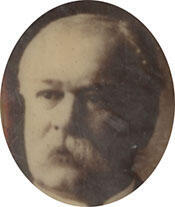
Here you will find contact information for Representative George Franklin Huff, including email address, phone number, and mailing address.
| Name | George Franklin Huff |
| Position | Representative |
| State | Pennsylvania |
| District | 22 |
| Party | Republican |
| Status | Former Representative |
| Term Start | December 7, 1891 |
| Term End | March 3, 1911 |
| Terms Served | 6 |
| Born | July 16, 1842 |
| Gender | Male |
| Bioguide ID | H000911 |
About Representative George Franklin Huff
George Franklin Huff (July 16, 1842 – April 18, 1912) was a Republican member of the U.S. House of Representatives from Pennsylvania who served as a Representative in the United States Congress from 1891 to 1911. Over the course of six terms in office, he contributed to the legislative process during a significant period in American history, participating in the democratic process and representing the interests of his constituents in western Pennsylvania.
Huff was born in Norristown, Pennsylvania, and spent his early years in that region of the state. He attended public schools in Middletown, Pennsylvania, and later in Altoona, Pennsylvania, reflecting the mobility of his family within the state during his youth. At the age of eighteen he entered the workforce with the Pennsylvania Railroad, working in the railroad car shops in Altoona. This early experience in a major transportation and industrial enterprise introduced him to the economic forces that would later shape his business and political careers.
In 1867 Huff moved to Westmoreland County, Pennsylvania, where he settled in Greensburg and engaged in banking. He quickly became a prominent figure in local financial circles and later was largely identified with the industrial and mining interests of western Pennsylvania, particularly in coal and related enterprises. His business activities connected him with other leading figures in the region’s economic development, including his association with Richard Coulter as a business partner. Huff’s growing prominence in business and civic affairs naturally led him into Republican Party politics at both the state and national levels.
Huff’s formal political career began in state government. He was a delegate to the 1880 Republican National Convention, participating in the party’s national deliberations during a pivotal era in post–Civil War politics. He subsequently served as a member of the Pennsylvania State Senate from 1884 to 1888, where he represented his district during a period of rapid industrial expansion and social change in the Commonwealth. His legislative experience in Harrisburg helped establish his reputation as a capable Republican leader and prepared him for service in the U.S. Congress.
Huff was first elected as a Republican to the Fifty-second Congress, beginning his initial period of service in the U.S. House of Representatives. He was again elected to the Fifty-fourth Congress, thus serving in the national legislature during the early 1890s and mid-1890s. Although he contributed to the legislative process during these terms, he was not a candidate for renomination in 1896. After a brief interval out of Congress, he returned to national office when he was again elected to the Fifty-eighth Congress and to the three succeeding Congresses, extending his service through the early years of the twentieth century. In total, he served as a Representative from Pennsylvania from 1891 to 1911, encompassing six terms in office. During the Sixtieth and Sixty-first Congresses he held a key leadership role as chairman of the United States House Committee on Mines and Mining, a position that reflected both his seniority and his deep involvement in the mining and industrial interests of his region. He was not a candidate for renomination in 1910, bringing his congressional career to a close the following year.
Huff’s personal life was closely tied to prominent legal and social circles in Pennsylvania. On March 16, 1871, he married Henrietta Burrell, the daughter of Jeremiah M. Burrell, President Judge of the Tenth Judicial District of Pennsylvania. The marriage linked Huff to an influential judicial family, and he and Henrietta were the parents of eight children. His wealth and social standing also placed him among the elite of western Pennsylvania. Along with more than sixty other wealthy residents of the region, including Andrew Carnegie, Andrew Mellon, and Henry Clay Frick, Huff was a member of the exclusive South Fork Fishing and Hunting Club. The club’s earthen dam at Lake Conemaugh failed on May 31, 1889, causing the catastrophic Johnstown Flood, one of the most devastating disasters of the era and an event that drew public attention to the responsibilities of industrial and financial elites.
In his later years, Huff divided his time between Pennsylvania and the nation’s capital. In Washington, D.C., he commissioned a grand mansion in the Dupont Circle neighborhood, designed by noted architect Horace Trumbauer with significant contributions by architect Julian Abele. Completed in 1906, the residence reflected Huff’s status as a successful businessman and long-serving congressman. After his death, the mansion was sold by his widow in 1913 to the Argentine Ministry of Foreign Relations and has since served as the Embassy of Argentina, giving his former home a lasting diplomatic role.
George Franklin Huff died in Washington, D.C., on April 18, 1912, at the age of 69. He was interred in St. Clair Cemetery in Greensburg, Pennsylvania, returning in death to the community that had been the center of his business, political, and family life. His career spanned the transformation of Pennsylvania into an industrial powerhouse, and his service in both state and national office placed him at the intersection of finance, mining, and public policy during a formative period in American history.