Representative George William Johnson
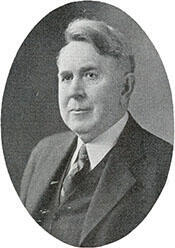
Here you will find contact information for Representative George William Johnson, including email address, phone number, and mailing address.
| Name | George William Johnson |
| Position | Representative |
| State | West Virginia |
| District | 4 |
| Party | Democratic |
| Status | Former Representative |
| Term Start | December 3, 1923 |
| Term End | January 3, 1943 |
| Terms Served | 6 |
| Born | November 10, 1869 |
| Gender | Male |
| Bioguide ID | J000132 |
About Representative George William Johnson
George William Johnson was an American lawyer and Democratic politician who served as a United States Representative from West Virginia from 1923 to 1943. Born in 1869, he came of age during the post-Civil War era, a period of rapid industrialization and political realignment in the United States. Little is recorded in the available sources about his early family background or place of birth, but his later professional career indicates that he received a formal education sufficient to enter the practice of law and to participate actively in public affairs.
Johnson pursued a legal career prior to entering national politics, establishing himself as a lawyer at a time when West Virginia was undergoing significant economic and social change, particularly in its coal and industrial regions. His work as an attorney provided him with experience in statutory interpretation, advocacy, and the practical workings of government, all of which would have prepared him for legislative service. As a member of the Democratic Party, he aligned with a political organization that, in West Virginia, was deeply engaged in issues of labor, resource development, and infrastructure during the late nineteenth and early twentieth centuries.
Building on his legal and political experience, Johnson was elected to the United States House of Representatives as a Democrat from West Virginia. He began his congressional service in 1923 and remained in office until 1943, serving a total of six terms. His two decades in Congress spanned a transformative period in American history, encompassing the prosperity of the 1920s, the onset and depths of the Great Depression, and the early years of World War II. Throughout this time, he participated in the legislative process, representing the interests of his West Virginia constituents in the national legislature.
During his tenure in the House of Representatives, Johnson took part in debates and votes on major national issues that defined his era, including economic policy, social welfare measures, and questions of national security. As a Democratic member of Congress during the New Deal period, he served while the federal government expanded its role in economic regulation and social programs. In this capacity, he contributed to the democratic process by helping to shape federal legislation and by advocating for the needs and priorities of his district within the broader framework of national policy.
Johnson’s congressional career concluded in 1943, after which he left the House following twenty years of continuous service. His departure from Congress came at a time when the United States was fully engaged in World War II, and the legislative agenda was increasingly dominated by wartime measures and postwar planning. Although specific details of his activities after leaving office are not extensively documented in the available sources, his long record of public service marked him as a significant figure in West Virginia’s political history during the first half of the twentieth century.
George William Johnson died in 1944, shortly after the end of his congressional career. His life encompassed a period of profound change in the United States, from Reconstruction-era America through industrial expansion, economic crisis, and global conflict. As a lawyer and Democratic politician who served six terms as a United States Representative from West Virginia between 1923 and 1943, he played a sustained role in the legislative life of the nation and in the representation of his state’s citizens in the federal government.