Representative George Johnstone
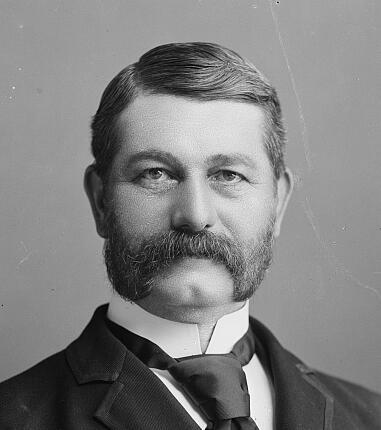
Here you will find contact information for Representative George Johnstone, including email address, phone number, and mailing address.
| Name | George Johnstone |
| Position | Representative |
| State | South Carolina |
| District | 3 |
| Party | Democratic |
| Status | Former Representative |
| Term Start | December 7, 1891 |
| Term End | March 3, 1893 |
| Terms Served | 1 |
| Born | April 18, 1846 |
| Gender | Male |
| Bioguide ID | J000202 |
About Representative George Johnstone
George Johnstone (April 18, 1846 – March 8, 1921) was a United States Representative from South Carolina who served in the Fifty-second Congress from 1891 to 1893. A member of the Democratic Party, he represented his South Carolina constituency during a significant period in American history marked by the aftermath of Reconstruction, the consolidation of Democratic control in the South, and the nation’s transition into the Gilded Age and early Progressive Era.
Born in the nineteenth century, George Johnstone came of age in a South that had been transformed by the Civil War and Reconstruction. Although detailed records of his early life are not provided in the available sources, his later political career indicates that he was sufficiently educated and engaged in public affairs to gain the confidence of Democratic Party leaders and voters in his district. Growing up in this environment would have exposed him to the legal, economic, and social questions that dominated Southern public life after the war, including issues of states’ rights, agricultural recovery, and the reorganization of local and state governance under Democratic leadership.
By the late 1880s and early 1890s, Johnstone had established himself as a figure of sufficient prominence to secure election to the United States House of Representatives. Running as a Democrat, he was elected to the Fifty-second Congress and served from 1891 to 1893. During this single term in office, he contributed to the legislative process at a time when Congress grappled with questions of tariff policy, monetary standards, veterans’ pensions, and federal oversight of elections. As a member of the House of Representatives, George Johnstone participated in the democratic process and represented the interests of his South Carolina constituents, reflecting the priorities of a predominantly agrarian state concerned with crop prices, railroad regulation, and the balance between federal and state authority.
Johnstone’s congressional service coincided with a period of intense political realignment and debate over economic policy. The Democratic Party, to which he belonged, generally favored lower tariffs and was increasingly attentive to the concerns of farmers and small producers, while also navigating internal divisions over currency and regional interests. Within this context, Johnstone’s role as a Representative from South Carolina placed him in the midst of national deliberations that would shape the country’s economic and political trajectory in the closing years of the nineteenth century. Although he served only one term, his tenure formed part of the broader effort by Southern Democrats to reassert and maintain influence in the federal government after Reconstruction.
After leaving Congress in 1893, George Johnstone did not return to the national legislature. His later life unfolded against the backdrop of continuing change in both South Carolina and the nation, as the United States moved toward the twentieth century. He lived until 1921, his lifespan encompassing the Civil War’s aftermath, the rise of Jim Crow in the South, the Spanish-American War, and the First World War. His career as a U.S. Representative from South Carolina remains his principal recorded contribution to public life.