Senator George Jones
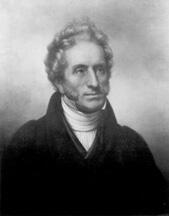
Here you will find contact information for Senator George Jones, including email address, phone number, and mailing address.
| Name | George Jones |
| Position | Senator |
| State | Georgia |
| Party | Republican |
| Status | Former Representative |
| Term Start | October 26, 1807 |
| Term End | December 31, 1807 |
| Terms Served | 1 |
| Born | February 25, 1766 |
| Gender | Male |
| Bioguide ID | J000220 |
About Senator George Jones
George Glenn Jones was born on September 12, 1931, in Saratoga, Texas, and was raised in Colmesneil, in the Big Thicket region of southeast Texas, with a brother and five sisters. His father, George Washington Jones, worked in a shipyard and played harmonica and guitar, while his mother, Clara (née Patterson), played piano in the Pentecostal Church on Sundays. When Jones was born, his arm was broken after a doctor dropped him, an early misfortune in a childhood marked by hardship. He first heard country music at the age of seven, after his parents bought a radio, and he would lie in bed on Saturday nights listening to the Grand Ole Opry, insisting that his mother wake him if he fell asleep so he could hear Roy Acuff or Bill Monroe. The early death of his sister Ethel worsened his father’s drinking, which in turn led to physical and emotional abuse within the family, including episodes in which his father would return home drunk, wake the terrified boy, and demand that he sing for guests under threat of a beating. Despite this, or perhaps because of it, Jones developed an intense, almost compulsive need to sing. His father bought him his first guitar when he was nine, and Jones learned his first chords and songs in church; soon he was busking on the streets of Beaumont, Texas, as a child performer.
Jones’s formal education was limited, and his formative schooling was effectively in music and performance rather than in academic institutions. He left home at age 16 and moved to Jasper, Texas, where he sang and played guitar on KTXJ radio with fellow musician Dalton Henderson, honing his craft live on the air. He later moved to KRIC radio, and during an afternoon show there he met his idol Hank Williams, an encounter that left him awestruck and deepened his commitment to a musical career. His early adult life was shaped by work, marriage, and military service rather than extended schooling. He married his first wife, Dorothy Bonvillion, in 1950; the marriage ended in divorce in 1951. Shortly thereafter, he enlisted in the United States Marine Corps and was stationed in San Jose, California, until his discharge in 1953, an experience that provided structure and discipline but did not divert him from his musical ambitions.
Following his return from military service, Jones devoted himself fully to music. He married Shirley Ann Corley in 1954 and, on January 19 of that year, recorded his first record, the self-penned “No Money in This Deal,” released in February on Starday Records. Working closely with producer H.W. “Pappy” Daily, he cut those early sides in makeshift conditions in a living room studio near Beaumont, often stopping takes as trucks roared past outside. During this period he also worked at KTRM (now KZZB) in Beaumont, where he acquired the nickname “Possum.” His first hit came with “Why Baby Why” in 1955, and that same year, touring with the Louisiana Hayride, he shared bills with Elvis Presley and Johnny Cash, beginning a lifelong friendship with Cash. Pressured by changing tastes, he briefly recorded rockabilly under the pseudonym “Thumper Jones,” though he later dismissed those efforts. In 1957 he moved to Mercury Records, scoring hits such as “Yearning” (with Jeannette Hicks) and “Don’t Stop the Music,” and he spent the late 1950s and early 1960s traveling the honky-tonk circuit. His first No. 1 on the Billboard country chart came in 1959 with “White Lightnin’,” and he soon emerged as a significant songwriter as well, writing or co-writing enduring songs like “Window Up Above,” “Seasons of My Heart,” “Just One More,” “Life to Go,” and “Color of the Blues.”
In the 1960s Jones’s career accelerated as he moved among major labels and refined his vocal style. Signing with United Artists in 1962, he scored one of his signature hits with “She Thinks I Still Care” and recorded albums of Hank Williams and Bob Wills songs, as well as duets with Melba Montgomery, including “We Must Have Been Out of Our Minds.” His voice deepened and his phrasing became more idiosyncratic, influenced heavily by Lefty Frizzell, from whom he said he learned to stretch a single word into multiple syllables. In 1964, Pappy Daily secured a contract for him with Musicor Records, where he recorded a long string of charting singles through the decade, including “Walk Through This World With Me” (his lone No. 1 of that era), “Love Bug,” “The Race Is On,” “A Good Year for the Roses,” and “If My Heart Had Windows.” At the same time, his personal life grew more turbulent as binge drinking and amphetamine use led to hospitalization in 1967. His second marriage ended, and he entered into a highly publicized third marriage to country star Tammy Wynette in 1969, with whom he recorded a series of successful duets such as “We’re Gonna Hold On,” “Let’s Build a World Together,” “Golden Ring,” and “Near You,” earning the pair the moniker “Mr. & Mrs. Country Music.”
Parallel to his musical career, George Jones also briefly entered public office. George Jones served as a Senator from Georgia in the United States Congress from 1807 to 1807. A member of the Republican Party, George Jones contributed to the legislative process during one term in office. His service in Congress occurred during a significant period in American history, and as a member of the Senate he participated in the democratic process and represented the interests of his constituents. During this short tenure, he took part in the deliberations of the early federal legislature, adding his voice to the evolving framework of the young republic. Though his time in the Senate was limited to that single term in 1807, it placed him within the institutional development of the United States Congress and underscored his role in the broader civic life of his state and nation.
Jones’s later life and career were dominated by both artistic triumph and personal struggle. After moving to Epic Records and working with producer Billy Sherrill in the 1970s, he recorded some of his most acclaimed work, including “The Grand Tour” (1974) and “The Door,” and, after years of missed shows and deepening addiction that earned him the nickname “No Show Jones,” he experienced a dramatic career resurgence with “He Stopped Loving Her Today” in 1980. The single, written by Bobby Braddock and Curly Putman, spent 18 weeks at No. 1 on the country chart, won him the Grammy Award for Best Male Country Vocal Performance, and was named Song of the Year by the Academy of Country Music (1980) and the Country Music Association (1980 and 1981). In 1981 he met Nancy Sepulvado of Mansfield, Louisiana, whom he married and credited with saving his life by stabilizing his finances and helping him fight his addictions. Largely sober from the mid-1980s onward, he continued to record and tour, releasing albums such as Who’s Gonna Fill Their Shoes, Wine Colored Roses, and Cold Hard Truth, and earning another Grammy for “Choices” in 1999. Inducted into the Country Music Hall of Fame in 1992 and honored with a Kennedy Center Honor in 2008 and a Grammy Lifetime Achievement Award in 2012, he remained a revered figure among younger country artists even as radio airplay declined. After a serious automobile accident in 1999 prompted him to renounce alcohol and cigarettes, he continued performing until his farewell “Grand Tour” in 2012–2013. George Glenn Jones died in Nashville, Tennessee, on April 26, 2013, at the age of 81, from hypoxic respiratory failure, leaving behind a legacy as one of the most influential and widely admired country singers in American music history.