Representative George Bradshaw Kelly
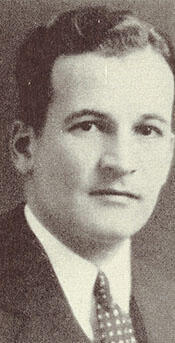
Here you will find contact information for Representative George Bradshaw Kelly, including email address, phone number, and mailing address.
| Name | George Bradshaw Kelly |
| Position | Representative |
| State | New York |
| District | 38 |
| Party | Democratic |
| Status | Former Representative |
| Term Start | January 5, 1937 |
| Term End | January 3, 1939 |
| Terms Served | 1 |
| Born | December 12, 1900 |
| Gender | Male |
| Bioguide ID | K000072 |
About Representative George Bradshaw Kelly
George Bradshaw Kelly (December 12, 1900 – June 26, 1971) was an American politician from New York who served one term as a Democratic Representative from New York in the United States House of Representatives from 1937 to 1939. His congressional service took place during a significant period in American history, amid the New Deal era, when he contributed to the legislative process and represented the interests of his constituents in Rochester and the surrounding communities.
Kelly was born on December 12, 1900, in Waterloo, Seneca County, New York, the son of James P. Kelly and Charlotte Bradshaw Kelly. He attended St. Mary’s School in Waterloo and later Saints Peter and Paul School and West High School in Rochester, New York. Seeking further education while working, he took extension classes at the University of Rochester, reflecting an early commitment to self-improvement and engagement with the civic and economic life of his region.
Before entering public office, Kelly worked in a variety of industrial and commercial positions in Rochester. He was employed by General Railway Signal, the Ritter Dental Company, and the Pfaudler Company, gaining experience in manufacturing and industrial operations. In 1920, he joined Fashion Park, Inc., a men’s clothing company in Rochester, where he rose to become labor manager. In that role he developed close ties with organized labor and the city’s clothing workers, relationships that would later prove central to his political base and electoral success.
Kelly’s formal political career began in the early 1930s. In 1932, he became the first Democrat in more than forty years to win a seat in the New York State Assembly from Monroe County, a notable breakthrough in a traditionally Republican area. He represented Monroe County’s 2nd District in the New York State Assembly in 1933 and 1934. Building on this success, he was elected to the New York State Senate from the 45th District, serving in 1935 and 1936. His rise through state office was closely associated with strong support from labor unions, particularly the Amalgamated Clothing Workers, and from voters in the so‑called “industrial wards” on the east side of Rochester, heavily populated by Italian clothing workers.
In 1936, Kelly challenged and defeated incumbent Congressman James P. B. Duffy in the Democratic primary, a contest that marked a significant setback for the established Democratic organization of Monroe County. The congressional district he sought to represent included almost all of the City of Rochester and the towns of Greece, Irondequoit, Webster, Penfield, Brighton, Perinton, Pittsford, Rush, and Henrietta. Kelly performed especially well in the northeast section of Rochester, notably the 8th and 16th Wards, home to much of the city’s Italian community and clothing industry. A later political analysis noted that Kelly, “who is as Irish as his name,” had learned Italian as a young man, and that his knowledge of the language and his close identification with industrial workers significantly aided his elections to the State Assembly, State Senate, and ultimately Congress.
Kelly was elected as a Democrat to the 75th United States Congress, holding office from January 3, 1937, to January 3, 1939. During his single term in the House of Representatives, he participated in the democratic process at the federal level, contributing to the legislative work of Congress during the later phase of the New Deal. As a member of the House, he represented the interests of his Rochester-area constituents at a time of ongoing economic recovery and political realignment. He sought to continue his service in Washington, running for re-election in 1938 and again in 1940, but on both occasions he was defeated by Republican Joseph J. O’Brien, bringing his congressional career to a close after one term in office.
In his personal life, Kelly married Catherine Weber, a secretary at the Democratic Party headquarters, on December 10, 1936. The couple had one son, James Kelly. His family life remained rooted in the Rochester area, where his earlier professional and political activities had been centered and where he retained enduring ties to labor, ethnic communities, and local Democratic politics.
George Bradshaw Kelly died on June 26, 1971, while on a European vacation in Lyon, France. His career traced a path from industrial employment and labor management in Rochester to service in the New York State Assembly and Senate and ultimately to a term in the United States House of Representatives, where he served as a Democratic Representative from New York from 1937 to 1939.