Representative George John Kindel
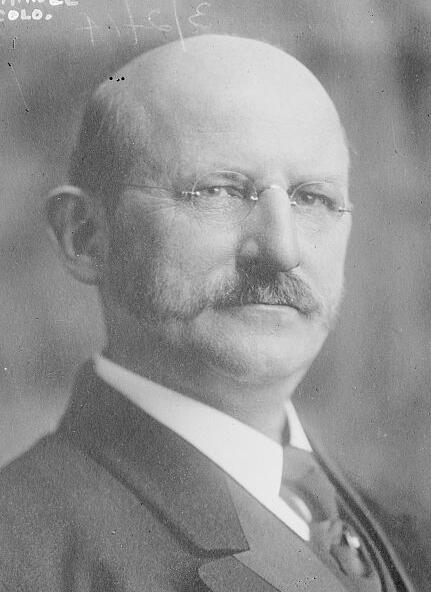
Here you will find contact information for Representative George John Kindel, including email address, phone number, and mailing address.
| Name | George John Kindel |
| Position | Representative |
| State | Colorado |
| District | 1 |
| Party | Democratic |
| Status | Former Representative |
| Term Start | April 7, 1913 |
| Term End | March 3, 1915 |
| Terms Served | 1 |
| Born | March 2, 1855 |
| Gender | Male |
| Bioguide ID | K000189 |
About Representative George John Kindel
George John Kindel (March 2, 1855 – February 28, 1930) was an American politician and businessman from Colorado who served one term as a Democratic Representative in the United States House of Representatives from 1913 to 1915. Over the course of his career, he combined entrepreneurial activity in the upholstery and furniture trade with service in local and national office, representing Colorado during a significant period in American political and economic history.
Kindel was born on March 2, 1855, in Cincinnati, Ohio. He attended the public schools of Cincinnati and continued his education at St. Augustine’s School in that city. Raised in an urban, industrial environment during the post–Civil War era, he entered the workforce at a young age, gaining practical training that would shape his later business career and provide him with experience in the concerns of working people and small manufacturers.
Beginning in 1871, Kindel apprenticed as an upholsterer and mattress maker, learning a skilled trade at a time when craftsmanship and small-scale production were central to local economies. In 1877 he relocated to Denver, Colorado, which was then developing rapidly as a regional center of commerce and transportation. In Denver he established himself in the upholstery, mattress, and furniture business, a line of work in which he remained throughout his life. His long engagement in these enterprises made him a familiar figure in Denver’s commercial community and provided the economic foundation for his later public service.
Kindel’s entry into public life came through local government in Denver. He served as a member of the board of supervisors of the city and county of Denver from 1910 to 1914, participating in the administration and oversight of municipal affairs during a period of urban growth and progressive-era reform. His work on the board of supervisors helped build his political profile and positioned him for higher office, as he became known for representing the interests of his community and engaging in the civic life of the city.
In 1912, Kindel was elected as a Democrat to the Sixty-third Congress, convening from March 4, 1913, to March 3, 1915, representing Colorado in the United States House of Representatives. His service in Congress occurred during a significant period in American history, marked by the early years of the Woodrow Wilson administration and major legislative initiatives in areas such as banking, tariffs, and regulation of business. As a member of the House of Representatives, George John Kindel participated in the democratic process, contributed to the legislative work of the chamber, and represented the interests of his Colorado constituents during his single term in office.
Rather than seek re-election to the House in 1914, Kindel chose to pursue a seat in the United States Senate. He initially ran as a Democratic candidate but subsequently left the party and continued his candidacy as an independent. In the general election, which featured a field of five candidates, Kindel placed fifth, receiving 4.5 percent of the vote. His departure from the Democratic Party and independent bid reflected both the fluidity of party politics in the Progressive Era and his willingness to pursue office outside traditional partisan structures, though the effort ultimately ended his brief tenure in national office.
After leaving Congress, Kindel returned to Colorado and resumed his former business pursuits in the upholstery, mattress, and furniture trade. He continued to reside in the state whose interests he had represented in Washington, maintaining his identity as a businessman even after his congressional service. He remained in Colorado for the rest of his life, connected to the commercial and civic environment in which he had long been active.
On February 28, 1930, Kindel was involved in an automobile accident near Hillrose, Colorado. The injuries he sustained in the accident led to his death in Brush, Colorado, on the same day. He was interred in Fairmount Cemetery in Denver, Colorado. His life reflected the trajectory of a nineteenth-century tradesman who rose through local business and municipal service to a term in the United States Congress, and then returned to private enterprise in the state he had helped to represent at the national level.