Representative George Kremer
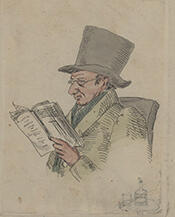
Here you will find contact information for Representative George Kremer, including email address, phone number, and mailing address.
| Name | George Kremer |
| Position | Representative |
| State | Pennsylvania |
| District | 9 |
| Party | Jackson |
| Status | Former Representative |
| Term Start | December 1, 1823 |
| Term End | March 3, 1829 |
| Terms Served | 3 |
| Born | November 21, 1775 |
| Gender | Male |
| Bioguide ID | K000329 |
About Representative George Kremer
George Kremer (November 21, 1775 – September 11, 1854) was an American lawyer and politician who served as a member of the United States House of Representatives from Pennsylvania during the early nineteenth century. Born in Middletown in the Province of Pennsylvania on November 21, 1775, he came of age in the final years of the colonial period and the early national era, experiences that shaped his later political outlook. Little is recorded about his immediate family background, but his early life in Pennsylvania placed him within a region that would become a center of Jacksonian political strength.
Kremer pursued legal studies as a young man and, after reading law in the customary manner of the time, was admitted to the bar. He established his legal practice in Lewisburg, Pennsylvania, where he built a professional reputation that helped launch his public career. His work as an attorney in a growing community in central Pennsylvania provided him with familiarity with local economic and political concerns, which he would later carry into state and national office.
Kremer first entered public office as a member of the Pennsylvania House of Representatives, serving in 1812 and 1813. His tenure in the state legislature coincided with the War of 1812, a period of heightened political debate over national policy, party alignments, and the role of the federal government. Service in the Pennsylvania House gave him legislative experience and visibility within state politics, positioning him for subsequent election to the national legislature.
Kremer was elected to the United States House of Representatives as a Jackson Republican to the Eighteenth Congress and was subsequently reelected as a Jacksonian to the Nineteenth and Twentieth Congresses. He represented Pennsylvania in Congress from 1823 to 1829, serving three consecutive terms during a significant and contentious period in American political history. As a member of the Jackson Party, he aligned himself with the emerging Jacksonian movement, which emphasized expanded political participation for white male voters and skepticism toward entrenched elites. During his years in the House of Representatives, he participated in the legislative process and represented the interests of his Pennsylvania constituents, contributing to debates that helped define the Second Party System.
Kremer is best remembered nationally for his role in the controversy surrounding the presidential election of 1824. He published, anonymously, a letter in the Philadelphia newspaper Columbian Observer accusing Henry Clay of having entered into a “bargain” with John Quincy Adams. According to Kremer’s charges, Clay agreed to throw his support to Adams in the House of Representatives—where the election was ultimately decided—in exchange for being appointed Secretary of State. Kremer’s letter further alleged that Clay had first made a similar offer to Andrew Jackson, who purportedly refused it. Clay vehemently denied the accusations and demanded an official House investigation to clear his name. Although Kremer later acknowledged authorship of the letter and defended its contents, he refused to testify when called before the investigating committee. The “Corrupt Bargain” allegation nonetheless persisted and continued to shadow Clay’s political career for many years.
After leaving Congress in 1829, Kremer withdrew from national office, and while detailed records of his later professional activities are limited, he remained a figure of note within his region of Pennsylvania. His political ideas and his role in the Jacksonian movement later attracted scholarly attention, including analysis in William A. Russ Jr.’s article “The Political Ideas of George Kremer,” published in Pennsylvania History in October 1940. Kremer spent his final years in Middleburg, Pennsylvania, where he maintained ties to the community and his family.
George Kremer died in Middleburg, Pennsylvania, on September 11, 1854. He was interred in the private burial ground on his family estate near Middleburg. His career, spanning service in the Pennsylvania House of Representatives and three terms in the United States Congress, placed him within the formative struggles of the Jacksonian era, and his role in publicizing the “Corrupt Bargain” controversy secured him a lasting, if often controversial, place in American political history.