Representative George Washington Ladd
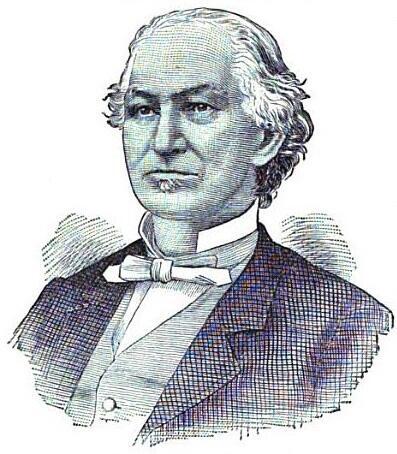
Here you will find contact information for Representative George Washington Ladd, including email address, phone number, and mailing address.
| Name | George Washington Ladd |
| Position | Representative |
| State | Maine |
| District | 4 |
| Party | National Greenbacker |
| Status | Former Representative |
| Term Start | March 18, 1879 |
| Term End | March 3, 1883 |
| Terms Served | 2 |
| Born | September 28, 1818 |
| Gender | Male |
| Bioguide ID | L000013 |
About Representative George Washington Ladd
George Washington Ladd (September 28, 1818 – January 30, 1892) was a U.S. Representative from Maine and a prominent member of the National Greenback Party during the late nineteenth century. He was born on September 28, 1818, in Augusta, in the District of Maine (then part of Massachusetts, now the State of Maine), to Joseph and Sarah (Hamlin) Ladd. Raised in a New England community that was transitioning from frontier conditions to a more settled commercial society, he attended the local common schools, receiving the basic education typical of the period.
Ladd continued his education at Kents Hill Seminary in Readfield, Maine, an institution known for providing advanced instruction beyond the common school level. His schooling there prepared him for a career in business at a time when Maine’s economy was expanding through trade, lumber, and transportation. This educational background, combined with his family’s local roots, helped position him for later prominence in Bangor, one of the state’s leading commercial centers.
After completing his studies, Ladd moved to Bangor, Maine, where he first engaged in the drug business, operating in the pharmaceutical trade that served the city’s growing population. On October 9, 1839, he married Marcia C. P. Ingraham, establishing a household as he advanced in local business circles. Over time he expanded his commercial interests beyond the drug trade, becoming involved in the lumber, commission, and wholesale grocery business in Bangor. These enterprises connected him to the broader regional economy, particularly the lumber industry that was central to Bangor’s prosperity. He also developed an interest in railroad development, reflecting the importance of improved transportation networks to Maine’s commercial growth in the mid-nineteenth century.
Ladd’s business success and civic engagement led him into politics. In 1868 he was the Democratic Party nominee for Maine’s 4th congressional district, an early indication of his ambition for national office, although he was not elected at that time. As economic issues came to the forefront in the post–Civil War era, particularly questions of currency, debt, and relief for farmers and laborers, Ladd aligned himself with the emerging Greenback movement, which advocated an expanded paper currency not backed solely by gold.
As a member of the National Greenbacker Party representing Maine, Ladd contributed to the legislative process during two terms in office. He was elected as a Greenback Party candidate to the Forty-sixth and Forty-seventh Congresses, serving from March 4, 1879, to March 3, 1883. His service in Congress occurred during a significant period in American history marked by economic adjustment after the Civil War, debates over monetary policy, and the rise of third-party movements. Ladd was one of only thirteen successful Greenback Party candidates elected to the Forty-sixth Congress and one of ten elected to the Forty-seventh Congress. In both Congresses he was one of only four Greenback congressmen from the Northeast, as the party’s major strength lay in the Midwest and the South. Within the House of Representatives he held a position of responsibility as chairman of the Committee on Expenditures in the Post Office Department during the Forty-sixth Congress, overseeing aspects of federal spending in a rapidly expanding national postal system.
Ladd’s tenure in Congress was characterized by his participation in the democratic process and his efforts to represent the interests of his constituents in Maine’s 4th district, particularly on issues related to economic reform and government expenditures. Despite his active role, he was an unsuccessful candidate for reelection in 1882 to the Forty-eighth Congress, as the Greenback Party’s influence waned and the political system reverted increasingly to the dominance of the major parties. After leaving Congress on March 3, 1883, he returned to private life in Bangor, where his earlier business interests and community ties remained the foundation of his local standing.
George Washington Ladd died in Bangor, Maine, on January 30, 1892. He was interred in Mount Hope Cemetery in Bangor, a burial place for many of the city’s leading citizens. His career reflected the intersection of commerce and politics in nineteenth-century Maine and illustrated the brief but notable role of the Greenback Party in national affairs during the post–Civil War era.