Representative George Swinton Legaré
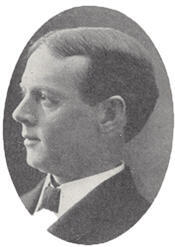
Here you will find contact information for Representative George Swinton Legaré, including email address, phone number, and mailing address.
| Name | George Swinton Legaré |
| Position | Representative |
| State | South Carolina |
| District | -1 |
| Party | Democratic |
| Status | Former Representative |
| Term Start | November 9, 1903 |
| Term End | March 3, 1915 |
| Terms Served | 6 |
| Born | November 11, 1869 |
| Gender | Male |
| Bioguide ID | L000219 |
About Representative George Swinton Legaré
George Swinton Legaré (November 11, 1869 – January 31, 1913) was an American attorney and Democratic politician from South Carolina who served as a Representative in the United States Congress from 1903 until his death in 1913. Over the course of six terms in office, he contributed to the legislative process during a significant period in American history, participating in the democratic process and representing the interests of his constituents in South Carolina.
Legaré was born in Rockville, South Carolina, the son of Edward T. Legaré and Kate (Malcolmson) Legaré. Shortly after his birth, the family moved to Charleston, where he was raised and educated. He attended Porter Military Academy in Charleston, graduating in 1889. His early life in the Lowcountry and in Charleston’s civic and educational environment helped shape his later legal and political career.
Following his preparatory education, Legaré pursued legal studies in South Carolina and the nation’s capital. He studied law at the University of South Carolina for two years before transferring to Georgetown University Law School in Washington, D.C. He completed his legal education at Georgetown, receiving an LL.B. degree in 1893. That same year he was admitted to the bar and commenced the practice of law in Charleston, establishing himself as a member of the city’s legal community.
Legaré’s public career began at the municipal level. From 1898 to 1903, he served as corporation counsel for the city of Charleston, acting as the city’s chief legal officer and advising on municipal affairs, ordinances, and litigation. His work in this capacity increased his visibility in Democratic Party circles and provided experience in public law and administration that would prove valuable in national office.
In 1902, Legaré was elected as a Democrat to the Fifty-eighth Congress, representing South Carolina in the United States House of Representatives. He took his seat on March 4, 1903, and was subsequently reelected to the Fifty-ninth, Sixtieth, Sixty-first, and Sixty-second Congresses, serving continuously from March 4, 1903, until his death on January 31, 1913. During these six terms in Congress, he participated in the legislative deliberations of the early twentieth century, a period marked by progressive reforms, economic change, and evolving national policy. He was also reelected to the Sixty-third Congress and thus to a seventh term, but he died before that term began on March 4, 1913, making him one of the members of the United States Congress who died in office between 1900 and 1949.
Legaré’s congressional service occurred during a transformative era in American political life, and as a member of the House of Representatives he represented the interests of his South Carolina constituents on issues affecting the state and the broader nation. As a Democrat from the South in the post-Reconstruction and Progressive Era, he was part of a regional delegation that played a significant role in debates over economic development, federal authority, and social policy, while maintaining close ties to the political and civic life of Charleston and the surrounding region.
In his personal life, Legaré married Fannie Izlar in 1893, the daughter of Judge James Izlar, thereby linking himself to another prominent South Carolina family. The couple had six children, four of whom were living at the time of his death: Ferdinda, Julia, Hermina, and William. His family life in Charleston paralleled his rising professional and political responsibilities, and his household remained rooted in the community he represented.
George Swinton Legaré died in St. Andrews, near Charleston, South Carolina, on January 31, 1913, while still in office and shortly before the commencement of the Sixty-third Congress to which he had been reelected. He was buried in Magnolia Cemetery in Charleston. His career, spanning local legal service as Charleston’s corporation counsel and a decade in the United States House of Representatives, reflected both his professional commitment to the law and his role in representing South Carolina in the national legislature during a pivotal period in American history.