Representative Mickey Leland
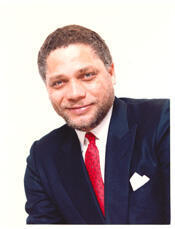
Here you will find contact information for Representative Mickey Leland, including email address, phone number, and mailing address.
| Name | Mickey Leland |
| Position | Representative |
| State | Texas |
| District | 18 |
| Party | Democratic |
| Status | Former Representative |
| Term Start | January 15, 1979 |
| Term End | January 3, 1991 |
| Terms Served | 6 |
| Born | November 27, 1944 |
| Gender | Male |
| Bioguide ID | L000237 |
About Representative Mickey Leland
George Thomas “Mickey” Leland III (November 27, 1944 – August 7, 1989) was an American politician, anti-poverty and hunger-relief activist, and six-term Democratic Representative from Texas, serving in the United States House of Representatives from 1979 until his death in 1989. Representing Texas’s 18th Congressional District, which included the Houston neighborhood in which he grew up, he became nationally known for his advocacy on behalf of the poor, the hungry, children, and the elderly, and for his leadership as chair of the Congressional Black Caucus and of the House Select Committee on Hunger.
Leland was born in Lubbock, Texas, to Alice and George Thomas Leland II. When he was very young, his family moved to Houston’s historically African American Fifth Ward, where he was raised in modest circumstances that helped shape his later commitment to social justice and public health. He attended Phillis Wheatley High School in Houston, a prominent school in the city’s Black community, and graduated in 1964, ranking in the top ten percent of his class. Growing up in a predominantly African American neighborhood during the civil rights era, he was exposed early to the inequities of segregation and poverty that would later become central to his political agenda.
After high school, Leland enrolled at Texas Southern University (TSU) in Houston. During the late 1960s, while pursuing his studies, he emerged as a vocal leader in the Houston-area civil rights movement, helping to bring national civil rights figures to the city and organizing around issues of racial equality and economic opportunity. He graduated from TSU in 1970 with a bachelor’s degree in pharmacy. Immediately after graduation, he joined the faculty of his alma mater as an Instructor of Clinical Pharmacy from 1970 to 1971. In that role, he organized “door-to-door” outreach campaigns in low-income neighborhoods to educate residents about their medical care options and to conduct preliminary health screenings, an early demonstration of the community-based health advocacy that would characterize his career. During the administration of Texas Southern University President Leonard O. Spearman, Leland received an honorary doctorate degree from TSU in recognition of his contributions.
Leland’s formal political career began in the early 1970s, when Texas shifted its State House of Representatives and Senate elections to single-member districts for the first time. In 1972, he joined four other minority candidates—collectively known as the “People’s Five”—in running for newly drawn district seats in the Texas House of Representatives. In a state that had not elected an African American to the legislature since Reconstruction, apart from State Senator Barbara Jordan, Leland’s victory marked a significant milestone. Elected to represent the 88th District, he was re-elected in 1974 and 1976, serving three two-year terms in the Texas House of Representatives. In Austin, he quickly became known as a staunch advocate for healthcare rights for poor Texans. He played a key role in passing legislation that provided low-income consumers with access to affordable generic drugs and supported the expansion of healthcare access through Health Maintenance Organizations (HMOs). To advance these priorities, he served on the Texas State Labor Committee, the State Affairs Committee, the Human Resources Committee, the Legislative Council, and the Subcommittee on Occupational and Industrial Safety. He was elected vice-chairman of the Joint Committee on Prison Reform and became the first African American to serve on a Senate–House Conference Committee as a member of the House Appropriations Committee.
After six years in the Texas Legislature, Leland was elected to the United States House of Representatives in November 1978 as a Democrat from Texas’s 18th Congressional District. He took office in January 1979 and was re-elected easily in 1980, 1982, 1984, 1986, and 1988, serving six two-year terms until his death in 1989. His district encompassed Houston’s inner-city neighborhoods, including the Fifth Ward where he had grown up, and he was widely recognized as a knowledgeable and energetic advocate for health care, children, the elderly, and the poor. His leadership abilities were quickly noticed in Washington: during his first term he was selected as Freshman Majority Whip, and he later served twice as At-Large Majority Whip in the House Democratic leadership. A member of the Democratic Party throughout his career, he also rose to prominence within the Congressional Black Caucus, eventually serving as its chair.
Leland became one of Congress’s most visible and effective advocates on hunger and public health issues. Deeply affected by conditions he witnessed in soup kitchens and makeshift shelters in the United States, he broadened his focus to global hunger as reports of famine in sub-Saharan Africa reached Washington in the early 1980s. Working with Representative Ben Gilman of New York, he co-authored legislation establishing the House Select Committee on Hunger. When the committee was created in 1984, Speaker of the House Thomas P. “Tip” O’Neill Jr. appointed Leland as its chairman. Although the Select Committee had no direct legislative jurisdiction, it was charged with conducting a continuing, comprehensive study and review of hunger and malnutrition, and it provided, for the first time, a single institutional focus for hunger-related issues in the House. Under Leland’s leadership, the committee drew national and international attention to hunger, and he used his personal moral authority and media presence to elevate complex issues of food security and poverty. His legislative initiatives helped create the National Commission on Infant Mortality, expanded access to fresh food for at-risk women, infants, and children, and supported some of the first comprehensive services for the homeless at the federal level.
Leland’s concern for the hungry soon extended far beyond U.S. borders. In response to acute famine in Ethiopia, Sudan, and other parts of sub-Saharan Africa, Speaker O’Neill asked him to lead a bipartisan congressional delegation to assess conditions and relief needs. Upon returning, Leland worked with entertainment figures, religious leaders, and private voluntary organizations to build public support for the Africa Famine Relief and Recovery Act of 1985, which authorized approximately $800 million in food and humanitarian relief supplies. The heightened international attention he generated contributed to additional non-governmental efforts that helped save thousands of lives. He also engaged directly with world leaders, meeting Pope John Paul II to discuss food aid to Africa and Cuban President Fidel Castro to address the reunification of Cuban families. As part of the first congressional delegation led by a Speaker of the House to Moscow in the post–Cold War era, he proposed a joint U.S.–Soviet food initiative for Mozambique. As chair of the Congressional Black Caucus, he broadened the caucus’s reach by presenting its first awards to non-Black recipients, honoring rock musician Bob Geldof for his Band Aid famine-relief efforts and news anchor Ted Koppel for his coverage of the African famine. Known for embracing and promoting Afrocentric cultural expression in Washington, Leland often wore dashikis and African-style hats, symbolizing his identification with Africa and the African diaspora.
In addition to his work on hunger, Leland was active on a wide range of domestic policy issues. While chairing the House Select Committee on Hunger, he served on the Committee on Energy and Commerce, including its Subcommittees on Telecommunications and Finance, Health and the Environment, and Energy and Power. He also chaired the Subcommittee on Postal Operations and Services and served on the Committee on Post Office and Civil Service and its Subcommittee on Compensation and Employment. Through these assignments, he addressed matters ranging from public health and environmental regulation to communications policy, postal services, and federal employment practices. His ability to build coalitions and to reach out to unlikely allies was widely regarded as central to his effectiveness in advancing policies benefiting the poor and minorities.
In his personal life, Leland married Alison Clarke Walton (born 1959) in 1983. The two had met the previous year at a Capitol Hill reception while she was in her first semester at Georgetown University Law Center. Encouraged by friends to approach him about an internship, she soon developed a relationship with Leland, and their first date was a dinner at the home of then-Representative Al Gore. The couple had three sons: Jarrett David, born February 6, 1986, and twins Austin Mickey and Cameron George, born January 14, 1990, after Leland’s death. Leland was a practicing Catholic, and his faith informed much of his humanitarian outlook and his emphasis on service to the poor and vulnerable.
On August 7, 1989, while still in office, Leland died in a plane crash near Gambela, Ethiopia, during a mission to Fugnido, Ethiopia, to inspect refugee and famine-relief operations. Sixteen people were killed in the crash, including the acclaimed writer Maria Thomas. His death ended a congressional career that had spanned six terms and a decade of service in the U.S. House of Representatives. In December 1989, his friend and former colleague in the Texas Legislature, Craig Washington, was elected to fill his unexpired congressional term. Leland’s passing placed him among the members of the United States Congress who died in office in the latter half of the twentieth century and prompted tributes in Congress and beyond to his work on behalf of the hungry and the poor.
In the years following his death, numerous buildings, programs, and initiatives were named in Leland’s honor, reflecting the breadth of his impact. In Houston, a federal building in the downtown area was named for him; it has served as the congressional headquarters for one of his successors, Representative Sheila Jackson Lee. The international terminal (Terminal D) at George Bush Intercontinental Airport in Houston also bears his name, as does the Mickey Leland College Preparatory Academy for Young Men and the Barbara Jordan–Mickey Leland School of Public Affairs at Texas Southern University. Internationally, a street and a condominium village in Addis Ababa, Ethiopia, and the Mickey Leland Primary School in Addis Ababa commemorate his work on African famine relief. The U.S. Agency for International Development created the Leland Initiative to improve internet connectivity in Africa, and the Texas Commission on Environmental Quality established the Mickey Leland Environmental Internship Program. The Department of Energy’s Minority Education Initiative was renamed the Mickey Leland Energy Fellowship, and many other government programs, fellowships, and academic organizations have also been dedicated in his memory. His life and work have been the subject of cultural and scholarly attention, including a song about him on singer-songwriter Pierce Pettis’s 1991 album “Tinseltown” and the historical study “In This Land of Plenty: Mickey Leland and Africa in American Politics” by Benjamin Talton, underscoring his enduring legacy in both American politics and international humanitarian efforts.