Representative George Richard Lunn
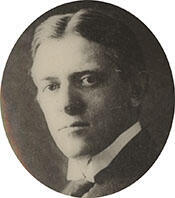
Here you will find contact information for Representative George Richard Lunn, including email address, phone number, and mailing address.
| Name | George Richard Lunn |
| Position | Representative |
| State | New York |
| District | 30 |
| Party | Democratic |
| Status | Former Representative |
| Term Start | April 2, 1917 |
| Term End | March 3, 1919 |
| Terms Served | 1 |
| Born | June 23, 1873 |
| Gender | Male |
| Bioguide ID | L000518 |
About Representative George Richard Lunn
George Richard Lunn (June 23, 1873 – November 27, 1948) was an American Spanish–American War veteran, clergyman, and politician from New York who became a prominent figure in early twentieth-century reform politics. He was the first Socialist mayor in the state of New York, served as a U.S. Representative from New York from 1917 to 1919, and later held statewide office as lieutenant governor of New York from 1923 to 1924. A member of the Democratic Party during his congressional service, Lunn contributed to the legislative process during one term in the United States House of Representatives at a time of significant national and international upheaval.
Lunn was born on June 23, 1873, and came of age in an era marked by rapid industrialization and growing concern over urban poverty and labor conditions. As a young man he served in the Spanish–American War, an experience that helped shape his sense of public duty and exposed him to the broader social and political issues of his time. After his military service he pursued religious training and entered the ministry, becoming a clergyman deeply influenced by the emerging social gospel movement, which emphasized the application of Christian ethics to social and economic problems.
Closely concerned with matters of ethics, inequality, and poverty, Lunn became a Christian socialist and began to testify to the social gospel from the pulpit. He believed that religious faith demanded engagement with structural causes of suffering, and he increasingly saw political action as a necessary extension of his ministry. Seeking to eliminate poverty and improve conditions for working people through systemic reform, he joined the Socialist Party of America. His religious background and oratorical skills made him a compelling advocate for municipal reform and social justice within the party.
Lunn’s political career took a decisive turn in 1911, when he was elected mayor of Schenectady, New York, at the head of the local Socialist ticket, becoming the first Socialist mayor in the state of New York. His first term ran from 1911 to 1913 and was marked by a practical, reform-oriented agenda that later came to be associated with “sewer socialism.” He promoted the expansion of the city’s parks and playgrounds, the establishment of city health centers, improvements in the public school system, and more efficient garbage collection and sanitation services. These initiatives reflected his belief that municipal government should directly improve the daily lives and health of its residents.
During his first term as mayor, Lunn became involved in a notable free-speech and labor dispute. Invited to speak in support of a strike then in progress in Little Falls, New York, he accepted the offer but was denied permission by local officials to address the public in a city park. Determined to proceed, Lunn attempted to speak by reading from Abraham Lincoln’s Gettysburg Address. He was arrested along with three others on charges of “inciting to riot,” an episode that drew public attention to civil liberties and labor rights. The charges were later dropped after tensions in the community subsided. Lunn left office in 1913 but was returned to the mayoralty for a second two-year term in 1915, again running on the Socialist Party ticket. During this second term, his record of municipal reform and his growing prominence led officials of the Democratic Party to approach him and invite him to switch parties in order to seek higher office.
Lunn subsequently aligned himself with the Democratic Party and ran for the United States House of Representatives from New York. He was elected as a Democrat and served as a Representative from New York in the United States Congress from 1917 to 1919. His single term in Congress coincided with the American entry into World War I and the associated debates over national security, civil liberties, and economic mobilization. As a member of the House of Representatives, Lunn participated in the democratic process and represented the interests of his constituents during this significant period in American history, contributing to the legislative work of the 65th Congress. After leaving the House in 1919, he remained active in Democratic politics and public affairs.
Lunn’s continued prominence in New York politics led to his election as lieutenant governor of New York, a position he held from 1923 to 1924. In that statewide office he served as the presiding officer of the New York State Senate and played a supporting role in the administration’s legislative program during a period of postwar adjustment and economic change. His trajectory from Socialist municipal reformer to Democratic statewide official reflected both his personal evolution and the fluid political alignments of the era.
In his private life, Lunn married Mabel Healy of Brooklyn, with whom he raised five children. Widowed in 1931, he remarried the following year, wedding Anita Oliver Jensen of California in 1932. In his later years he retired from active public life and moved to Del Mar, California. George Richard Lunn died there on November 27, 1948. He was buried at Forest Lawn Memorial Park in Glendale, California, closing a career that had spanned the pulpit, the mayor’s office, the halls of Congress, and the executive branch of New York State government.