Representative George Roland Malby
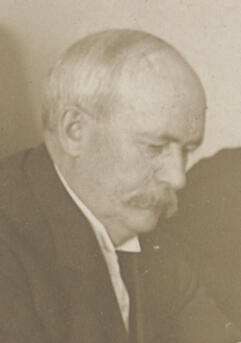
Here you will find contact information for Representative George Roland Malby, including email address, phone number, and mailing address.
| Name | George Roland Malby |
| Position | Representative |
| State | New York |
| District | 26 |
| Party | Republican |
| Status | Former Representative |
| Term Start | December 2, 1907 |
| Term End | March 3, 1913 |
| Terms Served | 3 |
| Born | September 16, 1857 |
| Gender | Male |
| Bioguide ID | M000077 |
About Representative George Roland Malby
George Roland Malby (September 16, 1857 – July 5, 1912) was an American lawyer and Republican politician from New York who served in the New York State Assembly and Senate before representing his state in the United States House of Representatives from 1907 until his death in 1912. Over the course of three terms in Congress, he participated actively in the legislative process during a significant period in American political and social history, representing the interests of his constituents in northern New York.
Malby was born on September 16, 1857, in Canton, St. Lawrence County, New York. He attended the local Canton Union School, receiving his early education in the public schools of the region. He subsequently enrolled at St. Lawrence University in Canton, where he pursued higher education before turning to the study of law. His upbringing and education in St. Lawrence County rooted him firmly in the civic and political life of northern New York, a connection that would shape his later public career.
After completing his legal studies, Malby was admitted to the bar in 1881. He commenced the practice of law in Ogdensburg, New York, a key commercial center on the St. Lawrence River. In addition to his legal practice, he entered local public service as justice of the peace in the town of Oswegatchie, New York. This early judicial and municipal experience provided him with practical exposure to the administration of law and local governance, and it helped establish his reputation as a capable attorney and public official in St. Lawrence County.
Malby’s state-level political career began with his election to the New York State Assembly, where he represented St. Lawrence County from 1891 through 1895. During his tenure in the Assembly, he quickly rose in influence within the Republican Party. He served as Minority Leader in 1893, demonstrating his leadership among Republican legislators when the party was out of power. In 1894 he was chosen Speaker of the New York State Assembly, one of the most powerful positions in state government, presiding over legislative proceedings and playing a central role in shaping the Assembly’s agenda. He continued in the Assembly through 1895, consolidating his standing as a prominent Republican figure in New York.
Following his service in the Assembly, Malby was elected to the New York State Senate from the 32nd District, serving from 1896 to 1906. During this period he sat in the 119th through the 129th New York State Legislatures, participating in more than a decade of continuous legislative work. His long tenure in the Senate reflected both his political durability and his influence within state government. As a senator, he was involved in the consideration of a wide range of legislative issues confronting New York at the turn of the twentieth century, further enhancing his profile as a seasoned lawmaker.
Building on his extensive state legislative experience, Malby was elected as a Republican to the United States House of Representatives. He won election to the Sixtieth Congress and was subsequently re-elected to the Sixty-first and Sixty-second Congresses, holding office from March 4, 1907, until his death. His service in Congress thus extended over three terms, from 1907 to 1912, a period marked by Progressive Era reforms and significant debates over domestic and foreign policy. As a member of the House of Representatives, Malby contributed to the legislative process and participated in the democratic governance of the nation, representing the interests of his New York constituents in Washington.
During his congressional service, Malby took positions that occasionally set him apart from his colleagues. On December 13, 1911, he was the sole dissenter when the House of Representatives voted 300–1 to terminate diplomatic relations with Russia in response to that nation’s discrimination against Jews. His lone vote against the measure underscored his independence of judgment and willingness to stand apart from overwhelming majorities in matters of foreign policy and international relations. His congressional career unfolded during a significant period in American history, and he played a role in the national legislative debates of his time.
George Roland Malby died in office on July 5, 1912, while serving in the Sixty-second Congress. His death placed him among the members of the United States Congress who died in office in the early twentieth century. He was interred at Ogdensburg Cemetery in Ogdensburg, New York, reflecting his long-standing ties to the community where he had practiced law and built his political career. Memorial addresses honoring Malby’s life and service were later delivered in the House of Representatives and the Senate, and his career is recorded in the Biographical Directory of the United States Congress.