Representative George Deardorff McCreary
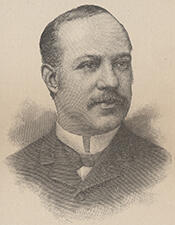
Here you will find contact information for Representative George Deardorff McCreary, including email address, phone number, and mailing address.
| Name | George Deardorff McCreary |
| Position | Representative |
| State | Pennsylvania |
| District | 6 |
| Party | Republican |
| Status | Former Representative |
| Term Start | November 9, 1903 |
| Term End | March 3, 1913 |
| Terms Served | 5 |
| Born | September 28, 1846 |
| Gender | Male |
| Bioguide ID | M000381 |
About Representative George Deardorff McCreary
George Deardorff McCreary (September 28, 1846 – July 26, 1915) was an American politician and businessman from Pennsylvania who served as a Republican member of the U.S. House of Representatives for Pennsylvania’s 6th congressional district from 1903 to 1913. Over the course of five consecutive terms in Congress, he represented his Philadelphia-area constituents during a significant period in American political and economic history, contributing to the legislative process as a member of the House of Representatives.
McCreary was born on September 28, 1846, in York Springs, Adams County, Pennsylvania, to John B. McCreary and Rachel Deardorff. During his youth, he moved with his parents to Philadelphia, where he was educated in the city’s schools. He attended the Saunders Military Institute, from which he graduated in 1864. That same year he entered the University of Pennsylvania, pursuing higher education in Philadelphia. He remained at the university until 1867, when he left during his junior year to enter the coal business, joining the Honey Brook Coal Company, of which his father was president. This early decision to leave college for commercial pursuits marked the beginning of a long career in industry and finance.
McCreary’s professional life in the coal trade developed steadily in the years following his departure from the University of Pennsylvania. From 1870 to 1879 he was employed with Whitney, McCreary & Kemmerer, a wholesale coal merchant firm, where he gained extensive experience in the coal industry and in large-scale commercial operations. After the death of his father, he advanced further in the field, becoming a director of the Upper Lehigh Coal Company and the Nescopec Coal Company, both important enterprises in Pennsylvania’s anthracite coal region. In addition to his coal interests, McCreary entered the banking sector, serving as vice president of the Market Street National Bank in Philadelphia, thereby extending his influence into the city’s financial community.
On June 18, 1878, McCreary married Kate R. Howell, establishing a family life in Philadelphia alongside his growing business and civic responsibilities. He became increasingly involved in public affairs and municipal finance, and in November 1891 he was elected treasurer of the city and county of Philadelphia. In this capacity he served from 1891 to 1895, overseeing the fiscal operations of one of the nation’s largest cities during a period of urban growth and industrial expansion. His performance in this office, combined with his business background, helped to solidify his reputation as a capable administrator and Republican Party figure in Pennsylvania.
Building on his municipal service, McCreary was elected as a Republican to the Fifty-eighth Congress and to the four succeeding Congresses, serving in the U.S. House of Representatives from March 4, 1903, to March 3, 1913. Representing Pennsylvania’s 6th congressional district, he participated in the democratic process at the national level during the Progressive Era, a time of significant debate over economic regulation, banking reform, and social policy. During the Sixty-first Congress he served as chairman of the United States House Committee on Ventilation and Acoustics, a committee concerned with the physical conditions of the Capitol and its chambers. He also served on the Banking and Currency Commission, reflecting his expertise and interest in financial matters. After five terms in office, he chose not to be a candidate for renomination in 1912, thus concluding a decade of continuous congressional service.
Beyond his official duties, McCreary was active in charitable and civic organizations in Philadelphia. He supported several philanthropic endeavors, including sponsorship of a tea service at the Sunday Breakfast Rescue Mission homeless shelter, and contributed to the work of the Red Bank Sanatorium, the Whosoever Will Mission, and the Pennsylvania Humane Society. He also held leadership roles in cultural and reform institutions, serving as treasurer of the Philadelphia Sketch Club, an important artists’ organization, and as vice president of the Franklin Reformatory School, reflecting his interest in education and social betterment.
George Deardorff McCreary died on July 26, 1915, in Philadelphia, Pennsylvania. He was interred in Laurel Hill Cemetery, one of the city’s historic burial grounds. His life encompassed significant contributions to Pennsylvania’s coal and banking industries, municipal finance in Philadelphia, and national legislative affairs during his ten years in the U.S. House of Representatives.