Bios     George Meader

Representative George Meader
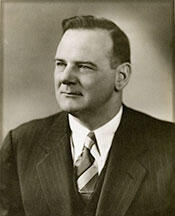
Republican | Michigan

Representative George Meader - Michigan Republican

Here you will find contact information for Representative George Meader, including email address, phone number, and mailing address.

NameGeorge Meader
PositionRepresentative
StateMichigan
District2
PartyRepublican
StatusFormer Representative
Term StartJanuary 3, 1951
Term EndJanuary 3, 1965
Terms Served7
BornSeptember 13, 1907
GenderMale
Bioguide IDM000620
Representative George Meader
George Meader served as a representative for Michigan (1951-1965).

About Representative George Meader


William George Meany (August 16, 1894 – January 10, 1980) was an American labor union administrator for 57 years and a vital figure in the creation of the American Federation of Labor and Congress of Industrial Organizations (AFL–CIO), serving as its first president from 1955 to 1979. Over the course of his long career, he became one of the best-known union leaders in the United States during the mid‑twentieth century, noted for his integrity, his consistent opposition to corruption in the labor movement, and his strong anticommunism. His public prominence and influence on national policy made him a central figure in American labor and political life for more than a generation.

Meany was born into a Roman Catholic family in Harlem, New York City, on August 16, 1894, the second of ten children of Michael Meany and Anne Cullen Meany, both American-born and of Irish descent. His ancestors had immigrated to the United States in the 1850s. His father, a plumber who served as president of his plumber’s union local and was a precinct-level activist in the Democratic Party, provided an early model of union and political engagement. When Meany was five, the family moved to the Port Morris neighborhood of The Bronx, where he grew up. Always called “George,” he later learned that his legal first name was William only when he applied for a work permit as a teenager. He attended local schools but quit high school at age sixteen to become a plumber like his father, beginning as a plumber’s helper and then serving a five-year apprenticeship. In 1917 he received his journeyman’s certificate from Local 463 of the United Association of Plumbers and Steamfitters of the United States and Canada.

Family responsibilities shaped Meany’s early adulthood. His father died of heart failure in 1916 after a bout of pneumonia, and when Meany’s older brother joined the U.S. Army in 1917, he became the sole source of income for his mother and six younger siblings. To supplement his wages as a plumber, he briefly played semiprofessional baseball as a catcher. In 1919 he married Eugenia McMahon, a garment worker and member of the International Ladies Garment Workers Union; the couple had three daughters and remained married for fifty‑nine years, until her death in March 1979. These early experiences in a working‑class, union‑oriented household, combined with his own trade background, informed his lifelong identification with organized labor and the economic concerns of ordinary workers.

Meany’s rise within the labor movement began at the local level. In 1920 he was elected to the executive board of Plumbers Local 463, and in 1922 he became a full‑time business agent for the local, which then had about 3,600 members. He later remarked that he had never walked a picket line during his plumber’s union days, explaining that his local had not needed to picket because employers did not attempt to replace the workers. His administrative skills and negotiating ability led to broader responsibilities. In 1923 he was elected secretary of the New York City Building Trades Council, the citywide federation of construction unions. In that role he gained attention in 1927 by winning a court injunction against an industry lockout, an innovative legal tactic for unions at the time and one that was initially opposed by many older labor leaders.

By the mid‑1930s Meany had become a prominent figure in New York labor politics. In 1934 he was elected president of the New York State Federation of Labor, the statewide coalition of trade unions. During his first year lobbying in Albany, seventy‑two bills he promoted were enacted into law, and he developed a close working relationship with Governor Herbert H. Lehman. Meany acquired a reputation for honesty, diligence, and effectiveness in legislative testimony and in dealing with the press. In 1936 he helped cofound the American Labor Party, a pro‑union political party active in New York, along with David Dubinsky and Sidney Hillman, partly to mobilize union and socialist support for the reelection of President Franklin D. Roosevelt and New York City mayor Fiorello La Guardia. His success in state and city labor politics led to his recruitment to the national labor leadership.

In 1939 Meany relocated to Washington, D.C., to become national secretary‑treasurer of the American Federation of Labor (AFL), serving under AFL president William Green. During World War II he was one of the AFL’s permanent representatives to the National War Labor Board, where he helped shape wartime labor policy and forged close relationships with prominent anticommunist labor leaders such as David Dubinsky, Jay Lovestone, and Matthew Woll. In October 1945 he organized the AFL boycott of the founding conference of the World Federation of Trade Unions, which welcomed Soviet participation and was later criticized as a communist front. In the postwar years, as Congress passed the Taft–Hartley Act of 1947, Meany supported the requirement that union officials sign noncommunist affidavits, declaring that he would “go further and sign an affidavit that I was never a comrade to the comrades,” underscoring his longstanding opposition to communist influence in unions. When Green’s health declined in 1951, Meany gradually assumed day‑to‑day control of the AFL and became its president upon Green’s death in 1952.

As AFL president, Meany quickly turned to the question of unifying the divided American labor movement. In 1952 he proposed a merger of the AFL with the Congress of Industrial Organizations (CIO) and then managed the complex negotiations over the next three years. He worked closely, though often contentiously, with CIO president Walter Reuther to bring about the merger, overcoming opposition from powerful figures such as John L. Lewis of the United Mine Workers, Jimmy Hoffa of the Teamsters, and Mike Quill of the Transport Workers Union. To avoid protracted disputes, Meany adopted what he called a “short route” to reconciliation, agreeing that all AFL and CIO unions would enter the new federation “as is,” with jurisdictional conflicts to be resolved later. The draft constitution was largely written by AFL vice president Matthew Woll and CIO general counsel Arthur Goldberg, while joint policy statements were crafted by leaders from both federations. The merger was consummated at a joint convention in New York City in December 1955, creating the AFL–CIO with some 15 million members, and Meany was elected its first president. Time magazine later termed the merger his “greatest achievement.” He continued as AFL–CIO president for the next twenty‑four years, until his retirement in November 1979.

Throughout his national leadership, Meany cultivated a reputation for integrity and for vigorous opposition to corruption and organized crime within unions. In 1953 the International Longshoremen’s Association, accused of racketeering, was expelled from the AFL; after internal reforms it was readmitted to the AFL–CIO in 1959. Beginning in 1952 he pressed for reforms in the United Textile Workers of America and in 1957 publicly reported that the union’s president had stolen more than $250,000, appointing an independent monitor to oversee its reorganization. Concerned about corruption and criminal influence in the International Brotherhood of Teamsters under Dave Beck and later Jimmy Hoffa, Meany supported investigations by the Senate Select Committee on Improper Activities in Labor and Management, known as the McClellan Committee. After televised hearings in 1957 exposed misconduct in both factions of the Teamsters, the AFL–CIO adopted a policy barring from leadership any union official who had invoked the Fifth Amendment in a corruption inquiry. When Hoffa refused to resign as Teamsters president, the union was expelled from the AFL–CIO on December 6, 1957. Meany subsequently backed a formal code of ethics and created an AFL–CIO Committee on Ethical Practices to investigate wrongdoing in affiliated unions, insisting on cooperation and, where necessary, organizing expulsions or rival unions. His campaigns extended to the International Jewelry Workers Union, the Laundry Workers International Union, the Distillery Workers, the United Auto Workers within the AFL, and the Bakery and Confectionery Workers International Union. Scholars later noted that few American labor leaders had such a sustained public record of opposition to corruption.

Meany’s tenure at the head of the AFL–CIO coincided with major developments in U.S. domestic politics and foreign policy, and he played an active role in both. A staunch anticommunist, he strongly supported President Lyndon B. Johnson’s Vietnam War policies and in 1966 insisted that AFL–CIO unions give “unqualified support” to the administration’s war effort. He clashed with labor leaders who opposed the war, including Ralph Helstein, George Burdon, Patrick Gorman, and Charles Cogen, and he criticized the New Left and antiwar demonstrators, describing protesters at the 1968 Democratic National Convention as a “dirtynecked and dirty‑mouthed group of kooks.” In the 1972 presidential election he opposed the antiwar candidacy of Senator George McGovern, whom he accused of being “an apologist for the Communist world,” yet he also declined to endorse President Richard Nixon. Meany argued that no country had ever freely voted for communism and welcomed Nixon’s landslide victory as a repudiation of “neo‑isolationism,” while noting that voters continued to support Democrats in Congress. He maintained his support for the Vietnam War until its final days, urging President Gerald Ford to use a U.S. Navy flotilla to assist the evacuation of South Vietnamese allies and calling for the admission of as many Vietnamese refugees as possible. He blamed Congress for cutting off aid and thereby weakening South Vietnam’s ability and will to fight.

On domestic policy, Meany often supported ambitious social and economic reforms associated with the Great Society. Under his leadership, the AFL–CIO endorsed industrial democracy and in 1965 backed a resolution calling for mandatory congressional price hearings for corporations, a technological clearinghouse, and a national planning agency—positions some observers compared to earlier socialist proposals, even as Meany himself emphasized his belief in the free market system. He advocated increases in the minimum wage, expanded public works spending, protection of union organizing rights, and universal health care. At the same time, he acknowledged that organized labor had become more middle class and, in some respects, more conservative as workers acquired homes and property. He remained committed to the two‑party system and to the strategy of “supporting your friends and punishing your enemies” in electoral politics.

Meany’s relationships with other labor leaders were often complex. Despite their cooperation in the AFL–CIO merger, he and Walter Reuther had a contentious relationship in the 1960s. Meany opposed a formal AFL–CIO endorsement of the 1963 March on Washington for Jobs and Freedom, while Reuther strongly supported it. At an executive council meeting on August 12, 1963, Reuther’s motion for a strong endorsement was backed only by A. Philip Randolph. As a compromise, the federation endorsed civil rights legislation and allowed individual unions to support the march. Meany was reportedly moved by Randolph’s speech at the march and later supported the creation of the A. Philip Randolph Institute to strengthen ties between organized labor and African Americans. Randolph believed Meany was morally opposed to racism, even if he sometimes moved cautiously on civil rights issues. By 1967, Reuther was pressing for more internal democracy within the AFL–CIO; he resigned from the executive council that year, and in 1968 the United Auto Workers withdrew from the federation, not reaffiliating until after both men had died.

In his later years, Meany remained a powerful, if aging, presence in American labor. By the mid‑1970s, after his eightieth birthday, there were increasing calls for him to retire and pass leadership of the AFL–CIO to a younger generation. He developed hobbies such as amateur photography and painting, and he continued to engage in public events, including hosting Soviet dissident writer Alexander Solzhenitsyn during a 1975 visit to the United States and introducing him at a widely noted dinner in his honor. President John F. Kennedy had established the Presidential Medal of Freedom on February 22, 1963, but died before presenting it; on December 6, 1963, two weeks after Kennedy’s assassination, President Lyndon B. Johnson awarded the medal to Meany and thirty others for their service, citing Meany’s contributions to unionism and to the advancement of freedom worldwide. On November 6, 1974, Meany dedicated the George Meany Center for Labor Studies, founded in 1969 and later renamed the National Labor College, which from 1993 to 2013 housed the George Meany Memorial Archives. Those archives, transferred in 2013 to the University of Maryland, preserve extensive records of the AFL and AFL–CIO, including millions of documents, photographs, audio recordings, films, and artifacts.

Meany retired from the presidency of the AFL–CIO in November 1979, concluding a 57‑year career in organized labor. His wife Eugenia’s death earlier that year left him deeply depressed, and a knee injury from a golfing accident left him reliant on a wheelchair in his final months. William George Meany died of cardiac arrest at George Washington University Hospital in Washington, D.C., on January 10, 1980. At the time of his death, the AFL–CIO had approximately 14 million members. President Jimmy Carter described him as “an American institution” and “a patriot.” Meany was interred at Gate of Heaven Cemetery in Silver Spring, Maryland. His public image, often captured in photographs with a cigar in hand, became emblematic of mid‑century American trade unionism. His legacy has been commemorated in various ways, including the George Meany Award established by the Boy Scouts of America in 1974, a 1994 U.S. commemorative postage stamp issued on the 100th anniversary of his birth, and several major biographies, among them Meany: The Unchallenged Strong Man of American Labor (1972) and George Meany and His Times: A Biography (1981).