Senator George Higgins Moses
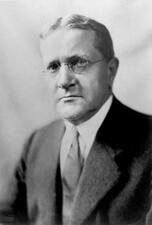
Here you will find contact information for Senator George Higgins Moses, including email address, phone number, and mailing address.
| Name | George Higgins Moses |
| Position | Senator |
| State | New Hampshire |
| Party | Republican |
| Status | Former Representative |
| Term Start | November 6, 1918 |
| Term End | March 3, 1933 |
| Terms Served | 3 |
| Born | February 9, 1869 |
| Gender | Male |
| Bioguide ID | M001028 |
About Senator George Higgins Moses
George Higgins Moses (February 9, 1869 – December 20, 1944) was a U.S. diplomat and political figure who became a leading Republican senator from New Hampshire and served as President pro tempore of the United States Senate. His congressional service, which extended from 1918 to 1933, spanned a transformative era in American history that included the final months of World War I, the interwar period, and the onset of the Great Depression.
Moses was born on February 9, 1869, in Lubec, Washington County, Maine. He moved with his family to New Hampshire at a young age and was raised in that state, which he would later represent in the Senate. Details of his early family life are relatively sparse in the public record, but his subsequent education and professional pursuits reflected the opportunities and political culture of New England in the late nineteenth century.
Moses pursued higher education at Dartmouth College in Hanover, New Hampshire, one of the region’s leading institutions. He graduated from Dartmouth in 1890. His education there provided him with a classical grounding in the liberal arts and exposed him to the civic and political currents of the time, preparing him for a career that would combine journalism, public service, and politics. Following his graduation, he became active in public affairs in New Hampshire, laying the foundation for his later national prominence.
Before entering the United States Senate, Moses built a career that included both political and diplomatic responsibilities. He was associated with journalism and political organization in New Hampshire and became involved in Republican Party activities at the state level. His work and connections led to federal diplomatic service; he served as a U.S. diplomat, a role that placed him within the broader framework of American foreign relations in the early twentieth century. This diplomatic experience, combined with his party work, enhanced his profile as a capable representative of New Hampshire’s interests on the national stage.
Moses entered the United States Senate in 1918 as a Republican senator from New Hampshire, beginning a congressional career that would last until 1933. He served three terms in office, representing his state during a period marked by the conclusion of World War I, the debates over the Treaty of Versailles and the League of Nations, the prosperity of the 1920s, and the economic crisis that began with the stock market crash of 1929. As a member of the Senate, George Higgins Moses participated in the legislative process and the broader democratic governance of the nation, working to represent the interests of his New Hampshire constituents while engaging with national policy questions characteristic of the era.
Within the Senate, Moses rose to a position of particular institutional importance when he was chosen as President pro tempore, one of the chamber’s highest leadership offices and, by tradition, a role often accorded to senior members of the majority party. In that capacity, he presided over Senate proceedings in the absence of the Vice President and played a part in guiding the legislative agenda and maintaining order and continuity in the Senate’s work. His tenure in this role underscored his standing among his colleagues and his influence within the Republican Party during the interwar years.
After leaving the Senate in 1933, following the conclusion of his third term, Moses remained a notable figure in Republican and public affairs, drawing on his long experience in both diplomacy and legislative service. He lived through the New Deal era and the early years of World War II, witnessing further changes in the federal government’s role and in international relations that built upon the period in which he had served. George Higgins Moses died on December 20, 1944. His career left a record of sustained participation in the political and diplomatic life of the United States, particularly through his fifteen years in the Senate and his service as its President pro tempore.