Senator George Stuart Nixon
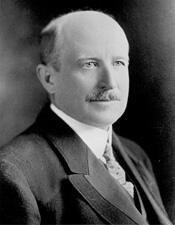
Here you will find contact information for Senator George Stuart Nixon, including email address, phone number, and mailing address.
| Name | George Stuart Nixon |
| Position | Senator |
| State | Nevada |
| Party | Republican |
| Status | Former Representative |
| Term Start | December 4, 1905 |
| Term End | March 3, 1913 |
| Terms Served | 2 |
| Born | April 2, 1860 |
| Gender | Male |
| Bioguide ID | N000114 |
About Senator George Stuart Nixon
George Stuart Nixon (April 2, 1860 – June 5, 1912) was an American entrepreneur and Republican politician who served as a United States Senator from Nevada from 1905 until his death in 1912. His congressional service, which spanned two terms in office, occurred during a significant period in American history and reflected his role in representing the interests of his Nevada constituents in the federal legislative process.
Nixon was born on April 2, 1860, in Newcastle, California. As a young man he went to work for a railroad company, where he studied and practiced telegraphy, gaining technical skills that were in high demand in the expanding transportation and communications networks of the late nineteenth century. His early employment with the railroad industry provided him with both practical experience and connections that would facilitate his later move into finance and business in the American West.
In 1881, Nixon was transferred by the railroad to Nevada, a relocation that proved decisive for his career. Settling in Winnemucca, he organized and became cashier of a bank there, marking the beginning of his prominence as an entrepreneur in the state’s developing economy. Beyond banking, he invested in cultural and commercial infrastructure, building an opera house in Reno and a theater in Winnemucca, and he was one of the principal financiers of the Mizpah Hotel in Tonopah, Nevada, a notable establishment associated with the region’s mining boom. These ventures underscored his role in the economic and civic development of Nevada communities.
Nixon’s public career began at the state level. He became a member of the Nevada Assembly in 1891, entering elective office at a time when the state was grappling with issues of mining, transportation, and economic diversification. His legislative experience in Carson City helped establish his reputation as a Republican leader and prepared him for national office. Through his combined business and political activities, he emerged as a significant figure in Nevada’s public life by the turn of the twentieth century.
In 1905, Nixon was elected as a Republican to the United States Senate from Nevada, beginning his first term in the Sixty-first Congress. He was re-elected in 1911, thus embarking on a second term and serving in the Senate from 1905 to 1913, although his service was cut short by his death in 1912. During his tenure, he contributed to the legislative process at a time of progressive-era reforms and expanding federal responsibilities. In the Senate he served as chairman of the Committee on Coast Defenses, a position that involved oversight of policies related to the protection and fortification of the nation’s coastal areas, reflecting broader national concerns about defense and infrastructure in the early twentieth century.
Nixon also participated in the social and civic life of the broader Pacific Coast region. On February 9, 1905, he joined the San Francisco Bohemian Club, an association that included prominent figures in politics, business, and the arts. His membership in such organizations paralleled his role as a public figure whose interests extended beyond Nevada to the cultural and political networks of the West.
George Stuart Nixon died in office on June 5, 1912, bringing an abrupt end to his Senate service during his second term. He was buried in the Masonic Cemetery in Reno, Nevada, reflecting his long-standing ties to the state he had helped to develop economically and represent politically. Following his death, the Nevada Legislature chose William A. Massey as his successor in the United States Senate. In recognition of his contributions, the town of Nixon, Nevada, was named in his honor. His death placed him among the members of the United States Congress who died in office in the first half of the twentieth century, and memorial addresses delivered in the House of Representatives and the Senate in 1913 commemorated his life and public service.