Representative George Partridge
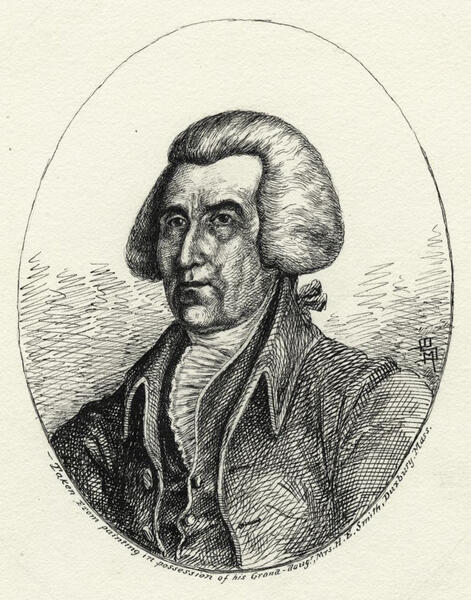
Here you will find contact information for Representative George Partridge, including email address, phone number, and mailing address.
| Name | George Partridge |
| Position | Representative |
| State | Massachusetts |
| District | 5 |
| Party | Unknown |
| Status | Former Representative |
| Term Start | March 4, 1789 |
| Term End | March 3, 1791 |
| Terms Served | 1 |
| Born | February 8, 1740 |
| Gender | Male |
| Bioguide ID | P000092 |
About Representative George Partridge
George Partridge (February 8, 1740 – July 7, 1828) was an American teacher and politician who represented Massachusetts as a delegate to the Continental Congress and as a Representative in the United States House of Representatives. He served as a Representative from Massachusetts in the United States Congress from 1789 to 1791, during which time he contributed to the legislative process over one term in office and participated in the democratic governance of the new federal republic.
Partridge was born in Duxbury in the Province of Massachusetts Bay. He attended Harvard College, graduating in 1762 and receiving a master’s degree in 1765. Although he studied theology, he never entered the active ministry. Instead, he chose a career in education and became a schoolteacher in Kingston, Massachusetts, a profession that placed him within the educated civic leadership of his region on the eve of the American Revolution.
Partridge’s political career began in the revolutionary ferment of the 1770s. In 1774 he was elected as a delegate to the Massachusetts Provincial Congress, the provisional body formed to replace the suspended Massachusetts General Court after Royal Governor General Thomas Gage dissolved it. Reflecting on that first meeting, Partridge later described the delegates’ deliberations over whether to submit to British authority or resist “to the point of the sword,” recalling their resolve to convene a congress at Concord and to urge all the colonies to send delegates to meet at Philadelphia. He subsequently served in the Massachusetts House of Representatives from 1775 to 1779, participating in the colony’s transition from royal province to revolutionary commonwealth.
In 1779 the Massachusetts legislature named Partridge a delegate to the Continental Congress, where he represented Massachusetts at the national level during the latter years of the Revolutionary War and the Confederation period. He was reappointed continuously and served until 1785, though he did not attend the 1783 session held in Princeton, New Jersey. During this period he was also recognized for his intellectual and civic standing as a charter member of the American Academy of Arts and Sciences in 1780, reflecting his engagement with the broader scholarly and political community of the new nation.
When the new federal government of the United States was established under the Constitution, Partridge was elected to the First United States Congress as the representative of Massachusetts’s 5th congressional district. He served in the House of Representatives from March 4, 1789, until he resigned on August 14, 1790. Records of the period, including those of Gales & Seaton, indicate that on Friday, December 10, 1790, George Partridge from Massachusetts appeared in the House of Representatives and took his seat, and that on Tuesday, February 8, 1791, he was present in the House and voted for the bill to charter a Bank of the United States. Although often associated with the emerging Federalist outlook of New England representatives, he is listed in some later records as a member of an unknown party, reflecting the fluid and undeveloped nature of formal party affiliations during the First Congress. Throughout his service, he represented the interests of his Massachusetts constituents during a formative period in American legislative history.
In his later years, Partridge remained a respected figure in Massachusetts civic and intellectual life. He was elected a member of the American Antiquarian Society in 1814, further underscoring his standing among the learned societies of the early republic. He spent his final years in his native Duxbury, where he continued to be remembered as both an educator and a public servant who had participated in the foundational institutions of the United States.
Partridge died at his home in Duxbury on July 7, 1828, and was buried in Mayflower Cemetery there. In his will, he bequeathed $10,000 to establish a private secondary school in Duxbury, a substantial philanthropic act for the period. This bequest led to the creation of Partridge Academy, built on Tremont Street in Duxbury in 1844. The academy served as the town’s only secondary school until the construction of the first Duxbury High School in 1927. Although Partridge Academy burned in 1933, its legacy endures; the site is now occupied by the Duxbury Town Offices, a continuing civic use that reflects Partridge’s long-standing commitment to public education and community life.