Representative George Campbell Peery
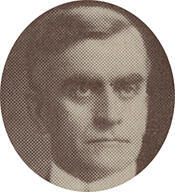
Here you will find contact information for Representative George Campbell Peery, including email address, phone number, and mailing address.
| Name | George Campbell Peery |
| Position | Representative |
| State | Virginia |
| District | 9 |
| Party | Democratic |
| Status | Former Representative |
| Term Start | December 3, 1923 |
| Term End | March 3, 1929 |
| Terms Served | 3 |
| Born | October 28, 1873 |
| Gender | Male |
| Bioguide ID | P000186 |
About Representative George Campbell Peery
George Campbell Peery (October 28, 1873 – October 14, 1952) was a Virginia lawyer, school principal, and Democratic politician who served three terms as a Representative from Virginia in the United States Congress from 1923 to 1929 and later became the 52nd governor of Virginia, serving from 1934 to 1938. A prominent figure in the political realignment of early twentieth-century Virginia, he also served on the State Corporation Commission and was sometimes described as the second governor selected, at least in part, by the emerging Byrd Organization led by former governor and later U.S. senator Harry F. Byrd Sr. Peery was the first Virginia governor from the state’s far southwestern region and frequently noted his descent from early settlers of the Clinch Valley.
Peery was born in Cedar Bluff, Tazewell County, Virginia, in the far southwestern portion of the state. His family had deep roots in the region: ancestors settled there after the American Revolutionary War, and Dr. Andrew Peery served in the Virginia House of Delegates from 1805 to 1807, while several relatives fought in the War of 1812. His father, Dr. James Peery, served as a surgeon in Derrick’s Battalion of the Confederate States Army. George Peery attended local public schools while working on his father’s farm, in the family store, and in the Tazewell County clerk’s office. He later recalled beginning to collect debts for his father and uncle at the age of twelve and holding his first salaried position as assistant clerk in the Tazewell County clerk’s office at $25 per month, experiences that acquainted him early with both business and public administration.
Peery pursued higher education at Emory & Henry College in nearby Washington County, Virginia, from which he graduated in 1894, earning medals in oratory and science. Although only twenty years old at the time of his graduation, he was appointed principal of Tazewell High School, a position he held for two years. Determined to enter the legal profession, he resigned and enrolled at Washington and Lee University School of Law, where he completed the LL.B. degree in 1897 after only a single year of study, an accelerated pace compared with the usual two-year course. In 1907 he married Nancy Bane Gillespie, daughter of Albert P. Gillespie, a prominent Tazewell attorney, Republican politician, and delegate to the Virginia Constitutional Convention of 1902. The couple had three children: Albert G. Peery (born 1908), George C. Peery Jr. (born 1910), and Nancy Peery Whitley (born 1916). Peery was also active in religious life as lay leader of the Main Street Methodist Church in Tazewell.
Admitted to the Virginia bar in 1897, Peery returned to southwestern Virginia and opened a law practice in Tazewell. He later remarked that he earned exactly $200 in his first twelve months of private practice. He chose to specialize in title work, expanding his practice into nearby Wise and Dickenson Counties and into eastern Kentucky, and eventually relocated to Wise, Virginia, to be closer to the growing coalfield business. In 1915 he returned to Tazewell to assist in settling his father-in-law’s estate and soon joined Gillespie’s former partners A. C. Buchanan and Archibald C. Chapman in the firm of Chapman, Peery & Buchanan. During these years he became increasingly involved in Democratic Party politics. He served as a Democratic elector at large on the Wilson–Marshall ticket in 1916 and, in 1920, became chairman of the Ninth District Democratic Committee. He was also a delegate to the Democratic National Conventions of 1920 and 1924, building relationships that would later support his rise in state and national politics.
In 1922, voters in Virginia’s Ninth Congressional District elected Peery to the United States House of Representatives. He succeeded C. Bascom Slemp, a Republican who did not seek re-election, and thus became the last Republican to serve in Virginia’s congressional delegation for decades. Peery, a member of the Democratic Party, defeated Republican John H. Hassinger in that election and won re-election in 1924 by defeating Republican C. Henry Harman. His initial victory was widely regarded as an early test of the growing influence of the Byrd Organization in Virginia politics. Peery served three consecutive terms in the House of Representatives, from March 4, 1923, to March 3, 1929, contributing to the legislative process and representing the interests of his constituents from southwestern Virginia during a period of significant economic and political change in the United States. His tenure coincided with the prosperity of the 1920s and the early stirrings of the political coalitions that would shape New Deal–era policies.
In 1929, Peery resigned from Congress to accept appointment as a member of the Virginia State Corporation Commission, where he served from 1929 to 1933. In that capacity he dealt with regulation of public utilities and corporations at a time when economic conditions were deteriorating nationally with the onset of the Great Depression. As the Byrd Organization consolidated its control over state politics, newly elected U.S. Senator Harry F. Byrd Sr. approached Peery to run for governor in 1933. Peery accepted and, in the general election of that year, was elected governor of Virginia with 73.74 percent of the vote, defeating Republican Fred W. McWane, Prohibitionist Andrew J. Dunning Jr., Socialist George C. White, and independents John Moffett Robinson and W. A. Rowe. His election confirmed both his personal standing in the state and the organizational strength of the Byrd political machine.
As governor from 1934 to 1938, Peery pursued policies that reflected both the fiscal conservatism of the Byrd Organization and the need to respond to Depression-era conditions. He established Virginia’s unemployment insurance system, providing a measure of economic security to workers affected by joblessness. Following the repeal of national Prohibition, he created the Virginia Alcoholic Beverage Control Board to regulate the sale and distribution of alcoholic beverages in the Commonwealth, a system that remains in place in modified form. Peery also played a central role in the creation of the Virginia State Parks system. In 1936 he signed into law the act establishing the state parks, and on June 15, 1936, he attended the opening ceremony for the first six parks at Hungry Mother State Park in Smyth County, near the Emory & Henry College campus. Introduced by former governor E. Lee Trinkle of Wytheville, Peery observed that the park system was one of the positive developments to emerge from the Great Depression, simultaneously providing Civilian Conservation Corps jobs, recreational opportunities for working families, and long-term economic benefits through tourism. The initial parks, like other public facilities in Virginia at the time, were racially segregated and reserved for white visitors.
After leaving office in 1938, Peery remained active in educational and civic affairs. He joined the boards of trustees of Washington and Lee University and Hollins College, reflecting both his legal training and his long-standing interest in higher education. He continued to be identified with the political and economic development of southwestern Virginia and maintained his connections to the Methodist Church and to the communities in which he had practiced law and held office. His legacy in conservation and recreation policy was later underscored when, in 2021, Virginia Governor Ralph Northam dedicated Clinch River State Park as the Commonwealth’s 41st state park. Envisioned as Virginia’s first blueway, or river-based, state park, it includes lands and facilities in Tazewell County and other localities along the Clinch River, with infrastructure developed in part by the Youth Conservation Corps at Sugar Hill near St. Paul in Wise County in 2023—areas closely associated with Peery’s home region and ancestral Clinch Valley heritage.
George Campbell Peery died on October 14, 1952, in Richlands, Virginia, two weeks short of his seventy-ninth birthday. He was buried in Maplewood Cemetery in Tazewell, Virginia, near the communities where he had been born, educated, and first established his legal and political career.