Senator George Poindexter
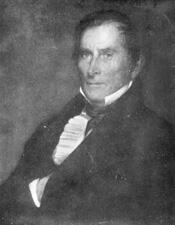
Here you will find contact information for Senator George Poindexter, including email address, phone number, and mailing address.
| Name | George Poindexter |
| Position | Senator |
| State | Mississippi |
| Party | Jackson |
| Status | Former Representative |
| Term Start | October 26, 1807 |
| Term End | March 3, 1835 |
| Terms Served | 5 |
| Gender | Male |
| Bioguide ID | P000402 |
About Senator George Poindexter
George Poindexter (1779 – September 5, 1853) was an American politician, lawyer, and judge from Mississippi who served as a territorial delegate, United States Representative, Governor of Mississippi, and United States Senator. Born in Louisa County, Virginia, in 1779, he was the son of Thomas Poindexter and Lucy (Jones) Poindexter, members of a large Virginia family of French Huguenot and English ancestry. His early education was sporadic and largely informal, conducted under the tutelage of two of his brothers. Orphaned as a teenager after his father’s death when he was about seventeen, Poindexter inherited two enslaved people and a share of his father’s land and resided with an older brother until he came of age. The Poindexter family frequently reused the given names George, Thomas, and John, which has complicated efforts to trace their genealogy; he may have been the uncle of Ohio abolitionist preacher James Preston Poindexter, whose father, Joseph Poindexter, was a journalist at the Richmond Enquirer.
The exact details of Poindexter’s legal training are uncertain, but family tradition holds that he read law under practicing attorneys, first in Kentucky and later in Richmond, Virginia. He was admitted to the bar in 1800 and began practicing law in Milton, an Albemarle County town along the Rivanna River that later ceased to exist as a distinct community. In 1802 he moved to the Mississippi Territory and established a law practice in Natchez, where he quickly became a friend and political ally of Governor William C. C. Claiborne and emerged as a leader in the local Democratic-Republican Party. His first bid for elective office, a campaign for the territorial legislature in 1804, was unsuccessful, but in 1803 he had been appointed Attorney General of the Mississippi Territory, a post he held until 1807. During this period, tensions with neighboring Spanish-controlled areas led residents of Adams County to form a militia; Poindexter was a principal organizer of a Natchez company known as the Mississippi Blues and was elected its commander with the rank of captain, though no Spanish attack ultimately materialized and the unit soon disbanded.
Poindexter’s prominence in territorial affairs grew rapidly. Elected to the Territorial House of Representatives in 1806, he took his seat in 1807. That same year, former Vice President Aaron Burr passed through Mississippi in connection with what became known as the Burr conspiracy. Acting Governor Cowles Mead declared martial law, appointed Poindexter and William B. Shields as aides-de-camp, and dispatched them to interview Burr and assess his intentions. When Burr was arrested, Poindexter conducted the prosecution but initially refused to bring formal charges on the ground that Burr had committed no crime within the territorial jurisdiction; Burr subsequently escaped custody. Governor Robert Williams, returning from North Carolina, criticized Mead’s handling of the affair and dismissed the militia officers Mead had appointed, including Poindexter. Poindexter later testified at Burr’s treason trial in Richmond in October 1807, where his testimony suggested that Burr’s arrest had rested on weak evidence and likely contributed to Burr’s acquittal. Personal and political tensions in the territory were intense: after Mead informed Poindexter of disparaging remarks Williams had allegedly made about him, Poindexter challenged Williams to a duel. Williams refused, declaring he would not “involve either his public or private character with such a man.” Poindexter responded with letters to the editor that portrayed him as wronged and unable to obtain satisfaction, a tactic that damaged Williams’s reputation among constituents. In 1811 Poindexter’s outspoken opposition to the Federalist Party culminated in a duel with wealthy merchant and planter Abijah Hunt, whom Poindexter killed; his opponents later alleged that he had violated the code duello by firing prematurely.
In 1807 Poindexter was elected as a nonvoting delegate to the United States House of Representatives from the Mississippi Territory, serving in the 10th, 11th, and 12th Congresses from 1807 to 1813. In this role he focused on matters directly affecting the territory, including federal patronage, the push for Mississippi’s admission as a state, and the complex problem of land titles in a region that had passed under Spanish, French, British, and American control. He worked to standardize and secure land claims and opposed the claims of the Yazoo land speculators, although the Supreme Court’s 1810 decision in Fletcher v. Peck ultimately validated those claims. Poindexter did not seek reelection in 1812. After his final term as territorial delegate ended, he was appointed federal judge for the Mississippi Territory, serving from 1813 to 1817. During the War of 1812 he also served as a volunteer aide to General William Carroll, who commanded a division of Tennessee militia at the decisive Battle of New Orleans in 1814. In the aftermath of that battle, a letter from Poindexter dated January 20, 1815, and published in the Mississippi Republican, claimed that British General Edward Pakenham’s troops had used “Beauty and Booty” as their watchword. Widely reprinted in Niles’ Weekly Register, the National Intelligencer, and other newspapers, the story shaped popular perceptions of the war by depicting the British as intent on rape and plunder and the Americans as morally superior. Political opponents and the newspaper’s editor challenged Poindexter’s account, accusing him of dereliction of duty during the battle; when Poindexter confronted the editor in March 1815, he was arrested for assault.
Poindexter played a central role in Mississippi’s transition from territory to statehood. As chair of the committee that drafted the state’s first constitution, he helped frame the basic legal and political structure of the new state. After Mississippi’s admission to the Union in 1817, he was elected its first United States Representative and served in the 15th Congress from 1817 to 1819, chairing the Committee on Public Lands. During the 1819 congressional investigation into General Andrew Jackson’s seizure of Florida, Poindexter defended Jackson against Henry Clay’s charges that Jackson’s conduct resembled the early despotism of Julius Caesar in Gaul, instead invoking more favorable military exemplars and urging that the United States “profit by the example.” Poindexter was an unsuccessful candidate for the U.S. House in 1820 for the 17th Congress and again in 1822 for the 18th Congress. Meanwhile, in 1819 he had been elected the second Governor of Mississippi by a large margin, winning over 60 percent of the vote. Serving from 1820 to 1822, he oversaw a reorganization of the state militia, the establishment of Mississippi’s first free public schools, and a reorganization of the state courts, and he presided over the selection of Jackson as the site of the state capital.
Poindexter’s national career reached its peak in the United States Senate. Identified with the Jacksonian, or Jackson, Party, he is recorded as having served as a Senator from Mississippi in the United States Congress from 1807 to 1835, contributing to the legislative process during five terms in office and participating in the democratic process during a significant period in American history. More specifically, he was appointed to the United States Senate in 1830 to fill the vacancy caused by the death of Senator Robert H. Adams and served from 1830 to 1835. Soon after taking his seat, he learned of the financial distress of Martha Jefferson Randolph, daughter of Thomas Jefferson, whose estate was heavily burdened by debt. Poindexter introduced a bill to grant her 50,000 acres of public land in Virginia, intending that she could sell the land for support; the measure failed in the Senate and was opposed by both Virginia senators in 1831. In the 22nd Congress (1831–1833) he chaired the Committee on Private Land Claims, and in the 23rd Congress (1833–1835) he chaired the Committee on Public Lands. He was elected President pro tempore of the Senate from June to November 1834. His tenure on the Committee on Private Land Claims was considered moderately controversial at the time; he advanced positions on government repossession of land that some contemporaries regarded as radical, and that were seen by some as bolstering President Andrew Jackson’s struggle against the Second Bank of the United States. Although Poindexter had long been a supporter of Jackson and had defended him against calls for censure over the 1818 invasion of Florida and the executions of Alexander Arbuthnot and Robert Ambrister, he gradually broke with the administration. He accused Jackson of relying excessively on an informal group of advisers known as the “Kitchen Cabinet” and of favoring friends and relatives for federal appointments, citing in particular Jackson’s plan to appoint his nephew Stockley D. Hays to a land office position in Mississippi. When Poindexter was chosen President pro tempore in 1834, Jacksonian newspapers attacked him personally; one editor denounced him in lurid terms as a drunkard and libertine unfit to preside over the Senate.
Poindexter’s final years in federal office were marked by controversy and personal animosity. In 1834 he had his Washington, D.C., residence painted by Richard Lawrence, a house painter who later became mentally deranged and came to believe he was the rightful ruler of both England and the United States. On January 30, 1835, Lawrence attempted to assassinate President Jackson at the U.S. Capitol during a congressional funeral, but both of his pistols misfired in what became the first known attempt to assassinate an American president. Jackson, convinced that political enemies were behind the attack, publicly suggested that Poindexter might have been involved. Poindexter vehemently denied any connection to Lawrence and was further alienated from the administration when Vice President Martin Van Buren strongly supported Jackson during the Bank War; Poindexter’s threats against Van Buren were taken seriously enough that the Vice President carried pistols for self-defense while presiding over the Senate. The suspicions surrounding Lawrence followed Poindexter back to Mississippi and contributed to his failure to secure a second Senate term. He returned to Mississippi embittered by these events and by the collapse of his once-close relationship with Jackson.
After leaving the Senate in 1835, Poindexter moved to Lexington, Kentucky, where he resumed the practice of law. He later returned to Jackson, Mississippi, continuing his legal work there until his death. His personal life was turbulent. In 1804 he married Lydia Carter (1789–1824), daughter of a prominent Natchez businessman and plantation owner. The couple had two sons, George Littleton (or Lytleton) and Albert Gallatin. The marriage ended in scandal and divorce after Poindexter publicly accused his wife of infidelity and asserted that their second son, whom he disavowed, was the product of an affair between Lydia and a neighbor. Lydia Carter Poindexter married Reverend Lewis Williams in 1820 and moved to Brimfield, Massachusetts, taking her sons with her. Poindexter contributed to the support of George but refused to acknowledge or provide for Albert. In 1816 he married Agatha Ball Chinn (1794–1822); they had one son, who died of yellow fever in childhood while Poindexter was Governor, and Agatha died soon afterward. Poindexter was also said to have had a serious, and possibly non-consensual, liaison with an enslaved woman. Decades later, when Representative Richard Mentor Johnson of Kentucky was criticized for his common-law marriage to Julia Chinn, an enslaved woman, Johnson defended himself by contrasting his conduct with that of other prominent men, declaring, “Unlike Jefferson, Clay, Poindexter and others, I married my wife under the eyes of God, and apparently He has found no objections.”
In his later years Poindexter struggled with gambling and alcoholism, and alcohol dependence was a significant contributing factor to his death. He died in Jackson, Mississippi, on September 5, 1853, and was interred in Greenwood Cemetery there.