Senator George Read Riddle
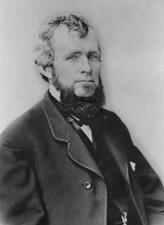
Here you will find contact information for Senator George Read Riddle, including email address, phone number, and mailing address.
| Name | George Read Riddle |
| Position | Senator |
| State | Delaware |
| Party | Democratic |
| Status | Former Representative |
| Term Start | December 1, 1851 |
| Term End | December 31, 1867 |
| Terms Served | 3 |
| Gender | Male |
| Bioguide ID | R000239 |
About Senator George Read Riddle
George Read Riddle (c. 1817 – March 28, 1867) was an American engineer, lawyer, and Democratic politician from Wilmington, Delaware, who served as both a U.S. representative and a U.S. senator from Delaware. A member of the Democratic Party, he contributed to the legislative process during a period of profound national upheaval, holding federal office in the years leading up to and during the Civil War. Although one source places his Senate service from 1851 to 1867, his documented congressional career consisted of two terms in the U.S. House of Representatives from 1851 to 1855 and service in the U.S. Senate from 1864 until his death in 1867.
Riddle was born in New Castle, Delaware, around 1817. Little is recorded about his early family life, but he came of age in a state that was geographically small yet politically significant as a border slave state. He pursued higher education at Delaware College, now the University of Delaware, where he studied civil engineering. This technical training shaped his early professional pursuits and later informed his work on public infrastructure and boundary surveys. By the mid-1840s he had established himself as a capable engineer in the Wilmington area.
In addition to engineering, Riddle studied law and broadened his professional qualifications. He was admitted to the Delaware Bar in 1848 and began practicing law in Wilmington, Delaware. His engineering expertise led to several notable commissions: in 1844 he was hired to design the Wilmington and Brandywine Cemetery, a significant civic project that reflected the era’s interest in planned, landscaped burial grounds. In 1849 he was appointed a commissioner to retrace the Mason–Dixon line, the historic boundary between Maryland and Pennsylvania that also carried deep political and social implications in the antebellum period. He was otherwise engaged in the construction of railroads and canals, contributing to the region’s transportation infrastructure as the industrial economy expanded.
Riddle’s legal and engineering work provided a springboard to public service. From 1849 to 1850, he served as a Deputy Attorney General of the United States, an appointment that brought him into closer contact with federal legal and political affairs. He had earlier sought elective office and lost in the election of 1844, but he remained active in Democratic politics in Delaware. His combination of technical knowledge, legal training, and party loyalty positioned him as a viable candidate for Congress at a time when Delaware’s small delegation nonetheless played a role in national debates.
Riddle was elected as a Democrat to the U.S. House of Representatives in 1850 and served two consecutive terms from March 4, 1851, until March 3, 1855. Elections for U.S. representatives were held on the first Tuesday after November 1, and representatives took office on March 4 for two-year terms. During the 33rd Congress, he served as chairman of the Committee on Engraving, a body responsible for matters relating to the engraving and printing of official government documents and illustrations. Representing Delaware at a time of intensifying sectional conflict, he participated in the democratic process and represented the interests of his constituents in the national legislature. Running for a third term in 1854, he was defeated by Elisha D. Cullen, ending his initial period of congressional service.
In the years between his House and Senate service, Riddle continued his legal practice and remained engaged in public affairs. By 1860, he was recorded as one of only two slaveholders in Delaware, owning three enslaved persons: a 68-year-old man and two females aged 56 and 12. This fact underscored Delaware’s complex status as a slaveholding border state on the eve of the Civil War. During the war itself, Riddle served with the Home Guard of Wilmington, a local defense organization that supported Union authority and maintained order in the community during the conflict. His personal life during these years included his marriage to his wife, Margaret, about whom relatively little else is documented in the surviving record.
On February 2, 1864, the Delaware General Assembly elected Riddle to the United States Senate to fill the vacancy caused by the resignation of Senator James A. Bayard Jr. Under the system then in place, the state legislature chose U.S. senators, who took office on March 4 for six-year terms; in Riddle’s case, he was completing an existing term rather than beginning a full one. As a U.S. senator from Delaware, he served from his election in 1864 until his death on March 28, 1867, participating in the legislative process during the final years of the Civil War and the opening phase of Reconstruction. In this capacity he again represented Delaware’s interests at a time when questions of union, emancipation, and postwar policy dominated congressional deliberations.
Riddle died in office at Washington, D.C., on March 28, 1867. His death placed him among the members of the United States Congress who died while serving between 1790 and 1899. He was returned to Delaware for burial and interred in the Wilmington and Brandywine Cemetery in Wilmington, the very cemetery he had designed two decades earlier. His career as an engineer, lawyer, and legislator reflected the intertwined development of infrastructure, law, and politics in mid-nineteenth-century America, and his service in both houses of Congress marked him as a significant, if now lesser-known, figure in Delaware’s political history.