Representative George Maxwell Robeson
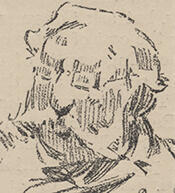
Here you will find contact information for Representative George Maxwell Robeson, including email address, phone number, and mailing address.
| Name | George Maxwell Robeson |
| Position | Representative |
| State | New Jersey |
| District | 1 |
| Party | Republican |
| Status | Former Representative |
| Term Start | March 18, 1879 |
| Term End | March 3, 1883 |
| Terms Served | 2 |
| Born | March 16, 1829 |
| Gender | Male |
| Bioguide ID | R000330 |
About Representative George Maxwell Robeson
George Maxwell Robeson (March 16, 1829 – September 27, 1897) was an American lawyer and Republican politician from New Jersey who served as Attorney General of New Jersey, Secretary of the Navy under President Ulysses S. Grant, and a United States Representative from New Jersey. He was born in Oxford Furnace, Warren County, New Jersey, and was the son of a prominent local judge. Robeson was educated in New Jersey and pursued classical studies before entering college. He attended Princeton University (then the College of New Jersey), graduating in 1847. After reading law, he was admitted to the bar and began practicing in New Jersey, establishing himself as a capable attorney in both civil and criminal matters.
Robeson’s early legal career led to a series of public appointments and growing influence within the Republican Party. During the Civil War he was active in New Jersey’s Unionist politics and legal affairs, gaining a reputation as a loyal supporter of the Lincoln administration and the Union cause. His professional standing and political connections culminated in his appointment as Attorney General of New Jersey, a post he held from 1867 to 1869. As Attorney General he represented the state in major legal matters and further solidified his status as a leading Republican figure in New Jersey.
In 1869 President Ulysses S. Grant appointed Robeson as Secretary of the Navy, a position he held from 1869 until 1877. His tenure coincided with a period of post–Civil War retrenchment, when Congress was generally reluctant to appropriate funds for naval expansion. Despite these constraints, Robeson sought to maintain and modernize the fleet, substantially rebuilding older ships with more durable materials and repairing and refitting the monitor fleet. Grant, in his eighth annual State of the Union Address on December 5, 1876, publicly defended Robeson against criticism that the Navy was not more modern and powerful, crediting his “practical action” with ensuring that the United States still had an effective naval force in peacetime. Robeson also ordered five modernized warships in 1874, and Grant urged Congress to provide additional funding for their completion, noting that high costs were driven by the adoption of steam power machinery.
Robeson’s administration at the Navy Department was marked by support for technological innovation and exploratory ventures. He encouraged the development of submarine and torpedo technologies, overseeing the Navy’s evaluation of the hand-cranked submarine Intelligent Whale, which had first been built in 1863. After favorable reports from naval officers, Robeson approved an agreement in October 1869 to purchase the vessel, although subsequent tests in 1872 were judged unsuccessful due to serious leakage, and no further payments were made beyond the initial installment. During his tenure the Navy also considered early submarine designs from John Holland, who would later build the first operational submarines for the United States and Britain. Robeson directed the development and testing of self-propelled torpedoes, including a weapon known as “the Fish,” which was designed to travel underwater at a fair speed while maintaining a straight, submerged course. Although the Fish and several other experimental torpedoes—such as John L. Lay’s remote-controlled torpedo, the Barber rocket torpedo, and the Ericsson torpedo—were tested at Newport, only the flywheel-powered Howell torpedo, developed between 1870 and 1889, ultimately entered U.S. service, in 1889.
Exploration and foreign crises also featured prominently in Robeson’s years as Secretary. He secured $50,000 from Congress for the Polaris Expedition, the United States’ first serious attempt at Arctic exploration and a bid to reach the North Pole. Under his authority, USS Polaris departed the New York Navy Yard on June 29, 1871, at 7 p.m., commanded by Charles Francis Hall, a veteran Arctic explorer. The expedition soon encountered grave difficulties: Hall fell ill after drinking coffee on October 24, 1871, and died two weeks later; the mission failed to reach the pole, and the crew ultimately split into two parties, one drifting south on an ice floe and the other overwintering aboard ship, though both were eventually rescued. On June 5, 1873, Robeson ordered an investigation into the circumstances of the expedition and Hall’s death. Although circumstantial evidence suggested foul play, the absence of Hall’s body and many of the expedition’s journals led to the exoneration of the crew. Nearly a century later, in 1968, exhumation and scientific testing of Hall’s remains revealed arsenic poisoning. In recognition of Robeson’s support for Arctic exploration, Hall named Robeson Channel in his honor. Robeson also directed the Navy’s response to the Virginius Affair in 1873, when the former Confederate blockade runner SS Virginius, engaged in smuggling arms to Cuban insurgents during the Ten Years’ War, was captured by the Spanish warship Tornado. After Spanish authorities in Santiago de Cuba executed 53 of the ship’s crew and passengers, including American and British citizens, Robeson, following President Grant’s November 14, 1873 order to place the Navy on a war footing, assembled elements of the North Atlantic Squadron at Key West in preparation for possible action. The crisis eased as the dubious legality of Virginius’s activities became clearer, and final settlement of indemnities for the executed men extended into early 1875.
After leaving the Navy Department at the close of the Grant administration in 1877, Robeson returned to New Jersey and resumed his political career. In 1878 he ran for and was elected to the United States House of Representatives as a Republican from New Jersey’s 1st Congressional District. He served two consecutive terms in Congress from March 4, 1879, to March 3, 1883. During his second term he held important leadership roles, serving as Chairman of the House Republican Conference and Chairman of the Committee on Expenditures in the Department of the Navy. In these capacities he exercised significant influence over naval appropriations and oversight. He was criticized in the Democratic-leaning satirical magazine Puck for helping to secure a large surplus allocation for the Navy, but historians have noted that this funding was instrumental in financing the service’s first steel-hulled vessels, the so‑called ABCD ships, an innovation widely regarded as marking the birth of the “New Navy.” While serving in the House, Robeson also made another bid for a United States Senate seat in 1880, but he was again unsuccessful.
Robeson’s congressional career ended after his defeat for a third House term in 1882 by Democrat Thomas M. Ferrell. Contemporary accounts suggested that the defeat was engineered in part by fellow Republican William J. Sewell, who in the same election secured a seat in the United States Senate. After leaving Congress in March 1883, Robeson returned to private law practice in New Jersey and remained a figure of note within Republican circles, though he never again held major public office. His long association with President Grant and his central role in naval policy during Reconstruction and the early Gilded Age have ensured that he is frequently discussed in biographies of Grant and in historical studies of the post–Civil War Navy.
George Maxwell Robeson died on September 27, 1897, in Trenton, New Jersey. He was buried in Belvidere Cemetery in Belvidere, Warren County, close to the region where he had been born and raised. His career, spanning state legal service, cabinet office, and congressional leadership, left a lasting imprint on the development of the United States Navy and on the political history of New Jersey during the latter half of the nineteenth century.