Representative George Blaine Schwabe
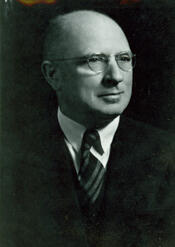
Here you will find contact information for Representative George Blaine Schwabe, including email address, phone number, and mailing address.
| Name | George Blaine Schwabe |
| Position | Representative |
| State | Oklahoma |
| District | 1 |
| Party | Republican |
| Status | Former Representative |
| Term Start | January 3, 1945 |
| Term End | January 3, 1953 |
| Terms Served | 3 |
| Born | July 26, 1886 |
| Gender | Male |
| Bioguide ID | S000155 |
About Representative George Blaine Schwabe
George Blaine Schwabe (July 26, 1886 – April 2, 1952) was an American politician, attorney, and Republican U.S. Representative from Oklahoma who served in Congress from 1945 to 1953. He was born in Arthur, Vernon County, Missouri, the son of George Washington Schwabe and Emily Ellen (Mose) Schwabe. He attended public schools in his hometown, where he received his early education before pursuing legal studies.
Schwabe enrolled in the law department of the University of Missouri, from which he graduated in 1910. That same year he was admitted to the bar and began the practice of law in Columbia, Missouri. In 1911 he moved to Nowata, Oklahoma, where he continued his legal practice and quickly became involved in local civic affairs. Demonstrating early political promise, he successfully ran for mayor of Nowata and served in that office during 1913 and 1914.
On June 10, 1914, Schwabe married Jeannette Eadie Simpson, with whom he had five children. His family life paralleled a growing public career. In 1918 he entered state government as a member of the Oklahoma House of Representatives, representing Nowata County. Schwabe rose rapidly through the legislative ranks and, in 1921 and 1922, served as Speaker of the Oklahoma House of Representatives. He was the first Republican to hold the speakership in the state, marking a significant milestone for his party in Oklahoma politics. After his term in the State House, he moved to Tulsa, Oklahoma, where he stepped away from elective office but continued to practice law. From 1928 to 1936, he remained active in party affairs as chairman of the Republican county committee. After the death of his first wife in 1939, he married Barbara Yirsa McFarland on July 23, 1943.
In 1944, Schwabe returned to electoral politics on the national stage when he successfully ran for Congress from Oklahoma’s 1st congressional district as a member of the Republican Party. He entered the U.S. House of Representatives on January 3, 1945, and served in the 79th and 80th Congresses, holding office until January 3, 1949. His three terms in Congress, spanning service from 1945 to 1953, occurred during a significant period in American history marked by the end of World War II and the beginning of the Cold War. As a member of the House of Representatives, George Blaine Schwabe participated in the democratic process, contributed to the legislative work of the chamber, and represented the interests of his Oklahoma constituents. During this time he served on the influential House Appropriations Committee, which oversaw federal spending and played a central role in shaping postwar budget priorities.
Schwabe was defeated for reelection in 1948 by Democrat Dixie Gilmer, temporarily interrupting his congressional career. However, he regained his seat in the 1950 election and returned to Washington as the representative of Oklahoma’s 1st district in the 82nd Congress, beginning his new term on January 3, 1951. He continued his work on appropriations and remained an active participant in the legislative process until his death.
On April 2, 1952, while still serving in office, Schwabe died of a heart attack in Alexandria, Virginia, at the age of 65 years, 251 days. His death placed him among the members of the United States Congress who died in office in the mid-twentieth century. He was interred at Memorial Park Cemetery in Tulsa, Oklahoma. His papers and photographs are preserved in the George B. Schwabe Collection and Photograph Series at the Carl Albert Center, documenting his legal and political career and his role in Oklahoma and national public life.