Representative George Cromwell Scott
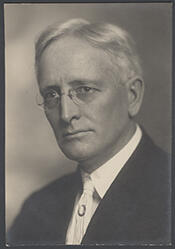
Here you will find contact information for Representative George Cromwell Scott, including email address, phone number, and mailing address.
| Name | George Cromwell Scott |
| Position | Representative |
| State | Iowa |
| District | 11 |
| Party | Republican |
| Status | Former Representative |
| Term Start | April 4, 1911 |
| Term End | March 3, 1919 |
| Terms Served | 3 |
| Born | August 8, 1864 |
| Gender | Male |
| Bioguide ID | S000170 |
About Representative George Cromwell Scott
George Cromwell Scott (August 8, 1864 – October 6, 1948) was a Republican member of the United States House of Representatives from Iowa’s 11th congressional district and later a United States district judge of the United States District Court for the Northern District of Iowa. He served as a Representative from Iowa in the United States Congress from 1911 to 1919, contributing to the legislative process during three terms in office, and subsequently held federal judicial office for more than two decades.
Scott was born near East Kendall (now Morton), an unincorporated hamlet in the Town of Kendall, Monroe County, New York. His early life was marked by hardship: his mother died when he was two years old, and his father died when he was five. Orphaned at a young age, he was raised by an uncle. In 1880, at the age of sixteen, he moved to Iowa to live with other relatives, settling in Dallas County. He attended country schools and the high school at Dallas Center, Iowa, gaining a basic education that would underpin his later professional pursuits.
While in Iowa, Scott combined work and study to advance his education. He taught school and, under the tutelage of his wife, Laura, undertook studies equivalent to a full college course load, compensating for his lack of formal collegiate training. Drawn to the law, he began studying in the office of a law firm in Adel, Iowa, and was admitted to the bar in 1887. The following year, in 1888, he commenced the practice of law in Le Mars, Iowa. His legal career developed steadily, and in 1901 he moved to Sioux City, Iowa, where he continued in private practice and became a well-known attorney in the region.
Scott’s entry into national politics came in the context of intra-party competition within the Republican Party. In January 1912, he announced his candidacy for the United States House of Representatives from Iowa’s 11th congressional district, then represented by Republican Elbert H. Hubbard. Scott was defeated by Hubbard in the June 3, 1912, primary, but Hubbard died the following day. A Republican nominating convention held in July 1912 selected Scott as the party’s candidate over State Senator Leslie E. Francis. In the ensuing general election, Scott defeated both Democratic and Progressive (Bull Moose) Party challengers. He was immediately sworn in to fill the remainder of Hubbard’s term in the 62nd Congress and then served a full term in the 63rd Congress.
As a member of the House of Representatives, Scott participated in the democratic process during a significant period in American history, representing the interests of his constituents in northwest Iowa. He was renominated by the Republicans in 1914 for what would have been his second full term, but he was defeated in the general election by Democrat Thomas J. Steele. Contemporary observers noted that Steele’s campaign emphasized intensive personal solicitation of votes and extensive personal publicity, while Scott remained in Washington until ten days before the election and devoted only about a week to campaigning in the district. Undeterred, Scott ran again in 1916 and recaptured the seat from Steele in one of the closest elections in House history, ultimately prevailing by a margin of four votes in a contest that was finally settled by the House itself. In all, Scott served in Congress from November 5, 1912, to March 3, 1915, and from March 4, 1917, to March 3, 1919. He was not a candidate for renomination in 1918 and returned to private life at the close of his final term.
After leaving Congress, Scott resumed the practice of law in Sioux City, reestablishing himself in the legal profession. His experience as both a practicing attorney and a legislator led to his selection for federal judicial service. On February 16, 1922, President Warren G. Harding nominated Scott to a seat on the United States District Court for the Northern District of Iowa, to fill the vacancy created by the departure of Judge Henry Thomas Reed. The United States Senate confirmed his nomination on February 21, 1922, and he received his commission the same day.
Scott served actively as a United States district judge for more than two decades, presiding over a wide range of federal civil and criminal matters arising in northern Iowa. On November 1, 1943, he assumed senior status, reducing his caseload but continuing to serve the court. His judicial service continued until his death on October 6, 1948, in Sioux City, Iowa. He was interred in Graceland Park Cemetery in Sioux City, concluding a public career that spanned teaching, law practice, legislative service in the House of Representatives, and long tenure on the federal bench.