Representative George Whitfield Scranton
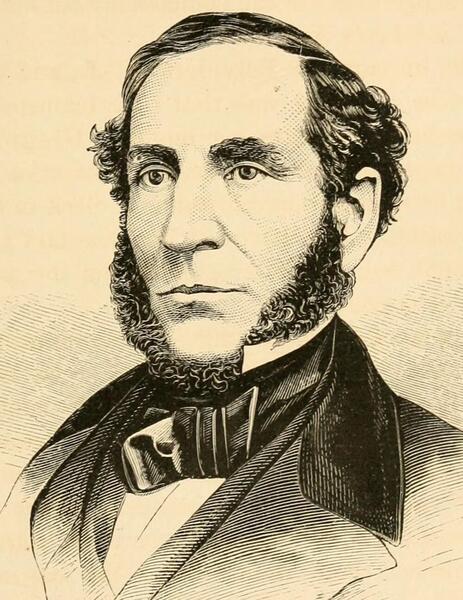
Here you will find contact information for Representative George Whitfield Scranton, including email address, phone number, and mailing address.
| Name | George Whitfield Scranton |
| Position | Representative |
| State | Pennsylvania |
| District | 12 |
| Party | Republican |
| Status | Former Representative |
| Term Start | December 5, 1859 |
| Term End | March 3, 1863 |
| Terms Served | 2 |
| Born | May 11, 1811 |
| Gender | Male |
| Bioguide ID | S000191 |
About Representative George Whitfield Scranton
George Whitfield Scranton (May 11, 1811 – March 24, 1861) was an American industrialist and politician who played a central role in the early development of the iron and railroad industries in northeastern Pennsylvania and served as a Republican member of the U.S. House of Representatives from Pennsylvania from March 4, 1859, until his death in 1861. He is widely regarded, along with his brother Selden T. Scranton and their partners, as a founder of the city of Scranton, Pennsylvania, which was named for their family.
Scranton was born on May 11, 1811, in Madison, Connecticut. Among his siblings was his brother and later business partner, Selden T. Scranton. He received his early education at Lee’s Academy in Madison, a local institution that prepared young men for business and professional careers. In 1828, as a young man seeking economic opportunity, he moved to Belvidere, New Jersey, where he worked as a teamster. Both he and his brother subsequently found employment at the Oxford Furnace, an iron manufacturing facility in New Jersey, where they gained practical experience in iron production and became familiar with the technical and commercial aspects of the iron industry.
By the late 1830s, the discovery and development of extensive iron ore and anthracite coal deposits in northeastern Pennsylvania attracted the attention of the Scranton brothers. Recognizing the potential for large-scale industrial development based on “hard” or anthracite coal, they moved to the region to pursue new ventures in iron manufacturing. Together with Sanford Grant and Philip H. Mattes—Mattes being the head of a branch of a bank in Easton, Pennsylvania, who helped secure crucial financing—they formed the firm of Scrantons, Grant & Company. In 1839, George W. Scranton began manufacturing iron in Slocum Hollow, an area that would later become the city of Scranton. There he undertook experiments to determine the practicability of smelting iron ore using anthracite coal, a relatively new and challenging process at the time.
From these efforts emerged the Lackawanna Iron & Coal Company, named for the nearby Lackawanna River. Under Scranton’s leadership, the enterprise developed a method for producing T-rails for railroad track, which had previously been imported from England. This innovation significantly reduced dependence on foreign iron and contributed to a rapid expansion in the production of railroad track in the United States. The resulting boom in rail construction helped transform the region into an industrial center and firmly established the Scranton family’s prominence. George and Selden Scranton, together with Grant and Mattes, are considered the founders of the city of Scranton, Pennsylvania, their industrial complex and associated community forming the nucleus of the future city. In 1858, Selden Scranton returned to Oxford Furnace in New Jersey, but the industrial base they had created in Pennsylvania continued to expand.
As his iron interests grew, George W. Scranton also became a major figure in railroad development. He constructed the Northumberland division of the Lackawanna Railroad, an undertaking that contributed to the creation and consolidation of the Delaware, Lackawanna and Western Railroad, a line that depended heavily on the iron and coal industries of northeastern Pennsylvania. Scranton served as the head of the Delaware, Lackawanna and Western Railroad and was president of two railroad companies, integrating iron production with rail transportation and helping to shape the economic infrastructure of the region.
Scranton entered national politics as the Republican Party gained prominence in the 1850s. He was elected as a Republican from Pennsylvania to the 36th Congress in 1858 and took his seat in the U.S. House of Representatives on March 4, 1859. His tenure in Congress coincided with the mounting sectional tensions that preceded the Civil War, and he represented a rapidly industrializing district whose economic fortunes were closely tied to iron, coal, and railroads. He continued to serve in Congress until his death in office in Scranton, Pennsylvania, on March 24, 1861, making him one of the members of the United States Congress who died in office in the nineteenth century.
After his death, leadership of his industrial enterprises remained within the extended Scranton family. His cousin Joseph H. (often cited as Joseph A.) Scranton, an early investor who had moved with his second wife and young family to northeastern Pennsylvania in 1847, became president of the Lackawanna Iron & Coal Company. Joseph’s son, William Walker Scranton, followed the family tradition by attending Yale and later became general manager of the Lackawanna Iron & Coal Company. William W. Scranton managed the company during and after the Scranton General Strike of 1877, a major labor conflict in the city, and subsequently founded the Lackawanna Steel Company, which carried forward the industrial legacy first established by George Whitfield Scranton in the 1830s and 1840s.