Representative George Nicholas Seger
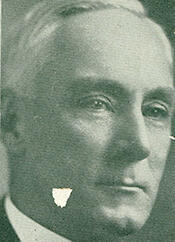
Here you will find contact information for Representative George Nicholas Seger, including email address, phone number, and mailing address.
| Name | George Nicholas Seger |
| Position | Representative |
| State | New Jersey |
| District | 8 |
| Party | Republican |
| Status | Former Representative |
| Term Start | December 3, 1923 |
| Term End | January 3, 1941 |
| Terms Served | 9 |
| Born | January 4, 1866 |
| Gender | Male |
| Bioguide ID | S000228 |
About Representative George Nicholas Seger
George Nicholas Seger (January 4, 1866 – August 26, 1940) was an American politician who served as a Representative from New Jersey in the United States Congress from 1923 to 1940. A member of the Republican Party, he represented New Jersey in the United States House of Representatives for eighteen years, from 1923 until his death in office. Over the course of nine consecutive terms, he first represented New Jersey’s 7th congressional district from 1923 to 1933 and then New Jersey’s 8th congressional district from 1933 to 1940, where he succeeded Fred A. Hartley Jr. His long tenure in the House of Representatives spanned a significant period in American history, including the Roaring Twenties, the onset of the Great Depression, and the New Deal era, during which he participated in the legislative process and represented the interests of his constituents.
Seger was born on January 4, 1866, in New York City. Little is recorded about his early education and formative years, but as a young adult he became engaged in business pursuits. At the age of thirty-three he moved to Passaic, New Jersey, where he settled permanently. In Passaic he involved himself in building up business in the city and quickly became a prominent local figure. He was active in a number of fraternal and civic organizations, including the Freemasons, Knights Templar, Shriners, Elks, and the Royal Arcanum, affiliations that helped establish his public profile and network within the community.
Seger’s involvement in public affairs in Passaic led naturally to a career in municipal politics. He served as a member of the Passaic Board of Education from 1906 to 1911, participating in the oversight of the city’s public schools during a period of growth and modernization. In 1911 he was elected mayor of Passaic, New Jersey, a position he held until 1919. His mayoral tenure coincided with World War I, and during this period he expanded his political influence beyond the city. He served as a delegate to the Republican National Convention in 1916, was appointed a member of the Council of National Defense during the war, and was president of the New Jersey State League of Municipalities in 1917 and 1918, reflecting his standing among municipal leaders across the state. After leaving the mayor’s office, Seger continued in city government as Passaic’s director of finance, a post he held until 1923.
In 1923 Seger sought national office and ran for the United States House of Representatives from New Jersey’s 7th congressional district. He won the election, succeeding Amos H. Radcliffe, and defeated Democratic candidate Wilmer A. Cadmus along with Frank Hubschmitt and Harry Santhouse in a multi-candidate race. Seger captured 54.6 percent of the vote, while Cadmus received 43.5 percent. He secured smooth reelection campaigns in 1924 and 1926, each time winning more than 70 percent of the vote against his Democratic opponents, underscoring his strong political base in the district. His personal and political connections extended across party lines; in December 1929 his daughter, Alva M. Seger, married Frederick Haskell Dominick, a Democratic Representative from South Carolina.
Seger’s later House campaigns were more closely contested as the political climate shifted during the Great Depression. In the 1930 United States House elections he faced Democrat Harry Joelson and won reelection with 53.7 percent of the vote in the 7th district. He again opposed Joelson in the 1932 elections, when the national swing toward the Democratic Party made the race extremely close. Seger prevailed with 49.2 percent of the vote, winning by a margin of only 239 votes. Following redistricting and political realignment, he moved to represent New Jersey’s 8th congressional district beginning with the 73rd Congress. In the 1934 House elections he faced Frank J. Van Noort, a former mayor of Paterson, New Jersey, and won with 53.6 percent of the vote. He continued to win reelection in subsequent cycles and served as the Representative for the 8th district until his death. Throughout his eighteen years in Congress, Seger participated actively in the democratic process, contributing to debates and legislation during a transformative era in federal policy, though specific committee assignments and legislative initiatives are less extensively documented.
Seger died suddenly in office on August 26, 1940, in Washington, D.C., while still serving as a member of the House of Representatives. His death brought an end to nearly two decades of continuous congressional service. He was succeeded in Congress by his long-time secretary, Gordon Canfield, who went on to hold the seat until 1961, providing continuity of representation for the district. Seger’s passing placed him among the members of the United States Congress who died in office during the first half of the twentieth century.
In recognition of his public service, a Liberty ship was commissioned in his honor during World War II. Liberty ship Hull No. 3049, the SS George N. Seger, was built in South Portland, Maine. The vessel was laid down on June 17, 1944, and launched on August 8, 1944, serving in the wartime merchant fleet before being scrapped in 1967. This posthumous honor reflected the esteem in which he was held as a long-serving Republican legislator from New Jersey whose career spanned local, state, and national public service.