Senator George Laird Shoup
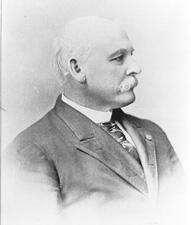
Here you will find contact information for Senator George Laird Shoup, including email address, phone number, and mailing address.
| Name | George Laird Shoup |
| Position | Senator |
| State | Idaho |
| Party | Republican |
| Status | Former Representative |
| Term Start | January 1, 1890 |
| Term End | March 3, 1901 |
| Terms Served | 2 |
| Born | June 15, 1836 |
| Gender | Male |
| Bioguide ID | S000382 |
About Senator George Laird Shoup
George Laird Shoup (June 15, 1836 – December 21, 1904) was an American politician and businessman who served as the last territorial governor and first state governor of Idaho, and as a United States Senator from Idaho from 1890 to 1901. A member of the Republican Party, he was one of Idaho’s first U.S. Senators and contributed to the legislative process during two terms in office, representing the interests of his constituents during a significant period in American history.
Shoup was born in Kittanning, Pennsylvania, northeast of Pittsburgh, on June 15, 1836. He was educated in the local public school system before moving west as a young man. In 1852 he relocated to Galesburg, Illinois, where he engaged in farming. The financial upheaval of the Panic of 1857 devastated his resources and prompted him to seek new opportunities further west. In 1859 he moved to the Colorado Territory, where he pursued mining and merchandising near Pikes Peak and later in Denver, laying the foundations for a career that combined frontier commerce with public service.
During the American Civil War, Shoup enlisted with independent scout units operating across the New Mexico Territory, Colorado Territory, and Texas. When the 3rd Colorado Cavalry Regiment was formed in 1861, he was commissioned as a second lieutenant and rose through the ranks, being mustered out as a colonel in December 1864. His wartime service included participation in the Battle of Apache Canyon in New Mexico Territory and involvement in the Sand Creek Massacre during the Colorado War. After the war, Shoup moved to Virginia City in the Montana Territory, where he owned a general merchandise store, and soon afterward settled across the Continental Divide in Salmon in the Idaho Territory, a community he helped to found. He operated general merchandise stores in both Virginia City and Salmon, becoming a prominent figure in the commercial life of the region.
Shoup’s political career developed alongside his business interests in Idaho Territory. He was appointed commissioner to organize Lemhi County and played a central role in establishing local government there. In 1874 he was elected to the Idaho territorial legislature, marking his formal entry into public office. With few interruptions, he served on the Republican National Committee for Idaho from 1880 to 1904, helping to shape the party’s organization and strategy in the territory and, later, the state. On June 15, 1868, he had married Magdelena “Lena” Darnutzer of Iowa; the couple had three sons and three daughters, including daughters Lena, Laura, and Margaret, and maintained strong ties to both their growing family and the developing communities of the Intermountain West.
In April 1889, President Benjamin Harrison appointed Shoup governor of Idaho Territory. He held this office until July 1890, when Idaho was admitted to the Union and the territorial government ceased to exist. In October 1890, Shoup was elected the first governor of the new State of Idaho. His tenure as state governor was brief, lasting only a few weeks, because in November 1890 the Idaho Legislature elected him to the United States Senate. He resigned as governor in December 1890 to take his Senate seat, and was succeeded in the governorship by Lieutenant Governor N. B. Willey. In this way, Shoup served as both the last territorial governor and the first state governor of Idaho, bridging the transition from territory to statehood.
As a United States Senator from Idaho, Shoup served from 1890 to 1901, a period that encompassed the closing of the American frontier and the nation’s rapid industrial and political transformation. He was reelected by the state legislature in January 1895 to a full six-year term. In the Senate, he developed particular interests in pensions, education, and military affairs, reflecting both his Civil War background and his concern for veterans and public institutions. He served as chairman of the Committee on Territories, where he advocated what was described as liberal and just treatment of Native Americans and took an active role in questions involving the governance and development of the remaining U.S. territories. His Senate service ended when he was defeated for reelection in January 1901 by Democrat Fred Dubois, after which he retired from public life and resided in Boise, Idaho.
Shoup remained politically engaged even after leaving the Senate. Two years later, in January 1903, at age 66, he made a final attempt to return to the U.S. Senate. In a four-man contest for the Republican nomination in the Idaho Legislature, he ultimately withdrew from the race and threw his support to fellow Pennsylvania native Weldon Heyburn of the Silver Valley. Heyburn went on to defeat Boise attorney William Borah for the Republican nomination and then Democrat James Hawley of Boise for the Senate seat. Four years later, Borah was elected to Idaho’s other U.S. Senate seat and served nearly thirty-three years, further extending the political legacy of the generation of leaders with whom Shoup had been associated.
George Laird Shoup died in Boise, Idaho, on December 21, 1904, at the age of 68. He was accorded a state funeral in Idaho, reflecting the esteem in which he was held as a founder of state institutions and an early national representative. He is interred in Boise Pioneer Cemetery, where he rests alongside his wife, Lena, who died in Salmon, Idaho, in 1927. His family preserved his papers, which were gathered by his son William and later donated by his grandson, G. Elmo Shoup, to the University of Idaho, providing a documentary record of his life and public career.
Shoup’s legacy in Idaho and the nation has been commemorated in multiple ways. In 1910, the State of Idaho donated a marble statue of him to the National Statuary Hall Collection in the U.S. Capitol, later joined in 1947 by a statue of Senator William Borah. The unincorporated community of Shoup, Idaho, on the Salmon River northwest and downstream of Salmon, was named in his honor in 1882, recognizing his role in the region’s early development. During World War II, a Liberty ship, the S.S. George L. Shoup (hull no. 2004), was launched at the Oregon Shipbuilding Corporation in Portland in May 1943, bearing his name into service. In 1958, a new men’s dormitory at the University of Idaho in Moscow was named for him, further cementing his place in the institutional history of the state he helped to bring into the Union and represent in the United States Senate.