Senator George Armistead Smathers
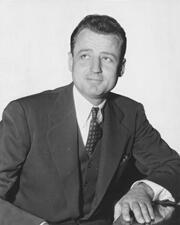
Here you will find contact information for Senator George Armistead Smathers, including email address, phone number, and mailing address.
| Name | George Armistead Smathers |
| Position | Senator |
| State | Florida |
| Party | Democratic |
| Status | Former Representative |
| Term Start | January 3, 1947 |
| Term End | January 3, 1969 |
| Terms Served | 5 |
| Born | November 14, 1913 |
| Gender | Male |
| Bioguide ID | S000505 |
About Senator George Armistead Smathers
George Armistead Smathers (November 14, 1913 – January 20, 2007) was an American lawyer and Democratic politician from Florida who served in both chambers of the United States Congress, in the United States House of Representatives from 1947 to 1951 and in the United States Senate from 1951 to 1969. Over the course of five terms in Congress—one decade in the House and nearly two decades in the Senate—he played a significant role in national legislative affairs during a transformative period in mid‑twentieth‑century American history, representing the interests of his Florida constituents while becoming a prominent figure in national Democratic politics.
Smathers was born in Atlantic City, New Jersey, the son of Lura Frances (Jones) Smathers and Benjamin Franklin “Frank” Smathers. Sources differ on whether he was born on November 13 or November 14, 1913, but his official congressional biography records November 14 as his birth date. The Smathers family had moved to New Jersey from western North Carolina. His father served as a state judge in New Jersey, and his uncle, William H. Smathers, later represented New Jersey in the United States Senate, giving George early exposure to law and politics. In 1920, when he was six years old, Frank Smathers moved the family to Miami, Florida. George attended Miami Senior High School, where he distinguished himself as an athletic student and began to develop the leadership skills that would mark his later public career.
After graduating from high school, Smathers was offered a football scholarship to the University of Illinois, but his father persuaded him instead to attend the University of Florida in Gainesville, believing his son had the potential for elected office and would benefit from the political and professional connections available there. At the University of Florida, Smathers excelled both athletically and academically. He captained the basketball and track teams, became a member of the Florida Blue Key leadership society, and was elected president of the student body without opposition. He was inducted into the university’s Student Hall of Fame in 1936, the year he received his undergraduate degree, and he later completed an LL.B. at the University of Florida College of Law in 1939. Decades later, in 1991, he was inducted into the University of Florida Athletic Hall of Fame, reflecting his lasting reputation as one of the institution’s notable student‑athletes.
Upon completing his law degree in 1939, Smathers married Rosemary Townley of Atlanta, Georgia, and returned to Miami to begin his legal and public service career. That same year he was appointed Assistant United States Attorney for the Southern District of Florida, a position he held from 1939 to 1942. With the outbreak of World War II, he volunteered for service in the United States Marine Corps. Smathers served with Marine Light Bomber Squadron 413 in the South Pacific for 19 months, surviving a crash landing after his aircraft was damaged by enemy fire. After the war he returned to Miami, where he briefly worked prosecuting war‑related fraud before turning to electoral politics.
In 1946, Smathers entered the race for Florida’s Fourth Congressional District and defeated four‑term incumbent Democrat Pat Cannon by a margin of more than two to one in the primary, beginning his national political career. He took his seat in the United States House of Representatives in January 1947 and served two terms, from 1947 to 1951. In the House he developed a reputation as a southern liberal and a rising Democratic leader, generally moderate in domestic policy but strongly anti‑communist in foreign affairs. He was a vigorous supporter of President Harry S. Truman and the Truman Doctrine, advocating a firm policy of containment against Soviet and Communist expansion. He worked to promote Miami as a gateway for commerce and cultural exchange with Latin America and sponsored legislation that contributed to the creation of Everglades National Park. He also supported the 24th Amendment to the Constitution, which outlawed the poll tax in federal elections, reflecting his belief in the importance of voting rights.
Smathers’ House district included Key West, home to President Truman’s “Winter White House,” and this geographic connection helped him forge a close relationship with the president. Truman frequently invited Smathers to accompany him on flights between Washington and Key West, bringing the young congressman into contact with senior administration officials. In 1949, Truman privately urged Smathers to challenge Florida’s incumbent U.S. senator, Claude Pepper, who had become a vocal critic of the Truman Doctrine and had played a leading role in efforts to “dump Truman” before the 1948 Democratic National Convention. Pepper, a nationally known New Deal liberal and gifted orator, was widely considered politically invulnerable in Florida. However, his postwar record—particularly his praise of Joseph Stalin and the Red Army, his advocacy of peaceful cooperation with the Soviet Union, and his support for sharing nuclear technology with the Soviets—had become politically vulnerable. In the 1950 Democratic primary, Smathers attacked Pepper’s international positions, his support for universal health care, and his shifting stance on the Fair Employment Practice Committee, arguing that Pepper was out of touch with Florida voters and out of step with national security interests. Smathers defeated Pepper by more than 63,000 votes in the primary and then won easily in the general election, becoming the first candidate from South Florida ever popularly elected to the United States Senate and breaking the longstanding dominance of North and Central Florida in the state’s highest offices. Pepper’s defeat marked the first time in Florida history that an incumbent U.S. senator lost re‑election and ended the tradition, dating to 1845, of always having at least one senator from North Florida.
Smathers took his seat in the United States Senate in January 1951 and served there until January 1969, completing three full terms. His Senate career coincided with the Cold War, the civil rights movement, and the rise of the modern American welfare state. His legislative skills quickly attracted the attention of Senate Majority Leader Lyndon B. Johnson, who brought him into his inner circle. Smathers was elected Secretary of the Senate Democratic Caucus, the third most powerful position in the party’s Senate leadership, and no other Floridian has risen as high in either party’s caucus. When Johnson suffered a heart attack in 1955–1956, Smathers functioned as acting majority leader during Johnson’s hospitalization. Johnson later urged him to become party whip, but Smathers declined and recommended Senator Mike Mansfield instead, a decision that effectively removed him from consideration to succeed Johnson as majority leader when Johnson became vice president in 1961. Smathers nonetheless retained his influence as Secretary of the Democratic Caucus under Majority Leader Mansfield and served for six years as chairman of the Democratic Senatorial Campaign Committee, playing a key role in party strategy and candidate recruitment.
On domestic policy, Smathers was involved in a wide range of major legislative initiatives. He helped pass the landmark Medicare and Medicaid programs, supported the Clean Air Act, and was instrumental in sponsoring the creation of the Small Business Administration and the Senate Select Committee on Aging. He served as the Senate sponsor of the Kerr–Smathers Individual Retirement Accounts (IRAs), which encouraged private retirement savings. He also played a role in reforming federal transportation and immigration laws and supported legislation that moved several federal holidays to Mondays, thereby institutionalizing the modern three‑day weekend for many American workers. These efforts reflected his interest in economic development, social welfare, and modernization of federal policy.
Smathers’ record on civil rights was complex and often contradictory, reflecting both his personal views and the conservative racial politics of mid‑century Florida. The civil rights movement dominated southern politics during his Senate tenure. Publicly, he opposed broad federal intervention in racial matters but endorsed federal protection of voting rights and emphasized the rule of law and the obligation of southern states to comply with federal statutes and court decisions. Privately, he rejected many tenets of white supremacy and believed that southern attitudes on race would evolve over time. Nonetheless, he joined most of his southern colleagues in signing the 1956 Southern Manifesto, which denounced the Supreme Court’s Brown v. Board of Education decision as a “clear abuse of judicial power” and pledged to use “all lawful means” to reverse or limit its implementation. As a key lieutenant to Johnson in the Senate, Smathers helped craft the Senate version of the Civil Rights Act of 1957, predicted that the southern filibuster would fail, and voted for the bill in the Senate; however, he opposed the final version that emerged from conference committee. After the violent confrontation over James Meredith’s admission to the University of Mississippi in 1962, Smathers publicly insisted that “Federal law must be obeyed … so that force does not have to be used to bring compliance.” Following Johnson’s accession to the presidency, Smathers privately urged rapid passage of comprehensive civil rights legislation, telling Johnson that “the sooner we get a civil rights bill over with … the better the South would be, the better the North would be, the better everybody would be,” and he quietly strategized with Johnson on securing passage of the Civil Rights Act of 1964. Yet when the bill came to the Senate floor, he voted against it. He similarly praised the objectives of the Voting Rights Act of 1965 but opposed the Senate version before ultimately supporting the final, amended measure, which enforced the voting rights guarantees of the Fourteenth and Fifteenth Amendments and outlawed literacy tests. He summarized his view by stating that “franchise and freedom are inseparable in America,” underscoring his belief that the ballot box was the essential instrument for African American political advancement.
Foreign policy, particularly in the Western Hemisphere, was another central focus of Smathers’ Senate career. He was an early and persistent advocate of increased U.S. engagement with Latin America, urging improvements in sanitation, infrastructure, education, and trade, as well as expanded economic aid to modernize Latin American economies and counter communist influence. He proposed the creation of a joint Organization of American States (OAS) military force to replace individual national armies in maintaining peace and combating communism in the region. His colleagues dubbed him “the Senator from Latin America” in recognition of his expertise and advocacy. In February 1960 he was sent, along with businessman and diplomat William D. Pawley, to the Dominican Republic in an unsuccessful effort to persuade dictator Rafael Trujillo to step down. Smathers’ interest in Latin America predated the Cuban Revolution; he had a chance encounter with Fidel Castro in April 1948 in Bogotá, Colombia, where Smathers attended the Pan‑American Conference and Castro participated in an opposition Pan‑American Students Conference. Smathers later claimed that Castro acknowledged communist leanings during this meeting, and Smathers subsequently became an early and vocal opponent of Castro’s regime, advocating an economic and arms embargo against Cuba.
Smathers was deeply involved in U.S. policy toward Cuba during the Kennedy administration. He described the failed 1961 Bay of Pigs invasion as “an ill‑conceived, ill‑planned deal” that lacked adequate preparation and firepower. During the Cuban Missile Crisis in October 1962, he was the only senator present with President John F. Kennedy on the night Kennedy announced the U.S. naval embargo of Cuba, a moment widely regarded as the closest the Cold War superpowers came to nuclear conflict. Smathers amended the Immigration and Nationality Act to provide permanent visas for Cubans fleeing communist rule and supported federal assistance for Cuban refugees in the areas of food, education, housing, and employment. He worked closely with the Catholic Welfare Bureau and the State Department to support Operation Pedro Pan, which brought more than 14,000 unaccompanied Cuban children to the United States. Many elements of President Kennedy’s Alliance for Progress program for Latin America reflected recommendations long advanced by Smathers, including expanded sanitation, infrastructure, education, trade, and economic assistance, as well as the strengthening of the Inter‑American Development Bank, which he had helped to authorize. Kennedy publicly praised Smathers as “one of the first Americans to recognize the importance of Latin America.”
After nearly two decades in the Senate and a total of five terms in Congress, Smathers chose not to seek re‑election in 1968 and left office in January 1969. In later years he remained active in legal, business, and civic affairs, maintaining close ties to Florida and to the University of Florida, which honored him for his contributions to the state and the nation. George Armistead Smathers died on January 20, 2007, closing a long life that had spanned service as a wartime Marine officer, federal prosecutor, influential congressman, and senior United States senator during a pivotal era in American political and legislative history.