Representative George Spalding
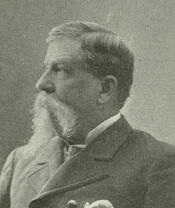
Here you will find contact information for Representative George Spalding, including email address, phone number, and mailing address.
| Name | George Spalding |
| Position | Representative |
| State | Michigan |
| District | 2 |
| Party | Republican |
| Status | Former Representative |
| Term Start | December 2, 1895 |
| Term End | March 3, 1899 |
| Terms Served | 2 |
| Born | November 12, 1836 |
| Gender | Male |
| Bioguide ID | S000696 |
About Representative George Spalding
George Spalding (November 12, 1836 – September 13, 1915) was a Republican politician and public servant who represented Michigan in the United States House of Representatives from 1895 to 1899. He was born in Blairgowrie, Perthshire, Scotland, and immigrated to the United States in 1843 with his parents. The family settled in Buffalo, New York, where he attended the public schools. As a young immigrant, Spalding’s early years in Buffalo provided the foundation for his later involvement in education, military service, and public life in his adopted country.
After completing his schooling in New York, Spalding moved to Monroe, Michigan. By 1860 and 1861 he was working as a schoolteacher there, reflecting an early commitment to education and local civic life. His experience in the classroom and his growing ties to the Monroe community would later inform his service on local educational boards and in municipal government.
Spalding entered national service during the American Civil War. On June 20, 1861, he enlisted in the United States Army as a private in Company A, 4th Michigan Volunteer Infantry Regiment. Over the course of the war he was promoted through the ranks, ultimately becoming colonel of the 12th U.S. Tennessee Cavalry. In recognition of his wartime service, he was brevetted a brigadier general in 1865. Following the war, he transitioned to federal civilian roles. On July 27, 1866, he was appointed postmaster of Monroe, Michigan, serving in that position until December 15, 1870. From 1871 to 1875 he served as a special agent of the U.S. Treasury Department. Returning to local affairs, he was elected mayor of Monroe in 1876 and also served as president of the board of education, further solidifying his leadership role in the community. He studied law during this period and was admitted to the bar in 1878, thereafter practicing law in Monroe. From 1885 to 1897 he was a member of the board of control of the State Industrial Home for Girls, reflecting his continued engagement with public institutions and social welfare.
Spalding’s legal and civic career led to his election to the United States Congress. In 1894, he was elected as a Republican from Michigan’s 2nd congressional district to the 54th United States Congress and was re-elected to the 55th Congress. He served from March 4, 1895, to March 3, 1899. During these two terms in office, he was a member of the Republican Party and contributed to the legislative process at a time of significant change in American political and economic life. As a member of the House of Representatives, George Spalding participated in the democratic process and represented the interests of his Michigan constituents, taking part in debates and votes that shaped national policy in the late nineteenth century. His service in Congress occurred during a notable period in American history, and he fulfilled the responsibilities of a Representative during two consecutive terms.
In 1898, Spalding was an unsuccessful candidate for renomination, losing to Henry C. Smith in the Republican primary elections. After leaving Congress on March 3, 1899, he returned to federal service at the local level. He was again appointed postmaster of Monroe on February 20, 1899, and held that office until February 13, 1907. Alongside his duties as postmaster, he resumed the practice of law and engaged in agricultural pursuits, maintaining close ties to the economic life of Monroe and its surrounding region.
In his later years, Spalding expanded his involvement in local finance and business. He became president of the First National Bank of Monroe, a position he held until his death. George Spalding died in Monroe, Michigan, on September 13, 1915. He was interred in Woodland Cemetery in Monroe. His life encompassed immigration, military distinction, legal practice, municipal leadership, federal administrative service, and two terms in the United States Congress, marking him as a significant figure in Michigan’s political and civic history.