Representative George Cookman Sturgiss
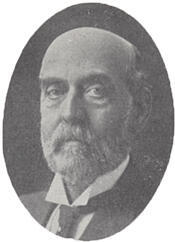
Here you will find contact information for Representative George Cookman Sturgiss, including email address, phone number, and mailing address.
| Name | George Cookman Sturgiss |
| Position | Representative |
| State | West Virginia |
| District | 2 |
| Party | Republican |
| Status | Former Representative |
| Term Start | December 2, 1907 |
| Term End | March 3, 1911 |
| Terms Served | 2 |
| Born | August 16, 1842 |
| Gender | Male |
| Bioguide ID | S001049 |
About Representative George Cookman Sturgiss
George Cookman Sturgiss (August 16, 1842 – February 26, 1925) was an American lawyer, jurist, and Republican politician who served as United States Representative for West Virginia’s 2nd congressional district from 1907 to 1911. A member of the Republican Party, he sat in the 60th and 61st United States Congresses, during which he contributed to the legislative process over two terms in office and represented the interests of his constituents during a significant period in American political and economic development.
Sturgiss was born on August 16, 1842, in Poland, Mahoning County, Ohio. He attended local country schools in his youth. In 1859, he moved to Morgantown, then in Virginia (now West Virginia), where he continued his education. He attended Monongalia Academy in Morgantown and, after completing his studies there, remained at the institution as a teacher, reflecting an early commitment to education and public service.
Sturgiss studied law while residing in Morgantown and was admitted to the bar in 1863, beginning his legal practice in that community. During the American Civil War, he served the Union cause in a civilian capacity as a clerk under Major James V. Boughner, paymaster of the United States Volunteers. Following the war, he returned to Monongalia County and became superintendent of free schools for the county, serving from 1865 to 1869 and helping to organize and administer the emerging public school system in the postwar period.
His formal political career began at the state level. From 1870 to 1872, Sturgiss served as a member of the West Virginia House of Delegates. He then held the office of prosecuting attorney for Monongalia County from 1872 to 1880, gaining prominence as a local legal authority. In 1880, he was the Republican nominee for Governor of West Virginia, though he was defeated in the general election by Democrat Jacob B. Jackson. His standing within the Republican Party remained strong, and in 1889 President Benjamin Harrison appointed him United States Attorney for the district of West Virginia, a post he held for four years. Beyond his formal offices, Sturgiss was active in statewide civic and economic initiatives, serving as the first president of the State board of trade and of the State association for the promotion of good roads, organizations that sought to advance commerce and infrastructure in West Virginia.
In 1906, Sturgiss was elected as a Republican to the United States House of Representatives from West Virginia’s 2nd congressional district. He served in the Sixtieth and Sixty-first Congresses from March 4, 1907, to March 3, 1911. During these two terms, he participated in the democratic process at the national level, contributing to federal legislation and representing the interests of his district at a time of progressive-era reforms and expanding federal authority. His candidacy for reelection in 1910 to the Sixty-second Congress was unsuccessful, ending his service in the House after two consecutive terms.
After leaving Congress, Sturgiss remained active in public and institutional life. He became a trustee of American University in Washington, D.C., reflecting his continued interest in higher education and national affairs. In West Virginia, he played a significant role in regional economic development and was instrumental in the construction of the Morgantown & Kingwood Railroad, which improved transportation and commercial connections in north-central West Virginia.
Sturgiss continued his legal and judicial career in the years following his congressional service. He served on the bench as a judge of the circuit court from 1912 to 1920, sitting on the Circuit Court of Monongalia County. In 1919, while serving in that capacity, impeachment proceedings were initiated against him in the West Virginia House of Delegates. The Judiciary Committee of the House found that he was guilty of corruption; however, when the matter came before the full House of Delegates, the members voted against impeachment, with the proposal failing by a vote of 28 in favor to 55 against. Sturgiss remained a figure of legal and political consequence in his region despite this controversy.
In his later years, Sturgiss resumed and continued the practice of law in Morgantown. He practiced there until his death on February 26, 1925. He was interred at Oak Grove Cemetery, leaving a legacy as a lawyer, educator, state legislator, federal prosecutor, congressman, railroad promoter, and judge whose career spanned the Civil War era through the early twentieth century in West Virginia and the nation.