Senator George Robinson Swift
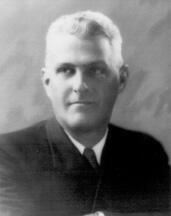
Here you will find contact information for Senator George Robinson Swift, including email address, phone number, and mailing address.
| Name | George Robinson Swift |
| Position | Senator |
| State | Alabama |
| Party | Democratic |
| Status | Former Representative |
| Term Start | June 15, 1946 |
| Term End | January 3, 1947 |
| Terms Served | 1 |
| Born | December 19, 1887 |
| Gender | Male |
| Bioguide ID | S001117 |
About Senator George Robinson Swift
George Robinson Swift (December 19, 1887 – September 10, 1972) was an American businessman and Democratic politician who represented Alabama in the United States Senate in 1946. Over the course of a public career that spanned two decades, he served in both houses of the Alabama Legislature and briefly in the U.S. Congress, while maintaining a long-standing involvement in the lumber industry. His tenure in the Senate, though short, occurred during a pivotal period in American history immediately following World War II, when the nation was transitioning to a peacetime economy and redefining its role in global affairs.
Swift was born on December 19, 1887. Details of his early life and formal education are not extensively documented in the public record, but he came of age in the post-Reconstruction South, a period marked by economic change and the growth of regional industries such as timber and lumber. He entered the lumber business as a young man, establishing himself in a field that was central to the economic development of Alabama and the broader Gulf Coast region. His experience in this industry would shape his understanding of commerce, labor, and resource management, and later informed his approach to public policy.
Before entering statewide and national office, Swift built his reputation as a businessman in the lumber trade. The lumber business in Alabama during the early twentieth century was closely tied to questions of land use, transportation, and industrial growth, and Swift’s work in this sector placed him at the intersection of private enterprise and public infrastructure needs. His practical familiarity with the concerns of business owners, workers, and rural communities helped provide a foundation for his subsequent legislative career. His family also had a notable record of public service; his younger brother, Ira P. Swift, rose to the rank of major general in the United States Army, underscoring the family’s broader engagement in national affairs.
Swift’s formal political career began in the Alabama House of Representatives, where he served from 1931 to 1935 as a member of the Democratic Party. He entered state politics during the Great Depression, a time when Alabama, like much of the country, faced severe economic hardship, high unemployment, and pressure for reforms in banking, agriculture, and public works. In the House, he participated in the legislative response to these challenges, contributing to the democratic process at the state level and representing the interests of his constituents during a period of significant social and economic strain.
Following his service in the Alabama House, Swift was elected to the Alabama State Senate, serving his first term from 1935 to 1939. In this capacity, he continued to work on issues affecting the state’s economic recovery and development, including matters related to industry, infrastructure, and public services. His legislative experience in both chambers of the state legislature gave him a comprehensive understanding of Alabama’s governmental structure and policy priorities. After his brief tenure in the United States Senate, he would return to the Alabama State Senate for another term from 1947 to 1951, reaffirming his central role in state politics and his continued influence on Alabama’s legislative agenda in the early postwar years.
Swift’s service in the United States Congress came about through appointment rather than election. Following the death of U.S. Senator John H. Bankhead II, he was appointed to fill the resulting vacancy and took his seat as a United States senator from Alabama on June 15, 1946. A Democrat, he served until November 5, 1946, when John J. Sparkman was elected to complete the term. During this single term in office, Swift participated in the legislative process at the federal level, representing Alabama’s interests in the Senate at a time when Congress was addressing the complex issues of demobilization, veterans’ affairs, economic reconversion, and the early stages of the emerging Cold War. Although his tenure was brief, it placed him within the national decision-making framework during a significant transitional moment in American history.
After leaving the U.S. Senate in November 1946, Swift resumed his work in Alabama politics and business. Returning to the Alabama State Senate in 1947, he served there until 1951, continuing to advocate for policies shaped by his background in the lumber industry and his experience in both state and national government. His combined roles as businessman and legislator allowed him to bridge the concerns of private enterprise and public policy, particularly in areas affecting economic development and resource-based industries. He remained a figure of regional importance in Alabama public life through these years.
George Robinson Swift died on September 10, 1972. By the time of his death, he had left a record of service that included membership in the Alabama House of Representatives, two separate periods in the Alabama State Senate, and a term in the United States Senate. His career reflected the trajectory of a Southern Democrat of his era: rooted in local industry, active in state governance, and briefly elevated to national office during a critical juncture in twentieth-century American history.